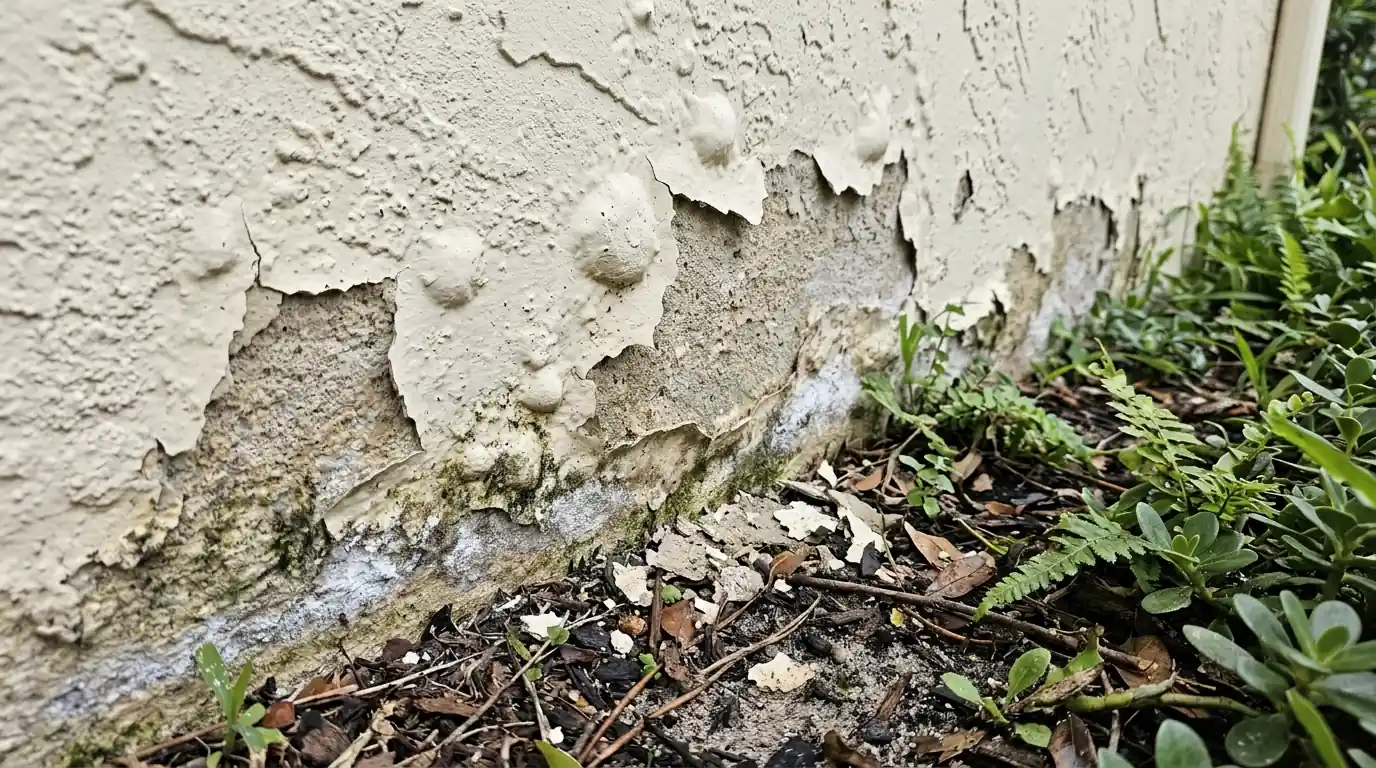
Paint peels when it loses its grip on the surface, usually because of moisture behind it, poor cleaning before painting, incompatible coatings or chalky old paint. In Sarasota, water from storms, irrigation, roof runoff and humidity is the most common driver. Fix the cause and prep properly, or the new coat will fail too.
Peeling is a symptom, not the problem
When paint lifts off a wall, it is telling you something about the surface underneath. The film itself rarely fails on its own. It peels because something broke the bond between the paint and the material it was applied to. Scraping and repainting the loose areas without finding that cause is like patching a roof stain without fixing the leak. It looks fine for a while, then the same spot starts lifting again, often faster the second time because the underlying problem has had longer to work.
On Gulf Coast homes, the list of likely causes is fairly short, and moisture sits at the top of it. The pattern of the peeling usually points to the source. Peeling at the bottom of a wall suggests ground moisture or splashback. Peeling around windows suggests failed caulk or flashing. Peeling high on fascia often traces back to the roof edge. Large sheets lifting from an otherwise dry wall can mean poor adhesion from the start, perhaps paint applied over chalk or dirt.
Moisture behind the paint
Block and stucco absorb water. Paint on the outside can handle rain landing on it, but when water gets into the wall from behind or below, it pushes outward as it tries to escape. In humid summers, that vapor pressure can lift paint in blisters that later split and peel. Common entry points include cracked stucco that lets rain in, windows and doors with failed caulk, and the base of walls where soil, mulch or planters sit against the stucco and keep it damp.
Irrigation is one of the most overlooked sources. A sprinkler spraying the same section of wall every morning keeps that stucco wet for hours a day, and paint there fails long before the rest of the house. Gutters that overflow, or missing gutters that send roof water sheeting down the walls, cause similar patterns. Before any repaint, we look for these sources and point them out, because solving them is often simple and makes a real difference to how long the new coat lasts.
- Cracks in stucco that let rain reach the block
- Failed caulk around windows and doors
- Sprinkler heads hitting the same wall every day
- Soil, mulch or planters packed against the wall base
- Roof runoff with no gutter to catch it
Poor prep and incompatible coatings
The second big cause is surface preparation. Paint needs a clean, sound, dry surface to bond to. Applying it over dirt, salt residue, mildew or heavy chalk means it sticks to that loose layer instead of the wall. Within a few years, the new coat lifts away carrying the chalk with it. A proper wash, time to dry, and a primer or conditioner on chalky areas solve most of this. Skipping those steps is the easiest way for a painting job to look good on day one and fail early.
Coating compatibility matters as well. Very old homes may have layers of oil-based paint under newer latex, and on some surfaces, latex applied directly over glossy oil paint does not grip well without the right primer. Elastomeric coatings over damp stucco, or ordinary paint over a failing elastomeric layer, cause similar trouble. On older Sarasota homes, especially Mediterranean Revival houses from the 1920s or mid-century homes, it is worth knowing what is already on the walls before choosing what goes on next.
Wood trim, doors and fascia
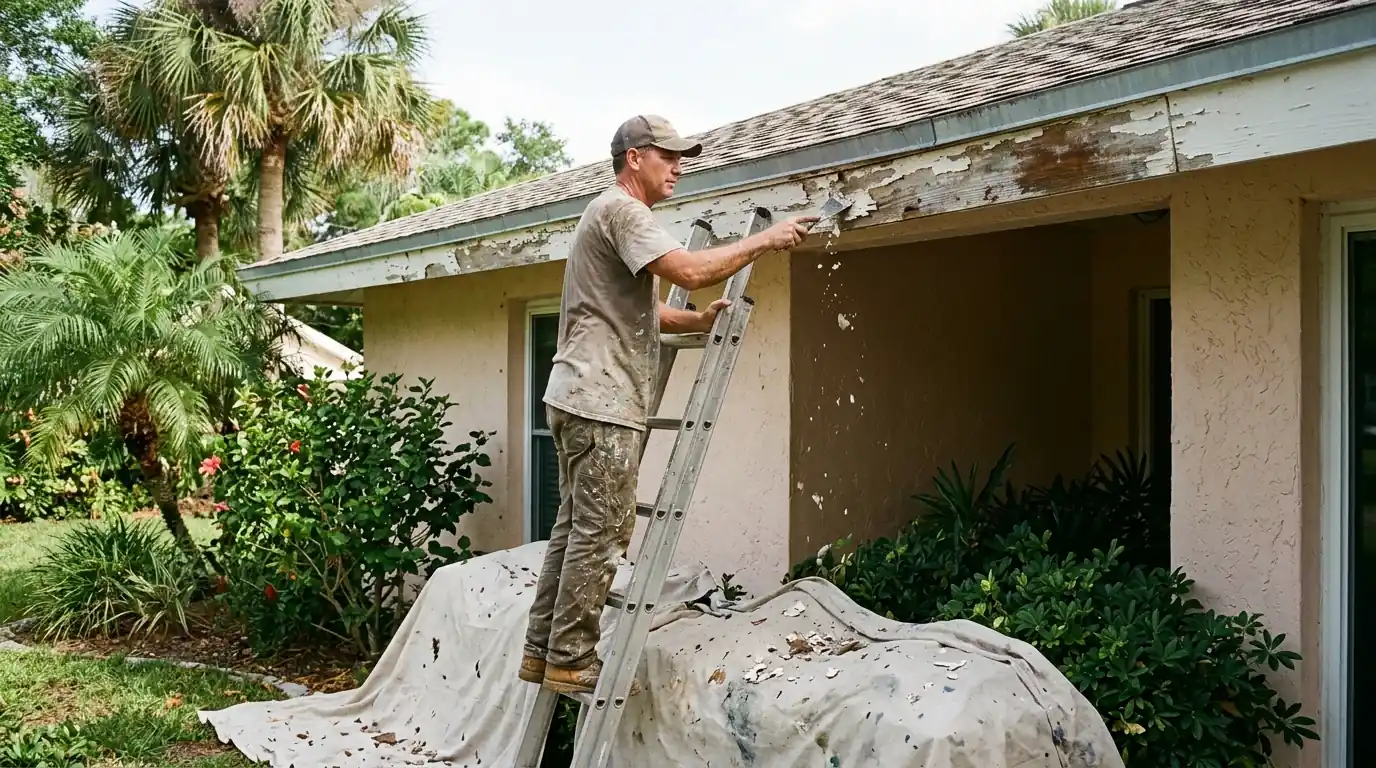
Wood behaves differently from masonry. It swells when wet and shrinks as it dries, and paint has to flex with it. End grain and joints soak up water fastest, which is why paint usually fails first at the bottom of door casings, the ends of fascia boards and corners of window trim. Once water gets in, it can start rot that spreads under the surface while the paint still looks mostly intact. A screwdriver tip pressed into soft wood is the quickest way to check.
Fixing peeling on wood starts with repairing any rot, either by replacing damaged boards or by cutting out soft sections and using a proper wood repair product. Bare wood then needs priming, with particular attention to end grain and cut edges. Joints need fresh caulk. Only then does finish paint go on. Painting over soft or wet wood will peel again quickly. Fascia is also worth a look from the roof side, since a lifted drip edge or clogged gutter can keep it wet regardless of the paint.
- Probe suspect areas for soft or spongy wood
- Replace or repair rot before priming
- Prime end grain and cut edges thoroughly
- Recaulk joints once the wood is sound and dry
Peeling inside the house
Interior peeling has its own patterns. Bathrooms are the usual suspects. Steam from showers condenses on walls and ceilings, and without a working exhaust fan, the paint stays damp often enough to lose its grip. Kitchens can see peeling above the stove from grease buildup that was painted over without cleaning. Ceilings sometimes peel in sheets when paint was applied over a dusty or unprimed surface, or over popcorn texture that never held well to begin with.
Water stains with peeling paint on ceilings or upper walls are a different matter. They often point to a roof leak, a leaking air conditioning drain line, or plumbing above. That source must be found and repaired before any repainting, and the damaged drywall may need cutting out and replacing rather than just patching. Once the area is dry and repaired, a stain-blocking primer keeps the mark from bleeding through the new paint. A fresh coat over a damp ceiling will peel again.
Fixing it so it stays fixed
A lasting repair follows a simple order: find and stop the moisture or adhesion problem, remove all loose paint back to a firm edge, repair the substrate, clean, let it dry fully, prime, then apply finish coats. Feathering the edges where old paint meets bare surface helps the repair blend in. On stucco, patched areas may need texture so they match the rest of the wall. Rushing any one of those steps tends to show up later as a new patch of peeling.
Sometimes peeling is widespread enough that a full repaint, with thorough prep across every wall, makes more sense than spot repairs. Other times, a few targeted fixes and touch-ups will carry the house comfortably to its next scheduled repaint. Photos of the problem areas taken over a few weeks can also show whether peeling is spreading. If paint is lifting anywhere on your house, give us a call. We will set up a visit, look for the cause, and explain what we think needs fixing before quoting the work.
- Stop the moisture or adhesion problem first
- Scrape back to a firm edge and feather it
- Repair, clean and let the surface dry fully
- Prime, then apply full finish coats