Main frame members
Vertical posts, purlins, chair rails and the ridge beams on mansard and dome cages are cleaned and recoated, including the top faces where oxidation is usually heaviest and hardest to reach.
Chalky, faded enclosure frames that leave white powder on your hands and dull the whole backyard can be cleaned, primed and recoated without tearing down a sound cage.
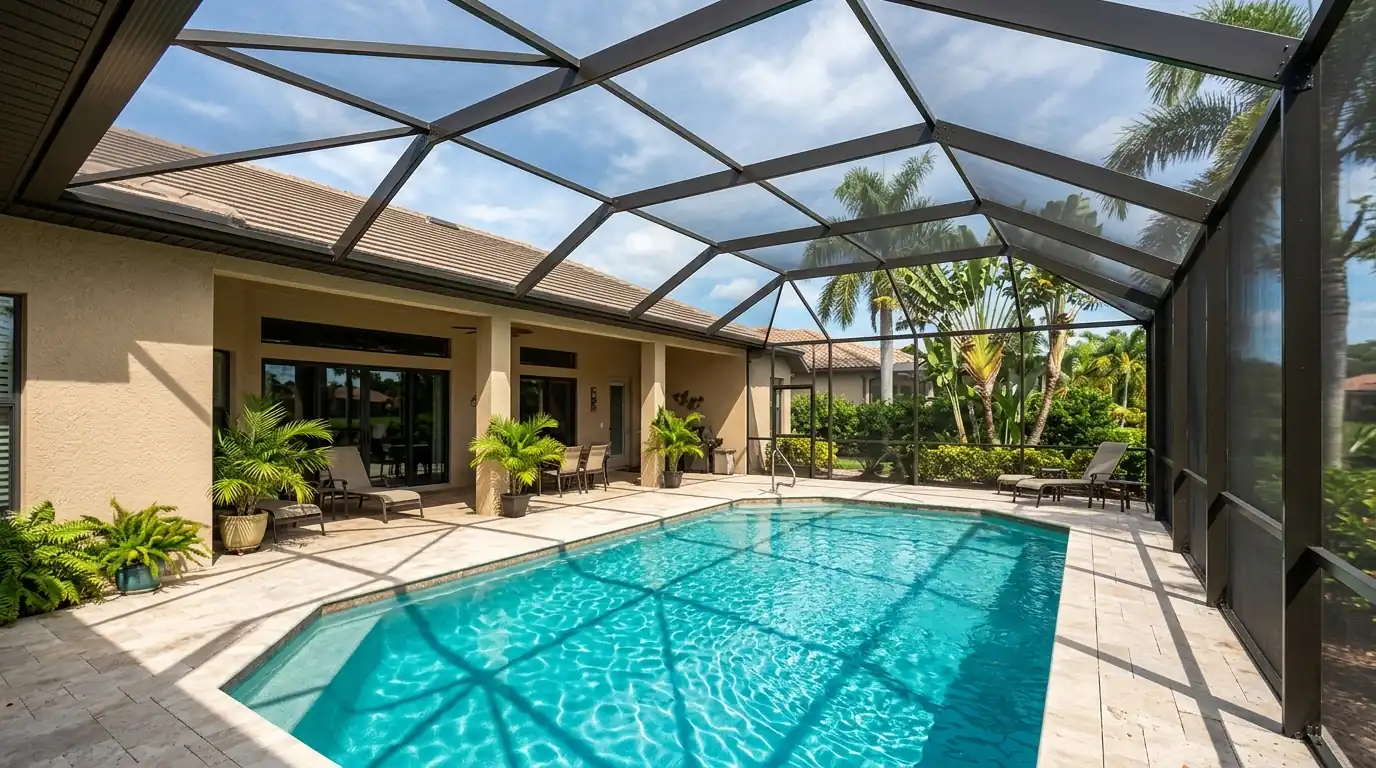
Pool cage painting means recoating the aluminum frame of a screen enclosure, along with the lanai ceiling, walls and trim inside it. In Sarasota we wash off oxidation and mildew, scuff the old finish, prime any bare metal, protect the screens and pool, then apply a durable exterior coating built for direct sun.
Most enclosures around Sarasota left the factory with a baked-on powder coat. After years of afternoon sun, that finish breaks down into a chalky film, the color drifts from bronze to a washed-out brown or from white to a dingy cream, and the frame starts to look older than the house. The aluminum underneath is usually fine. What failed is the skin on top, and a properly prepared paint system can replace it with far less disruption and expense than a brand new cage.
We treat the cage and the lanai as one outdoor room. The beams overhead, the kick plates near the deck, the screen door frame and the stucco wall where the cage meets the house all get looked at together, so colors and sheens match from every angle. If you are planning to rescreen, tell us early. Painting the frame while the old screen is coming out anyway saves masking time and gives our painters cleaner access to every face of the extrusion.
Vertical posts, purlins, chair rails and the ridge beams on mansard and dome cages are cleaned and recoated, including the top faces where oxidation is usually heaviest and hardest to reach.
Door frames and kick panels see more hands, hoses and pool toys than any other part of the cage, so we give them extra prep and a harder finish that resists scuffing.
Ceilings under the roofline often hold mildew and water staining from blown-in rain. We clean them, seal stains so they stop bleeding through, and repaint in a finish suited to damp outdoor air.
The stucco or block walls inside the lanai, plus door casings and window trim facing the pool, get the same prep as an exterior wall so the whole space reads as finished.
Corroded screws and gusset plates show up as white blooms or rust streaks. We clean them, spot prime with an adhesion primer, and point out any hardware that should be replaced before coating.
Pool water, tile line, pavers and screen panels are covered or masked before any coating goes on, and we keep cleaning runoff away from the pool so your water chemistry is not thrown off.
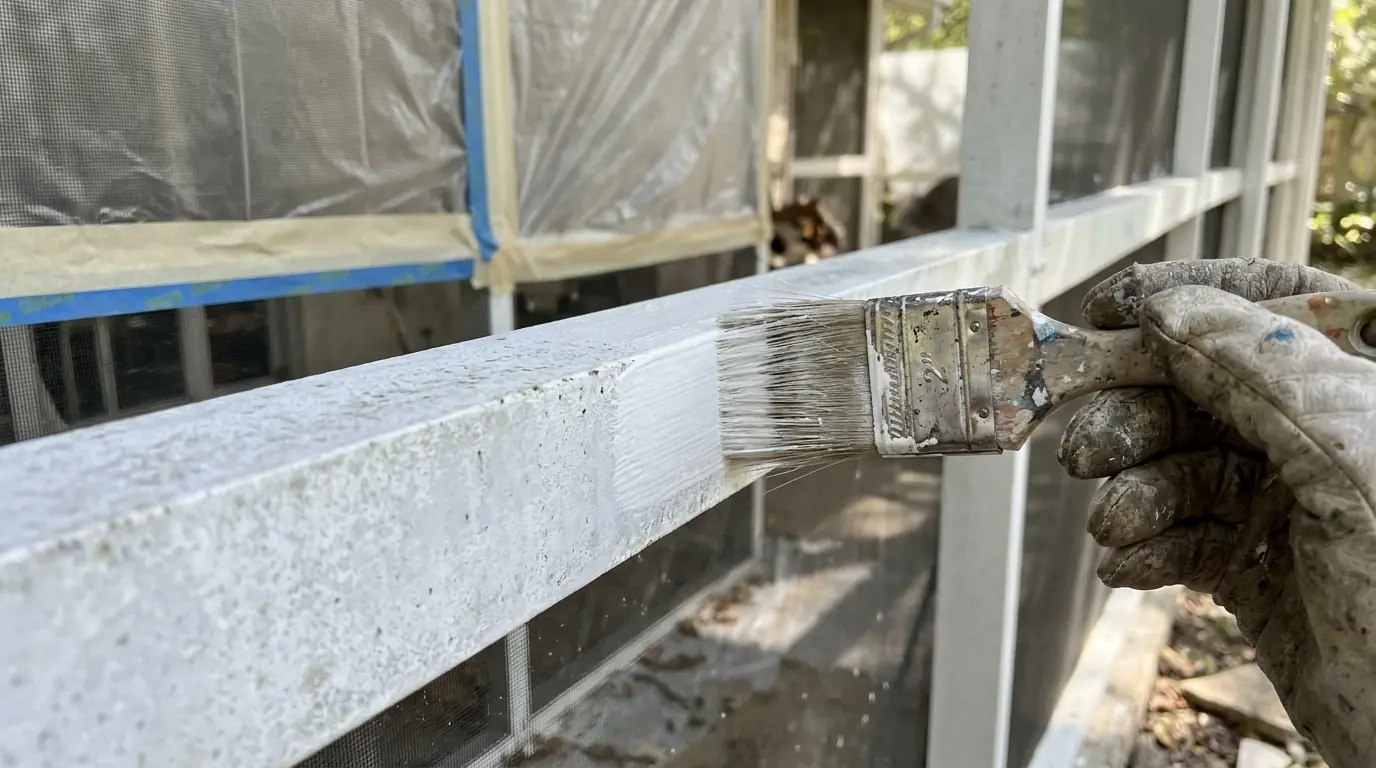
A pool cage on the Gulf Coast lives in about the harshest exposure a painted surface can have. The top rails face the sky all day, so ultraviolet light hits them harder than any wall on the house. Summer storms roll through most afternoons from June into September, soaking the frame and then baking it dry an hour later. Closer to the beaches and the bay, airborne salt settles on the aluminum and pulls moisture into every joint. That cycle is why top surfaces chalk first and why corrosion tends to start at fasteners rather than on flat runs of metal.
Timing matters too. Many enclosures in Sarasota belong to seasonal owners who want the lanai looking right when they arrive in winter, so late summer and early fall are popular windows for this work. We watch the forecast closely during those months, start early in the day, and stop coating well before the usual afternoon buildup so fresh paint is not caught by a downpour. During hurricane season we also make sure screens and frames are secure before we leave each day, since a partly prepped cage should not be left vulnerable overnight.
We clean the entire frame with a degreasing wash suited to aluminum, scrub chalk and mildew off the upper beams by hand, and rinse thoroughly so no residue is left to interfere with adhesion.
Every painted surface is scuffed to give the new coat something to grip. Bare or corroded aluminum gets an adhesion primer made for nonferrous metal, which keeps the topcoat from peeling in sheets later.
Screens are protected panel by panel, the pool and deck are covered, and nearby plants, pool equipment and furniture are moved or wrapped. Protection takes time, and it is the step we never rush.
We brush and roll the frame members in a coating rated for exterior metal and strong sun, working paint into corners and the underside of rails where drips and thin spots usually hide.
Ceiling, walls and trim inside the lanai are finished last. We then pull masking, check every member from the ground and from a ladder, touch up misses, and leave the deck clean.
We price pool cage & lanai painting after seeing the job, and the written quote lists every item below that applies.
Call the office any hour and we will set a walk-through time.
Yes. The original powder coat is a good base as long as it is cleaned of chalk and scuffed so the new coating can bond. Areas where the powder coat has failed down to bare metal get an adhesion primer first. Skipping those steps is why some painted cages peel within a couple of seasons, so prep is where most of our time goes on these jobs.
No. Most of our enclosure jobs are done with the screens in place, masked carefully so paint stays on the frame. If your screens are torn, faded or due for replacement anyway, it makes sense to schedule painting while they are out. That gives our crew full access and saves you the cost of masking screens that are about to be thrown away.
An average single-story enclosure usually takes a few working days from wash to final touch-up, depending on size and condition. Afternoon storms during the summer can shorten workable hours, so we plan around them rather than push paint onto wet metal. We give you a realistic schedule after seeing the cage in person during the walk-through.
We ask that the pool area stay clear while coatings are going on and for the rest of that day, mostly so nobody brushes against wet rails or tracks debris into fresh paint. On wash and prep days, light use is often fine once our crew leaves for the evening. We will tell you each afternoon what to expect the next morning.
Cool deck and concrete pool decks cleaned, crack-repaired and recoated with slip-resistant acrylic finishes in lighter colors that stay cooler underfoot.
Read moreSoft washing for stucco, tile roofs and lanai screens plus rotary surface cleaning for pavers and pool decks, for upkeep or as prep before painting.
Read moreRust removal, metal-specific primers and hard enamel finishes for steel, wrought iron and aluminum railings on balconies, stairs, porches and pool areas.
Read morePool Cage & Lanai Painting is available across our whole service area, including: