Gentle washing
We clean with a soft-wash method and low-pressure rinse. Blasting fiber cement with high pressure can fray the surface, force water behind laps and strip the factory finish unevenly.
Faded or chalky fiber cement siding loses the crisp lines it was chosen for, and open butt joints or cracked caulk let rain wick into edges that were never sealed.
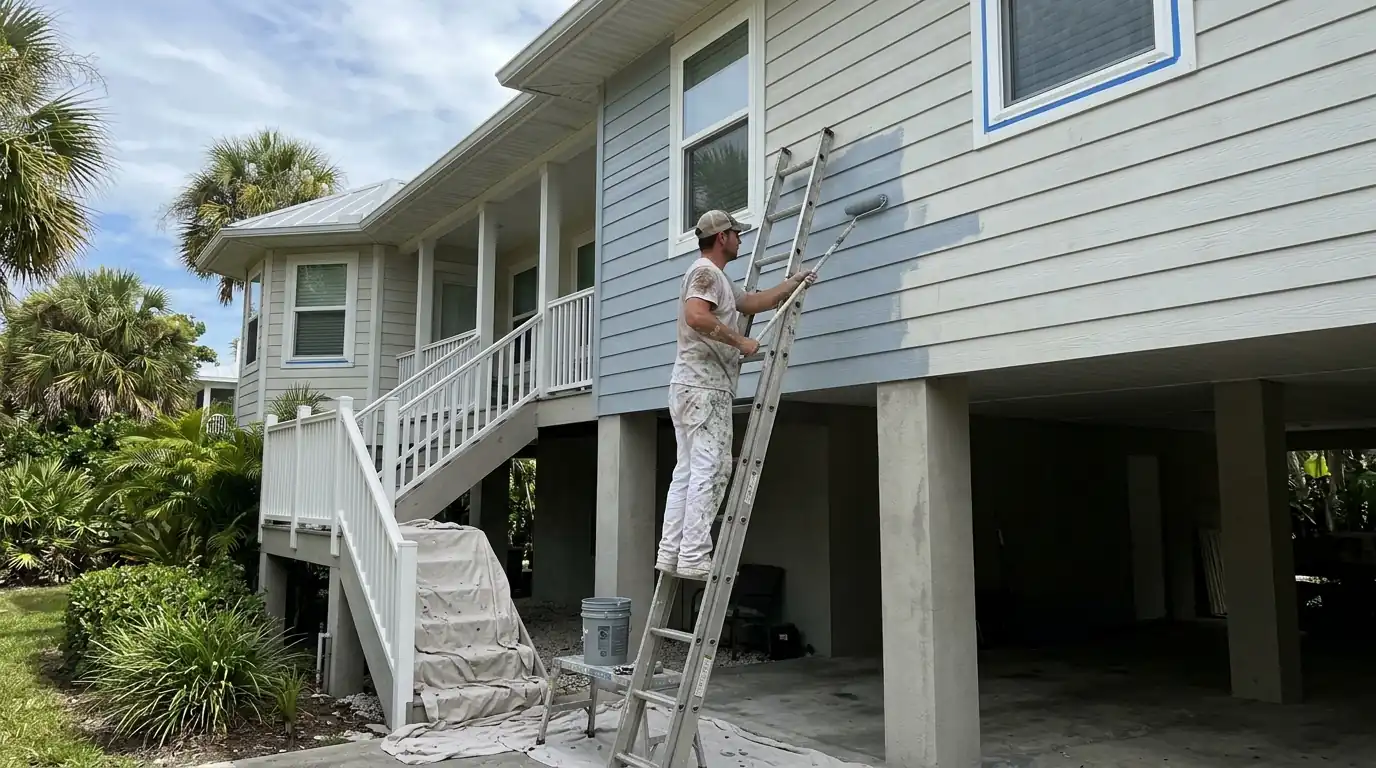
Fiber cement siding painting means washing the boards gently, replacing failed caulk at joints and trim, spot-priming any cut edges or bare spots, and applying two coats of a high-quality 100 percent acrylic. On Sarasota homes we pay close attention to the bottom edges and butt joints where moisture gets in.
Fiber cement siding has become common on newer Sarasota homes, especially in planned communities and on raised coastal homes and second-story additions where block was impractical. It stands up to rot and insects far better than wood, but it is not maintenance-free. Factory finishes eventually fade and chalk, and field-painted boards need recoating on a similar schedule to stucco. Caulked joints and cut edges are the weak points, and they are where moisture causes swelling and paint failure.
Painting it well is mostly about respecting what the material is. Fiber cement is cement and cellulose, so it handles water poorly at unsealed edges and should never be pressure washed hard enough to fray the surface. We wash it gently, replace caulk that has cracked or pulled away, prime any exposed cut ends and bare patches, and finish with a 100 percent acrylic that breathes and flexes. Manufacturer guidance on caulk gaps at butt joints and trim is followed, since some siding systems call for flashing instead of caulk there.
We clean with a soft-wash method and low-pressure rinse. Blasting fiber cement with high pressure can fray the surface, force water behind laps and strip the factory finish unevenly.
Cracked or shrunken caulk at trim, corners, windows and penetrations is cut out and replaced with a high-quality paintable sealant. Where siding uses flashing at butt joints, we leave those joints uncaulked.
Cut ends and any bare fiber cement exposed by damage or past repairs get a primer suited to masonry-based siding, sealing the board edges against moisture before finish coats.
Cracked or broken boards, often from impacts or fasteners set too deep, are noted. Small damage is filled. Badly cracked boards are flagged for replacement before painting.
We use a premium 100 percent acrylic exterior paint that stays flexible and lets moisture vapor escape, applied in two coats for full color depth and film thickness.
Fiber cement trim, PVC and wood elements are painted with compatible products, often in a contrasting color, so siding and trim lines stay sharp across the house.
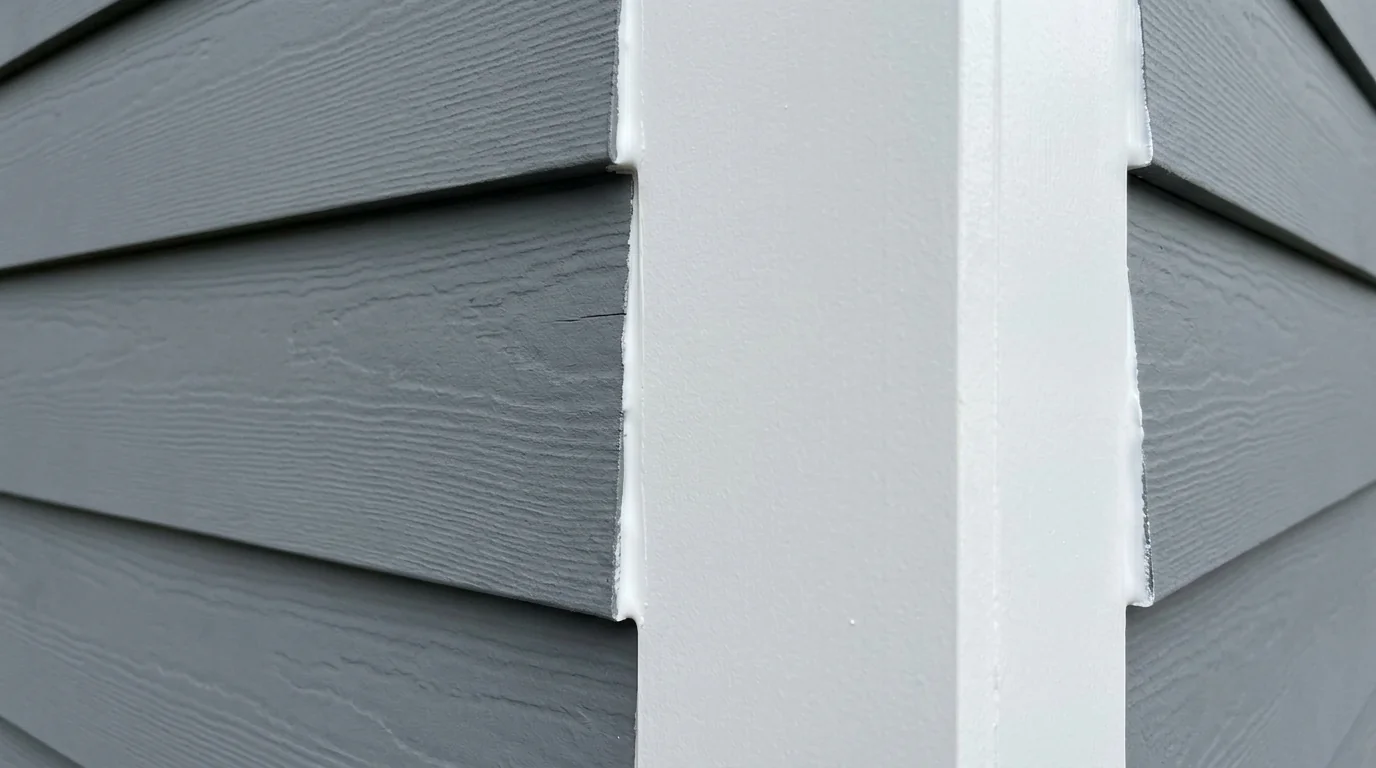
Fiber cement is a good choice for Gulf Coast weather, but the sun still wears on its finish. On west and south sides, colors fade and chalk, and the darker shades popular on newer homes in the area lose their depth sooner than lighter colors do. Humidity and frequent rain test every sealant joint, and caulk that has shrunk in the heat leaves openings where water can reach board edges. Those edges then swell slightly, and the paint at the bottom of each lap starts to crack.
We see fiber cement most often on raised homes near the coast, on second-story additions over block ground floors, and on newer builds in Lakewood Ranch, Parrish and North Port style communities. Raised coastal homes take salt spray and wind-driven rain during hurricane season, so sealed joints and edges matter even more. Where HOAs require approval for color changes, we work within the community palette and can match the original factory color closely when owners want to keep the same look.
We check siding condition, joint details, caulk and any damaged boards, and look for the manufacturer's installation approach so our caulking and painting fit the system.
Mildew and chalk are cleaned with a soft-wash solution and gently rinsed. The siding is allowed to dry fully, since fiber cement holds moisture in its edges.
Old caulk is removed and replaced. Cut ends, bare spots and repairs are primed. Board edges near the ground and roof get special attention as common moisture entry points.
We roll and brush or spray and back-roll the siding, working into the drip edge at the bottom of each lap, then apply a second coat once the first has dried.
Trim, corners and openings are painted, masking is removed and we walk the house with you to check coverage and caulk lines before the crew leaves.
We price fiber cement siding painting after seeing the job, and the written quote lists every item below that applies.
Call the office any hour and we will set a walk-through time.
Yes, as long as the factory finish is clean and still holding well. We soft-wash to remove chalk and dirt, check adhesion and prime only where needed. A good 100 percent acrylic bonds well to a sound factory finish, and it often makes a full prime coat unnecessary.
Not with high pressure. Fiber cement can fray and water can be forced behind the laps, which leads to swelling and peeling later. We use a soft-wash approach to clean mildew and chalk with gentle rinsing. That cleans the boards properly without damaging the surface or the edges.
A premium 100 percent acrylic exterior paint is the usual choice. It stays flexible, lets moisture vapor escape and resists UV fade. Near the Gulf or the bays, we focus on sealing every cut edge and joint so salt and wind-driven rain cannot get into the board ends.
No. Some siding systems use flashing behind butt joints and expect them to stay uncaulked so water can drain. Caulking those joints can trap moisture. We check how the siding was installed and follow that approach, caulking trim, corners and penetrations where sealant actually belongs on that system.
Full exterior repaints with pressure washing, crack and wood repair, primers matched to each surface and two coats of acrylic made for sun and salt air.
Read moreSoft washing for stucco, tile roofs and lanai screens plus rotary surface cleaning for pavers and pool decks, for upkeep or as prep before painting.
Read moreRoof-edge fascia and eave soffits cleaned of mildew, repaired where soft, and repainted with a mildew-resistant finish that keeps attic vents breathing freely.
Read moreFiber Cement Siding Painting is available across our whole service area, including: