Surface cleaning
A rotary surface cleaner strips dirt, mildew and algae evenly across the field without streaking, followed by detail work along edges, steps and the borders where grime collects against the house.
Pavers that look faded, sprout weeds in every joint and lose sand after each summer storm need cleaning, re-sanding and a sealer that locks the joints and protects the color.
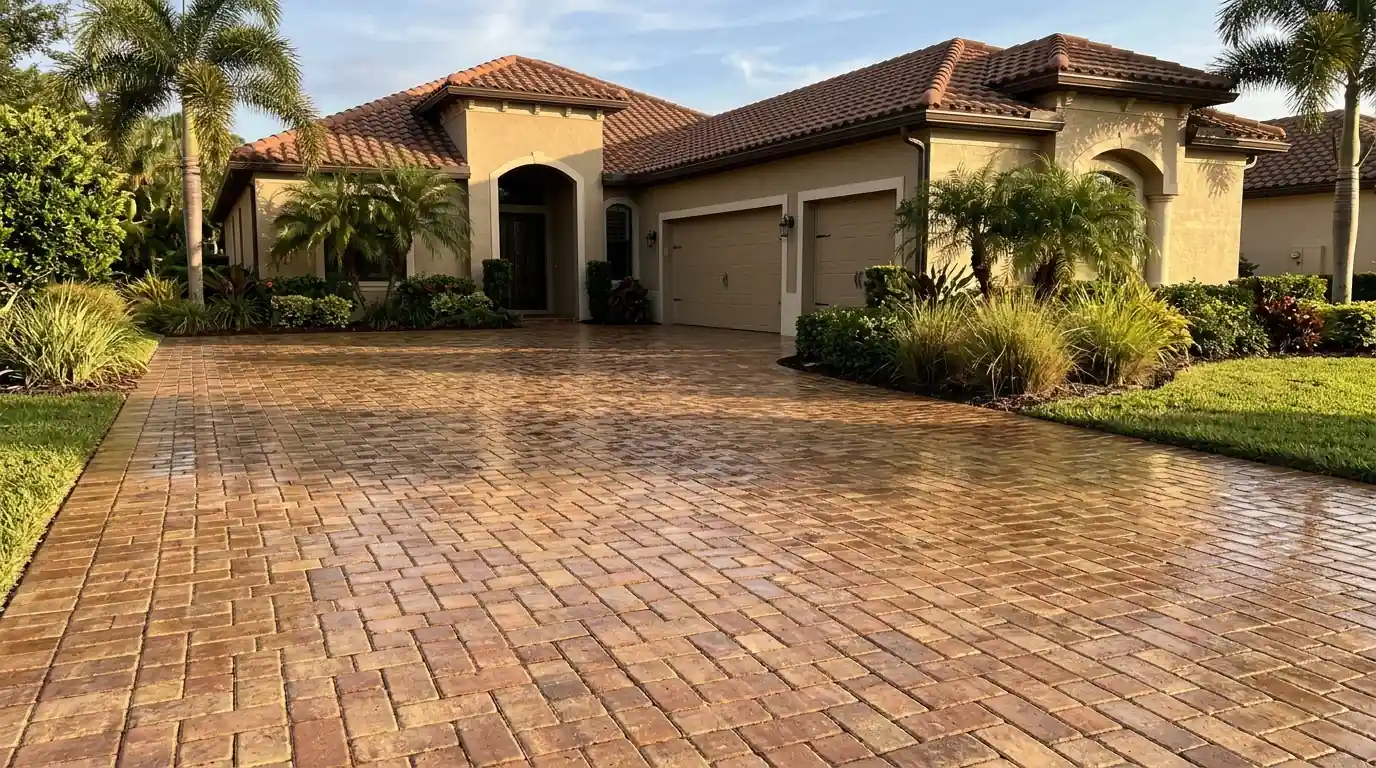
Paver sealing starts with a deep clean to lift dirt, mildew and stains, followed by refilling the joints with fresh sand and applying a sealer that hardens that sand and shields the surface. In Sarasota the pavers must be fully dry first, which shapes how we schedule around humidity and afternoon rain.
Brick pavers and travertine are everywhere in Sarasota, from driveways and front walks to the pool deck that wraps the back of the house. They hold up well structurally, but the surface takes a beating. Sun bleaches the color, sprinklers and runoff leave stains, and the sand between the stones slowly washes out until weeds and ants move into the gaps. Sealing does not make pavers new again, but a good cleaning and a proper sealer bring back much of the original color and keep the joints tight.
The finish you choose changes the look more than people expect. A wet-look sealer deepens the color and adds a soft sheen, which many homeowners like on darker concrete pavers. A natural or matte sealer protects without changing the appearance much, and it is usually the better choice around pools where bare feet and slickness are a concern. We seal a small test area so you can see the difference on your own pavers before committing to the whole surface.
A rotary surface cleaner strips dirt, mildew and algae evenly across the field without streaking, followed by detail work along edges, steps and the borders where grime collects against the house.
Oil drips, leaf tannin and the orange marks left by iron-rich irrigation water each need a different cleaner. We treat what can be lifted and tell you honestly which stains are permanent.
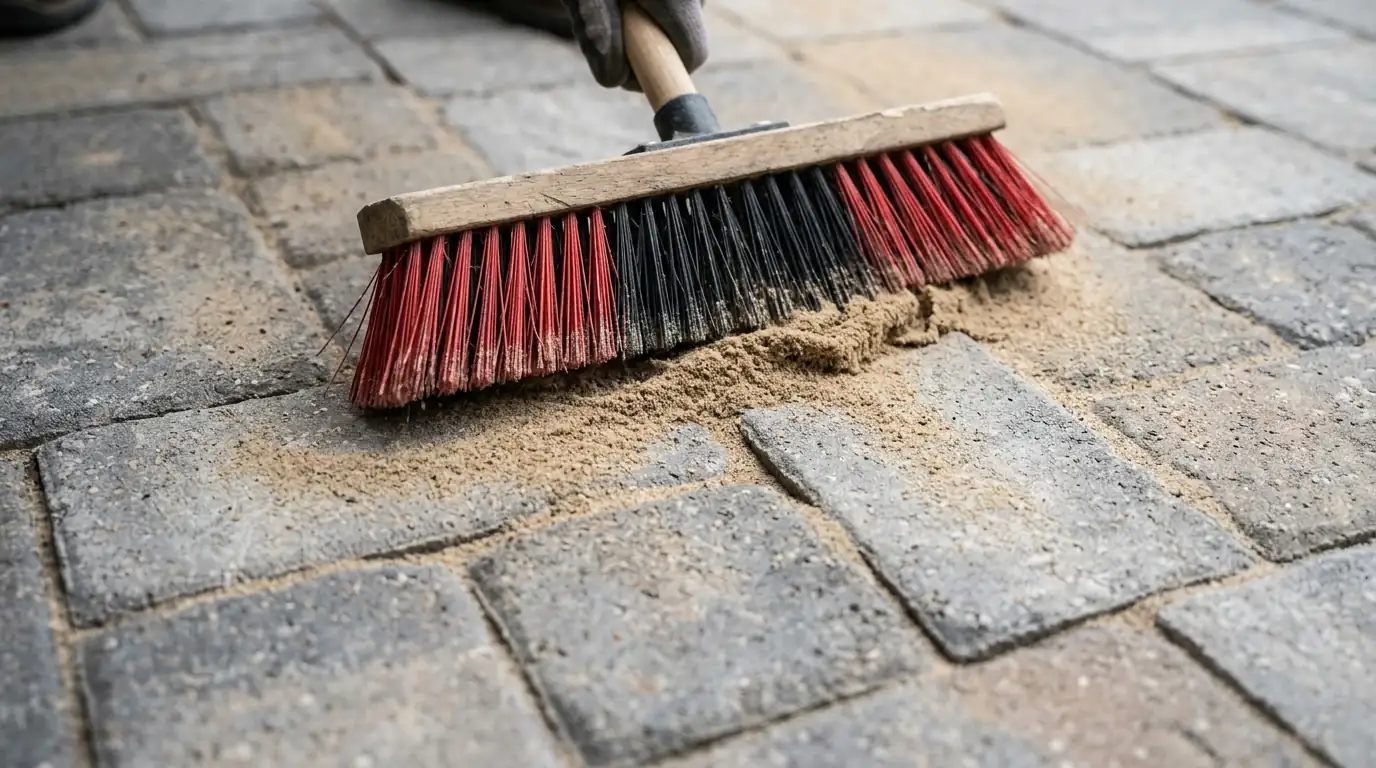
Washed-out joints are swept full of fresh sand, either standard joint sand or polymeric sand depending on the surface, then compacted so the stones stay locked together under traffic.
The white chalky haze that appears on newer concrete pavers is mineral salt migrating out of the stone. We clean it off before sealing so it is not trapped under the finish.
Sealer is applied in even coats with sprayer and roller, worked into the joints to bind the sand, and kept off stucco, door thresholds, garage doors and landscaping beds.
Natural travertine needs gentler cleaning and a breathable penetrating sealer rather than a heavy film, so stone pool decks get a different product and approach than concrete pavers.
Moisture is the main enemy of a paver sealing job in Sarasota. Pavers sit on a sand bed that holds water after every rain, and a sealer applied over damp stone can turn cloudy white as the trapped moisture tries to escape. During the wet season, from roughly June through September, afternoon storms arrive often enough that we need a clear forecast for the drying day and the application day together. Winter and spring, with lower humidity and fewer storms, are the most forgiving months, which is also when many seasonal residents want the work done.
Sandy soil and heavy downpours also explain why joints empty out so quickly here. Water sheets across a driveway, carries joint sand into the street, and leaves gaps that fill with seeds and fire ants. Hardened joints from a binding sealer or polymeric sand slow that cycle considerably. Pool decks have their own issue: chlorine or saltwater splash and constant sun fade pavers faster than a shaded front walk does, so we often recommend sealing the pool deck on a shorter cycle than the driveway out front.
We look at the paver type, existing sealer, settled areas and stains, and do a quick water test to see whether an old sealer is still repelling water or has worn away.
The surface is cleaned evenly, stains are treated with the right chemistry, and rinse water is directed away from the pool, planting beds and storm drains wherever the layout allows.
Pavers need to dry completely before sand and sealer go down. Depending on the weather, that may mean coming back the next day rather than sealing over a damp base.
Fresh sand is swept into every joint and compacted, with the excess cleared from the surface so it does not get locked into the sealer as a gritty film.
Sealer goes on in thin, even coats. We block off the area, give you clear guidance on foot and vehicle traffic times, and check the finish once it has set.
We price paver sealing after seeing the job, and the written quote lists every item below that applies.
Call the office any hour and we will set a walk-through time.
Most concrete paver surfaces here benefit from resealing every few years, but the right interval depends on exposure. A pool deck in full sun with chlorine splash wears faster than a covered entry walk. A simple test helps: if water no longer beads on the surface and the joints are starting to loosen, the sealer has done its job and it is time for another coat.
A heavy wet-look film can feel slicker when wet, which is why we usually recommend a natural or matte sealer around pools. For extra grip, a fine anti-slip additive can be mixed into the final coat. We talk through how the deck gets used, whether by kids, older family members or guests, before choosing the product for your surface.
Usually, yes. White haze on pavers is either efflorescence, which is mineral salt coming out of the concrete, or a previous sealer that trapped moisture underneath. Efflorescence can be cleaned off with the right product. A cloudy old sealer may need to be stripped. Identifying which one you have is part of our walk-through, and it changes the plan.
It slows them down considerably. When the joints are refilled and bound by sealer or polymeric sand, seeds have a harder time rooting and ants have a harder time tunneling. It does not make the surface permanently weed-free, especially near lawn edges, but most homeowners see far less growth between sealing cycles than they did with open, sandy joints.
Soft washing for stucco, tile roofs and lanai screens plus rotary surface cleaning for pavers and pool decks, for upkeep or as prep before painting.
Read moreCleaning, crack filling and a tinted, slip-resistant coating that hides oil stains, tire marks and patchwork on plain concrete driveways and walkways.
Read moreCool deck and concrete pool decks cleaned, crack-repaired and recoated with slip-resistant acrylic finishes in lighter colors that stay cooler underfoot.
Read morePaver Sealing is available across our whole service area, including: