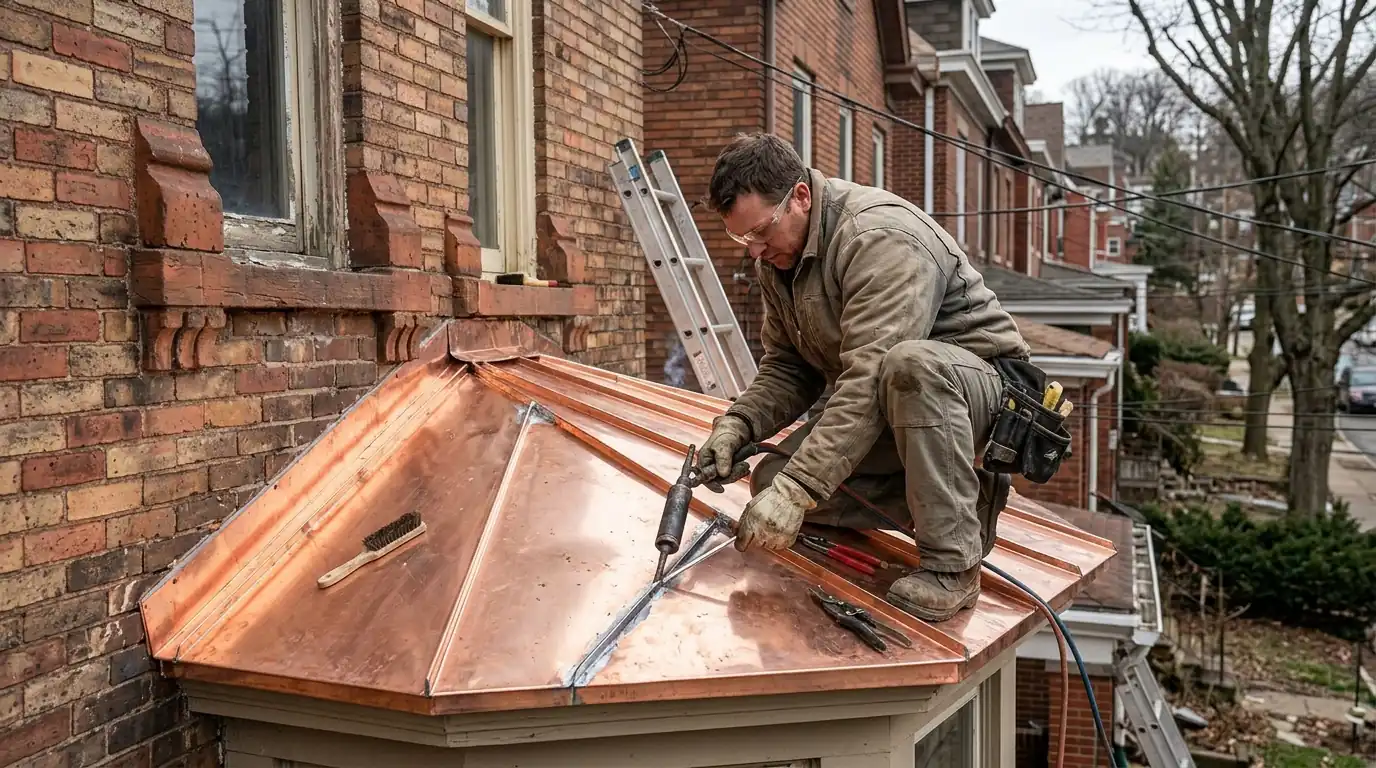
A stucco home on a Sarasota barrier island needs good paint plus extra care at every step. Salt is rinsed off right before coating, windy days call for brush and roller work, sand is kept out of wet paint, and the schedule respects bridges, rentals and season traffic.
Salt is the first thing we plan around
Walk up to almost any house on Siesta Key or Longboat Key and wipe a dark cloth across the Gulf-facing wall. It comes away with a faint gray film, mostly salt. Salt draws moisture out of the air and holds it against the surface, so paint applied over it can blister or let go early. On the mainland a pressure wash a few days ahead is usually enough. On the islands we rinse again with fresh water close to the start of coating, because a single breezy night can lay down a new layer.
Salt also goes after anything metal attached to the stucco. Steel screws in light fixtures, hose bibs, hurricane shutter tracks and old railing anchors corrode faster near the beach, and the rust bleeds down the wall in brown streaks. Painting over those streaks without dealing with the source only hides them for a few months. Our crew cleans the stain, treats or replaces the corroding fastener where the homeowner agrees, and spot primes with a stain-blocking primer so the new color stays clean around every fixture.
Wind, blowing sand and overspray
Island breezes rarely quit and tend to build through the afternoon. That changes how we apply paint. Spraying is fast on a calm inland street, but on a narrow lot next to a neighbor's car, a boat lift or a pool, airborne mist can travel much farther than anyone expects. Most days on the keys we brush and roll, and when spraying does make sense for a large plain wall, we do it in the calm early hours with shields up and a crew member watching which way the wind is moving.
Sand is the quieter problem. Fine beach sand lifts off driveways, dunes and planting beds and sticks to anything wet. A wall that looked perfect at lunch can feel gritty by evening if the breeze picked up while the paint was still soft. We dampen or sweep loose sand around the work area, avoid coating the lowest course of the wall on the gustiest days, and plan the order of elevations so the side facing the wind is painted when the air is most still.
- Brush and roller on breezy days, spray only in calm air
- Covers for cars, boat lifts, pool water and outdoor furniture
- Loose sand swept or dampened before coating low walls
- Windward walls scheduled for the stillest part of the day
Access, bridges and island logistics
Every island job starts with a drive over water. The drawbridges onto Siesta Key, the causeway out to Lido and St. Armands, and the bridges at either end of Longboat Key all open for boat traffic, and in winter the approach roads back up with visitors. We build that into the schedule rather than hoping for an easy morning. Crews arrive early, ladders and materials stay on site when the owner allows it, and we avoid running back to the shop in the middle of a beach-traffic afternoon.
Parking and staging are the next puzzle. Many island lots are small, driveways are shared, and some condo and HOA communities set hours for contractor work or require vehicles to be registered at the gate. Raised homes on Anna Maria Island and the keys add height too, with tall walls over ground-level parking. We sort out those details during the walk-through so the first workday is spent painting, not waiting for permission to unload.
- Drawbridge openings and seasonal traffic built into start times
- Contractor hours and gate rules confirmed before day one
- A staging spot for ladders and materials agreed with the owner
- Lift or tall ladder access planned for raised homes
Timing the work on a barrier island
Morning dew is heavier close to the water, and stucco on the shaded side of an island house can stay damp well after the sun is up on the mainland. Paint on a damp wall will not bond properly, so our painters start on whichever side has already dried and follow the sun around the house. Summer storms add a second limit in the afternoon. On a typical July day that leaves a short window, so island exteriors can take a few extra days.
Season matters for reasons beyond weather. Many homes on Anna Maria Island and Siesta Key are vacation rentals, and a painting crew cannot share the property with guests. Owners often book us between reservations or in the quieter weeks of late spring and early fall. Full-time residents usually care more about avoiding the peak of hurricane season. In either case, we talk through the calendar early, because a two-week window between bookings is easy to plan for and very hard to find at the last minute.
Products and details that last near the Gulf
Paint for an island house should be a premium exterior acrylic with strong mildew resistance and good flexibility, since stucco moves with heat and the walls see constant moisture. Where hairline cracks have opened, we seal them with a paintable patching compound before the first coat so salty water cannot travel into the block. Bare stucco patches get a masonry primer. On heavily cracked walls an elastomeric system can be the better choice, and we will explain that option on site rather than defaulting to it.
Small details carry more weight on the keys, where every weakness gets found quickly. Sealant around windows and sliding doors dries out faster in the sun and salt, so we cut out failed beads and replace them instead of painting over cracked caulk. Aluminum railings and light poles get a primer made for metal. Colors deserve thought too: very dark body colors absorb heat and show salt film clearly, while soft light tones hide a dusty week far better.
- Premium exterior acrylic with mildew resistance
- Hairline stucco cracks sealed before the first coat
- Failed caulk around openings cut out and replaced
- Metal primer on railings, poles and exposed hardware
Keeping an island exterior looking fresh
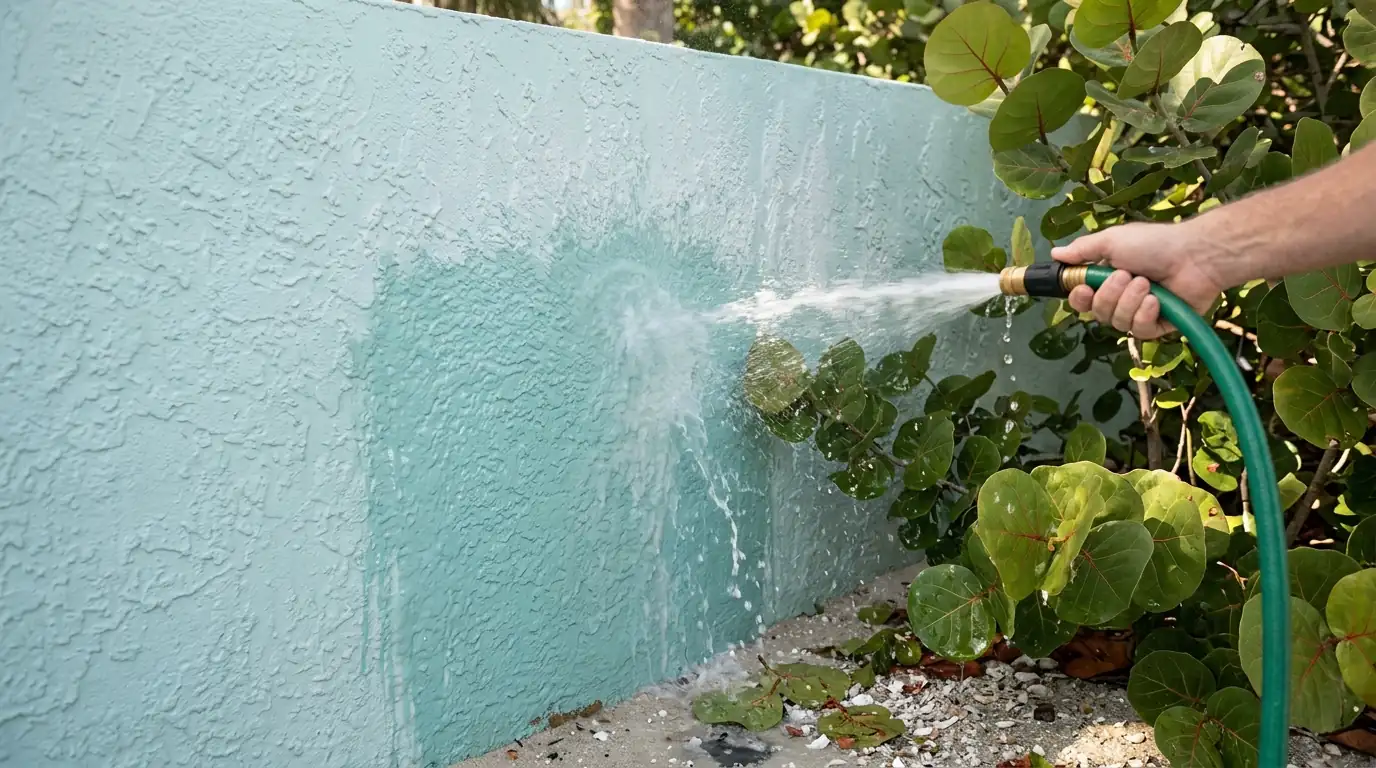
Once the new coat has cured, the best habit an island homeowner can adopt is a gentle freshwater rinse of the walls every few months, focusing on the Gulf side and the areas under eaves where rain never reaches. A garden hose with a spray nozzle is enough. Skip the high-pressure wand, which can scar fresh paint and force water into cracks. A rinse after any strong onshore blow is worth the twenty minutes it takes, because salt left to sit does most of its damage quietly.
Irrigation needs watching as well. Sprinklers fed by well water can leave orange iron stains on stucco that are hard to remove later, so aim heads away from walls. Walk around the house each spring and fall looking for rust streaks, failing caulk and chips on railings, and deal with them while they are still small. If something looks off and you are not sure what you are seeing, give us a call and we will take a look.