Hardware removal
Knobs, latches, hinges where needed and strike plates are removed and bagged by door, so nothing gets painted over and everything goes back where it came from.
Interior doors take daily handling, get dirty around knobs, yellow over time and show drips or brush marks from past paint jobs more than any wall does.
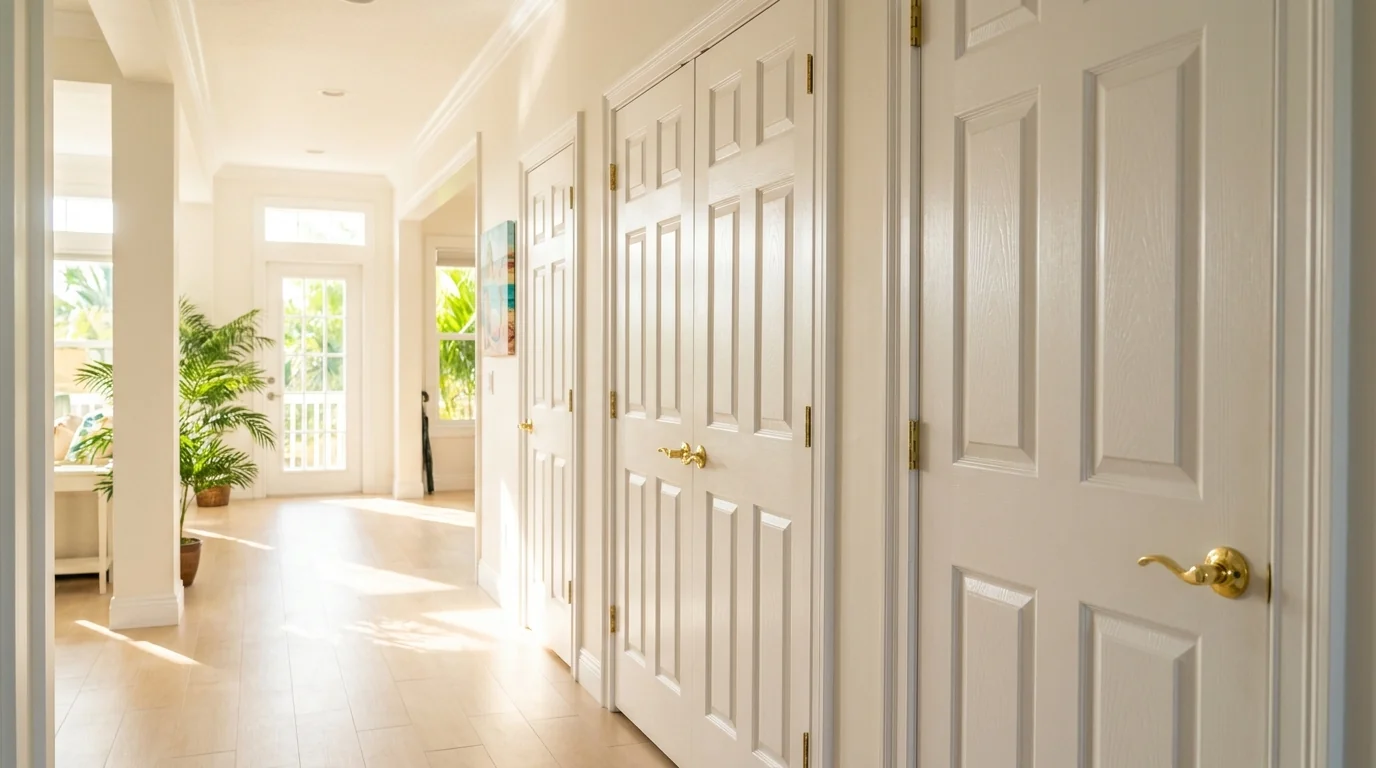
Interior door painting means removing hardware, cleaning the hand areas, sanding the old finish and filling dents, then priming and applying two coats of enamel. Panel doors are painted in a set order so recesses do not drip. Doors can be taken down and sprayed or brushed in place, and edges are sealed against humidity.
Doors are touched more than any other painted surface in a house. Hands push on the area around the knob dozens of times a day, the bottom edge gets kicked, and closet doors get bumped by vacuums and laundry baskets. Over time, that leaves gray smudges that will not wash out, chips on the edges and old drips frozen in the panels from someone's quick repaint. Fresh enamel on the doors sharpens up a house quickly, and it works well paired with repainted trim.
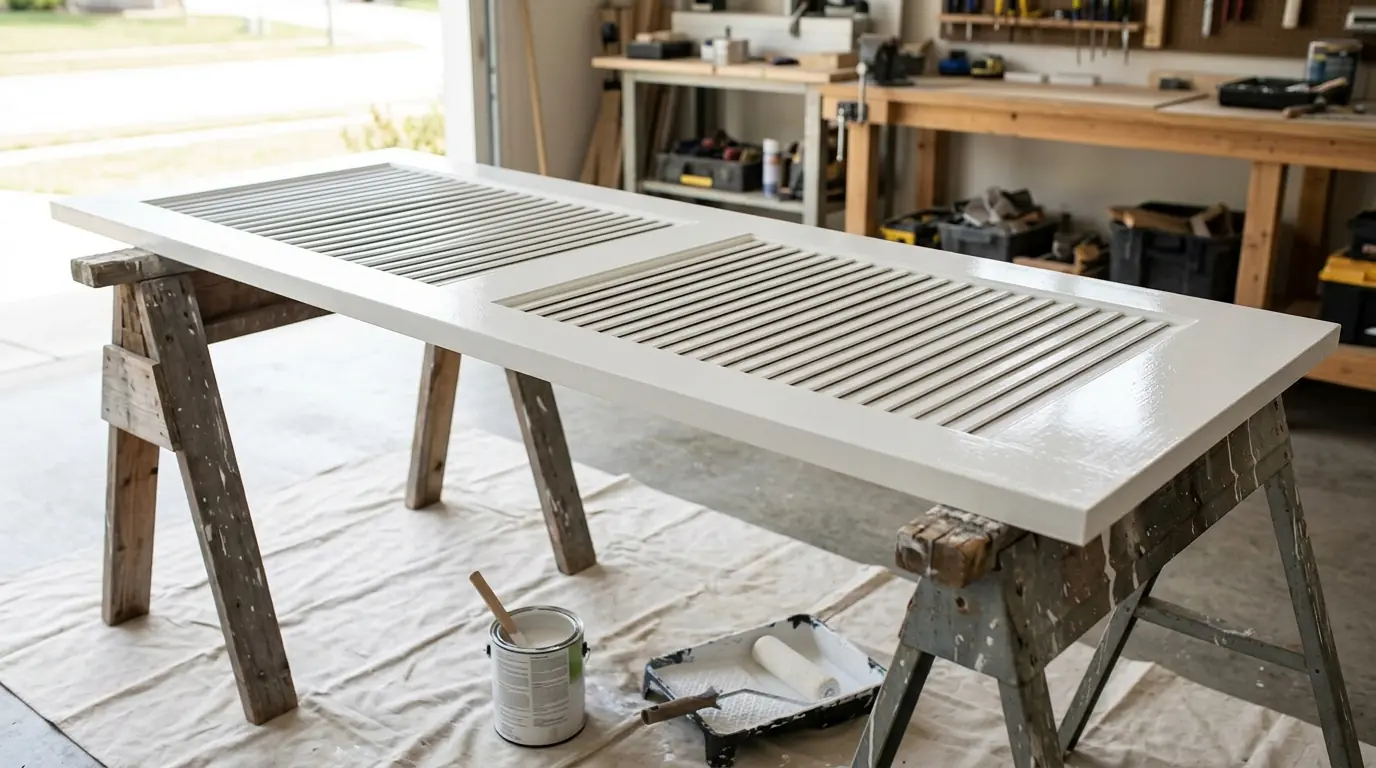
We decide case by case whether to take doors down. Many interior doors paint nicely in place with careful brush and roller work, keeping the room usable. Doors with heavy drips, deep panels or louvers usually come off the hinges and go to sawhorses or a spray setup, where we can work on them flat and finish both faces and edges. Either way, knobs and hinges are removed rather than taped around, because painted hinges and smudged hardware are the sign of a rushed job.
Knobs, latches, hinges where needed and strike plates are removed and bagged by door, so nothing gets painted over and everything goes back where it came from.
The zones around knobs and the push side of doors carry skin oil and grime. We degrease these areas thoroughly because paint does not stick reliably over oily residue.
Old runs and sags in panels are sanded flat and the whole door is scuffed, so the new finish lays smooth instead of telegraphing the previous paint job underneath.
Six-panel and shaker doors are painted in a set sequence: recessed panels, then rails, then stiles. This keeps wet edges in the right places and avoids lap marks.
Top and bottom edges are sealed when doors are off the hinges. Raw edges soak up humidity in Florida and can lead to swelling and sticking in summer.
Two coats of satin or semi-gloss waterborne enamel give a hard, washable surface. We give it proper drying time before rehanging so doors do not stick to stops.
Humidity affects doors in two ways around Sarasota. Hollow-core and solid wood doors absorb moisture through any unsealed edge, especially the bottom, which is rarely painted. That makes doors swell, rub against frames and stick during the wet summer months. Painting is a good time to seal every edge. The second issue is drying: enamels stay soft longer in humid air, and doors closed too soon stick to their stops and pull off paint. We keep air conditioning running and leave doors open until the finish has firmed up.
Many homes here use bifold closet doors and louvered doors for airflow, which is a sensible choice in a damp climate but a real chore to paint by hand. Louvered doors are best sprayed, so we take them down and finish them away from your living space. In newer homes around Lakewood Ranch and Palmer Ranch, molded hollow-core doors with factory primer are common and paint well. Older solid doors in mid-century houses may have stained finishes that need careful priming before switching to paint.
We decide door by door whether to paint in place or remove it, based on condition, style and how long you can do without that door in the house.
Hardware is removed and bagged, doors are cleaned, and old drips are sanded down. Dents and dings in the faces and edges are filled and sanded smooth.
Bare spots, filled areas, stained wood and glossy old oil paint get primer. For a change from stained to painted doors, a full coat of bonding primer goes on.
Panels, rails and stiles are painted in the right order for a clean finish. Removed doors may be sprayed for a smooth surface, including louvered and bifold styles.
Doors cure until firm, then go back on with hardware reinstalled. We check that each door swings and latches cleanly without sticking to its frame.
We price interior door painting after seeing the job, and the written quote lists every item below that applies.
Call the office any hour and we will set a walk-through time.
Both work. Flat and simple panel doors can be painted in place neatly, which keeps the room usable. Doors with heavy drips, louvers or glass panes come out better when removed and sprayed flat. We recommend the approach door by door, depending on condition and how long you can be without it.
Enamel takes longer to harden in humid air, and closing a door too soon presses the soft paint against the stops so it sticks and tears. We keep the air conditioning on, leave doors open during drying, and seal the top and bottom edges so the wood takes on less moisture.
Yes. Stained doors are cleaned, scuffed and primed with a bonding primer that also blocks tannin bleed, which can push yellow through white paint on oak or other woods. Then two coats of enamel go on. The result looks like a factory painted door when the prep is done properly.
Doors can usually be closed carefully the next day, but the enamel keeps hardening for a week or two. During that time, avoid slamming, hanging hooks on the door, or pushing hard on the face. After the cure period, the finish is tough and wipes clean easily.
Baseboards, door casings, window trim and crown molding cleaned, caulked, sanded and brushed in a hard enamel that wipes clean and stays white.
Read moreWalls, ceilings and trim repainted with proper patching, primer where it matters and two even finish coats, one room or the whole house.
Read moreEntry doors of steel, fiberglass or wood sanded, primed and finished in a hard exterior enamel, with hardware protected and colors chosen to handle Florida sun.
Read moreInterior Door Painting is available across our whole service area, including: