Polished Venetian plaster
Multiple thin trowel layers burnished to a soft marble-like sheen, suited to entries, feature walls and fireplace surrounds where light can travel across the surface.
A flat painted wall can feel thin in a big Sarasota great room or a bayfront entry, and a decorative finish adds depth that paint alone cannot give.
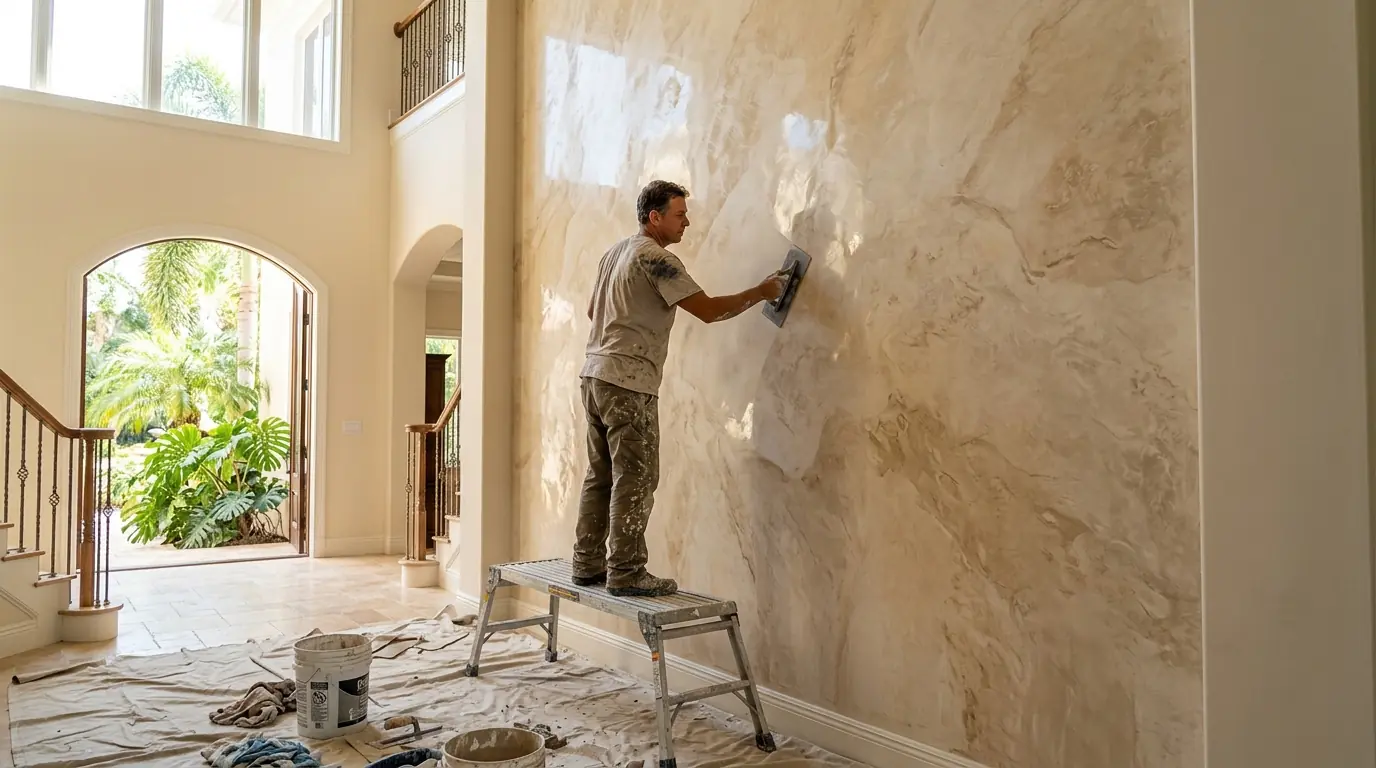
Venetian plaster and faux finishes are hand-applied decorative coatings: thin layers of lime or acrylic plaster burnished to a soft sheen, or glazes and washes that add depth and movement. On a Sarasota home we prepare the wall like fine paint work, test samples in your light, then build the finish in layers and seal it where moisture is a concern.
Decorative finishes earn their place on a few surfaces rather than everywhere. A two-story entry, the wall behind a fireplace, a dining room ceiling or a powder room where guests linger are the usual candidates. Polished plaster gives a stone-like depth that shifts as the light moves across it, while a limewash or glaze softens a wall without the sheen. Used with restraint, either one makes a room read as finished and deliberate instead of simply painted.
The work itself is slow and manual. Each layer of plaster goes on thin with a steel trowel, gets compressed, and is left to set before the next pass. Glazes are rolled or brushed, then worked with rags, brushes or sponges while still open. That means the finish depends on the hand applying it, and on preparation underneath, so we treat every job as a series of controlled steps rather than a single coat.
Multiple thin trowel layers burnished to a soft marble-like sheen, suited to entries, feature walls and fireplace surrounds where light can travel across the surface.
A chalky, mineral finish with gentle movement and no shine, a good fit for Mediterranean Revival homes and rooms that want texture without polish.
Brushed in crossing strokes for a soft, cloudy color that looks aged on purpose, used inside and on suitable masonry where the surface allows it.
Translucent color layered over a base coat and worked by hand to add warmth and depth to cabinets, beams, built-ins or a single wall.
Pearl or metallic coatings on ceilings, niches or trim details, kept to small areas so the effect stays rich instead of loud.
Patching damaged plaster or faux areas after water leaks or remodels, blending the new section into the existing finish so the repair disappears.
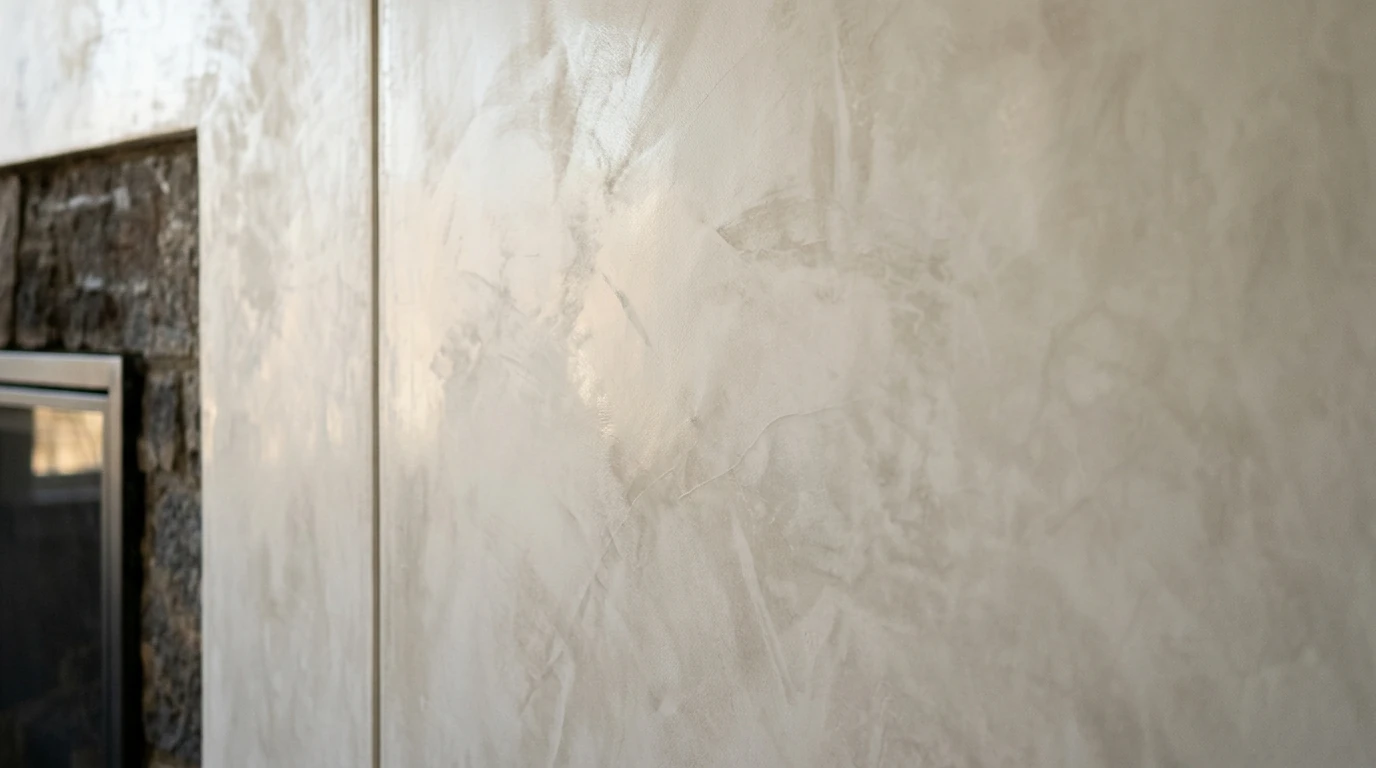
Humidity is the main thing that separates decorative work here from the same job up north. Lime plaster cures by drawing in carbon dioxide and releasing moisture, and on a muggy summer afternoon with the air conditioning set back it can stay soft much longer than expected. We schedule layers around the house's actual conditions, keep the air conditioning running steadily during application, and allow extra curing time before any sealer or wax goes on.
Many Sarasota homes sit empty for months while owners are up north, and a closed house can swing between damp and dry. Finishes in bathrooms, near pool doors or on exterior-facing walls need a protective topcoat that suits the room. Mid-century houses with block walls and older Mediterranean homes with true plaster also need their substrate checked first, since loose old plaster or efflorescence will show through any decorative layer laid on top.
We make sample boards in the colors and finishes you are considering, then look at them in the actual room at different times of day before anything is decided.
Walls are repaired, skimmed where needed and primed with the bonding primer the finish calls for, because flaws underneath show clearly through thin decorative layers.
Plaster goes on in thin trowel passes or glaze is worked in sections, with each layer allowed to set before the next so the pattern stays even across the wall.
Polished plaster is compressed and burnished to bring up its sheen; washes and glazes are blended at edges so there are no lap marks or visible stopping points.
Where the room calls for it, a wax or sealer is applied after curing so the finish resists moisture, fingerprints and cleaning in daily use.
We price venetian plaster & faux finishes after seeing the job, and the written quote lists every item below that applies.
Call the office any hour and we will set a walk-through time.
Yes, when it is applied with enough curing time and sealed where the room sees moisture. Lime plaster actually handles humidity well once cured, because it breathes. The risk is during application, when muggy air slows setting, so we keep the air conditioning steady and space the layers out instead of rushing them.
Glazes and washes can follow a light texture, and some people like how they catch the knockdown pattern. Polished plaster needs a smooth base, so textured walls are skimmed flat first. We show you samples on both a smooth and a textured board so you can see the difference before deciding.
A typical feature wall takes several days rather than one, because each thin layer needs time to set before the next goes on, and burnishing and sealing come after that. Larger entries or ceilings take longer. We give you the schedule with the quote so you know when the room will be usable again.
Often, yes. We patch the damaged area, rebuild the base, then layer and blend the finish to match the surrounding wall. Older finishes may have faded or yellowed, so we test the blend on a small section first. If a match is not possible, we will tell you and suggest redoing the wall to a natural break.
One feature wall in a deep color, stripes or geometric pattern, painted with crisp edges, full coverage and a color tested in your room's light.
Read moreIn-home help choosing interior and exterior colors with large sample boards, HOA palette guidance, undertone checks and sheen advice for each surface.
Read moreKnockdown, orange peel, skip trowel and smooth wall finishes recreated over patches and remodel areas so new work blends into the rest of the house.
Read moreVenetian Plaster & Faux Finishes is available across our whole service area, including: