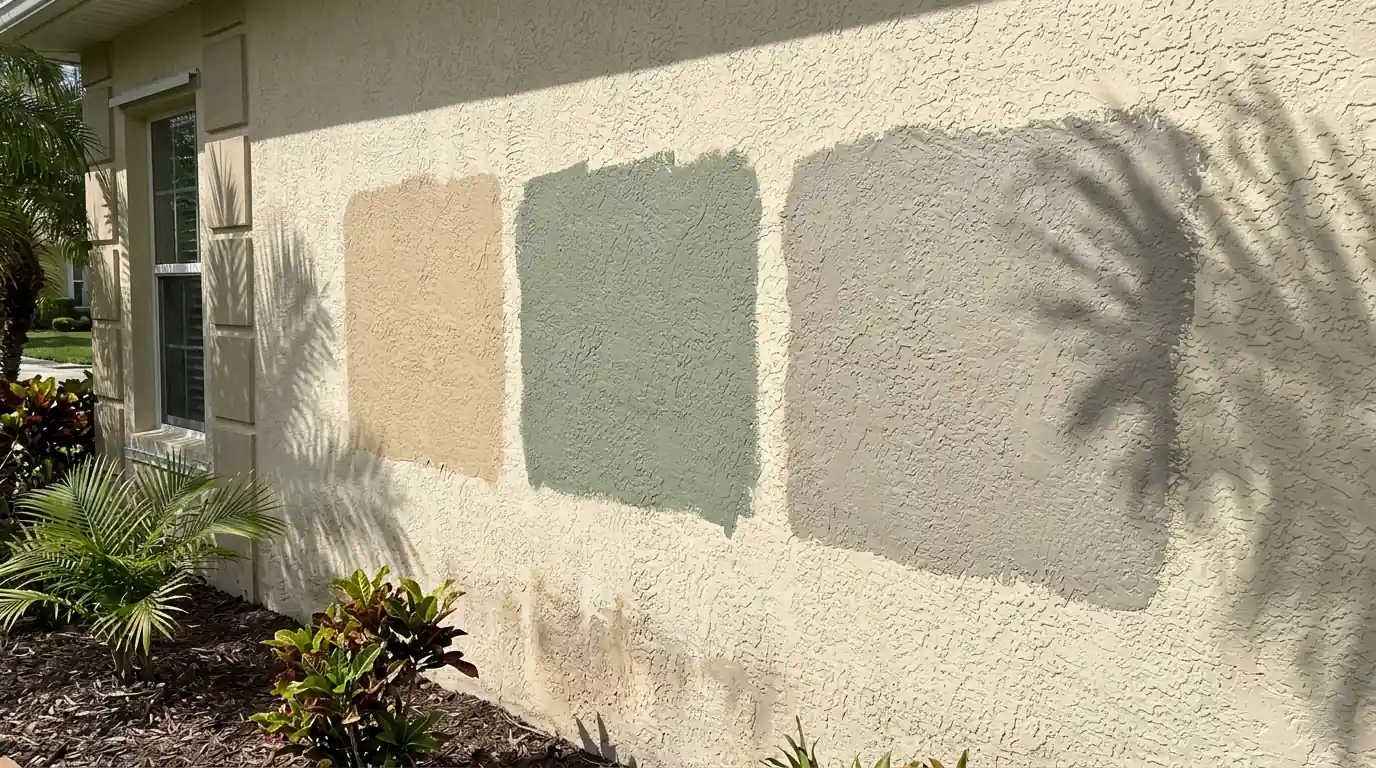
Earthy, mid-tone colors built on mineral pigments, such as sandy beiges, soft greens, warm grays and muted terracottas, hold up best in Florida sun. Bright reds, saturated yellows and some deep blues fade fastest. Very dark colors also absorb heat that stresses trim and doors. Always test large samples on the actual walls before committing.
Why some colors fade faster than others
Color in paint comes from pigment, and pigments are not equally tough. Many of the earthy shades, the tans, ochres, browns and brick tones, rely on iron oxide and other mineral pigments that shrug off sunlight for a long time. Brighter, cleaner colors often need organic pigments to get that punch. Those can break down faster under strong ultraviolet light. That is why a cheerful canary yellow or fire-engine red front door can look washed out after a few Sarasota summers while a clay-colored wall nearby barely changes.
Deep, saturated colors also carry more colorant overall, so when fading starts, it shows. A pale color can lose a little pigment and nobody notices. A navy or a forest green that drifts lighter looks blotchy, especially if one wall gets sun and another sits in shade. This does not mean bold colors are off the table. It means they belong on smaller, easier-to-repaint areas like doors and shutters, and that you should expect to refresh them more often than the main body of the house.
Heat, dark colors and the materials underneath
Dark exterior colors absorb more heat. On a sunny afternoon, a charcoal wall can get noticeably hotter to the touch than a light one beside it. Stucco over block usually tolerates this reasonably well, but the extra heat still speeds up wear on the paint film. Wood trim and doors suffer more. They expand, shrink and can warp or check, and the paint on them cracks along with the wood. Some vinyl and composite products also limit how dark they can be painted, so check before choosing.
Lighter colors reflect more sunlight, which keeps surfaces cooler and is part of the reason so many Gulf Coast homes lean toward pale bodies. If you love a dark look, there are ways to use it sensibly. Put the deep color on an accent area, a front door with an overhang, or shutters that are easy to take down and repaint. Pair it with a lighter body. That gives you contrast and character without asking your entire exterior to bake in deep color every afternoon.
- Lighter body colors stay cooler and age more evenly
- Save the deepest shades for doors, shutters and accents
- Check product guidance before darkening vinyl or composite
- Expect dark accents to need refreshing sooner
Whites and off-whites in strong glare
White is a classic Florida choice, but pure, bright white can be harsh in our light. On a stucco house in full sun, a stark white body can produce real glare, and it shows every streak of dirt and mildew. Most homeowners end up happier with a softened white: one with a touch of warmth, cream or a hint of gray. Those read as clean and crisp from the street without being blinding at noon. They also hide light soiling between washes far better than a cold, blue-leaning white.
Undertones matter more outdoors than people expect. A white that looks neutral on a small chip indoors can turn pink, green or yellow once it is on a large wall in Florida daylight. Nearby elements play in too. A terracotta barrel tile roof will pull warmth into the walls, while a gray metal roof cools things down. We always look at the fixed elements, roof, pavers, stone and window frames, before narrowing whites, because those surfaces are not changing and the paint has to work with them.
Building a palette that ages evenly
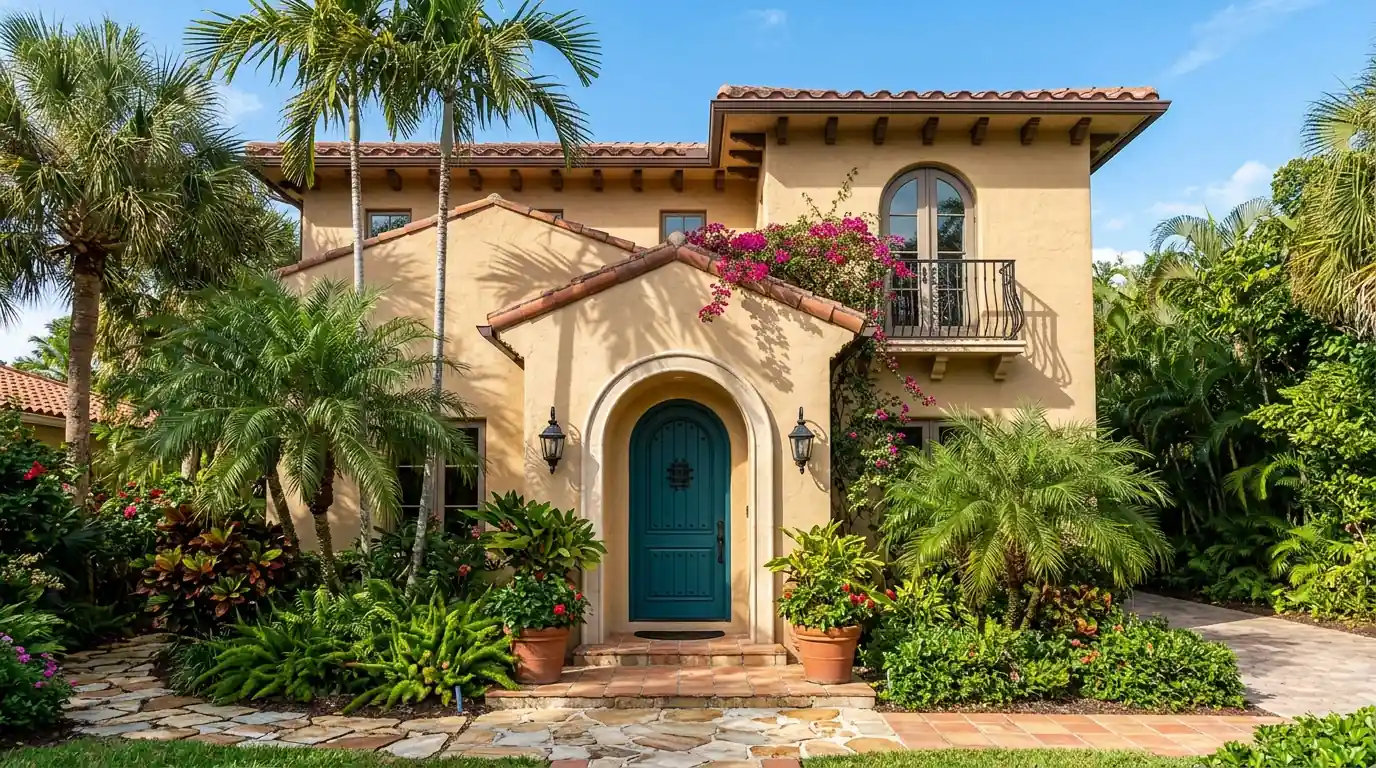
A good exterior scheme usually has three parts: the body, the trim and an accent. The goal is for all three to age at a similar pace so the house never looks patchy. Mid-tone bodies with soft trim do this well. Problems come when a light body is paired with a saturated accent that fades in a few years, or when trim is a bright white that yellows next to a cream body. Thinking about aging up front saves a lot of touch-up frustration later.
Sarasota architecture gives you useful cues. Mediterranean Revival homes from the 1920s often look right in warm stucco tones with deeper accents on doors and ironwork. Mid-century homes from the Sarasota School era suit clean, restrained palettes that let the lines speak. Coastal cottages on the keys can carry lighter, airier colors. Matching the palette to the style tends to produce something that looks intentional for longer, rather than something that felt trendy for a season and dates quickly.
- Body: mid-tone or softened light shade
- Trim: a white or off-white that suits the body undertone
- Accent: a stronger color on a small, easy-to-redo area
- Fixed elements: roof, pavers and stone guide every choice
Test samples the right way
Small chips lie. Outdoors, color shifts with time of day, the angle of the sun and the reflection off lawn, pool water and neighboring houses. The only reliable test is a large sample painted right on the house, ideally on more than one side. Look at it early in the morning, at midday and in late afternoon. What seemed perfect at the store often turns out lighter and brighter outside, so many people end up going a shade or two deeper than their first pick.
If your community has an HOA, sample testing can also help with approval, because some boards want to see the color in place or in photos. Keep samples well away from edges and corners, and put them on the actual material, stucco on stucco and trim on trim, since texture changes how color reads. Our painters can brush out test patches during a walk-through visit. That small step has saved plenty of homeowners from living with a color that never looked the way they imagined.
- Paint samples at least the size of a large poster
- Check them on a sunny wall and a shaded wall
- View at morning, midday and late afternoon
- Photograph them for HOA review if needed
Sheen choices for sunny walls
Sheen affects durability and appearance as much as color does. Flat finishes hide stucco texture and surface flaws well, which is why many stucco bodies are done in flat or low sheen. Satin and semi-gloss finishes shed dirt more easily and stand up to cleaning better, so they are common on trim, doors and fascia. Higher sheens can also hold their look a little longer in sun, though they show surface imperfections more clearly on wavy stucco.
Mixing sheens on purpose gives a house definition. A low-sheen body with satin trim and a semi-gloss front door is a familiar pattern for good reason. It photographs well, cleans where it needs to, and keeps the body from looking plastic. If you are unsure, a color consultation before the job is the place to settle body, trim, accent and sheen together. Give us a call and we will set up a visit, look at your house in its real light, and help you narrow the options.