Holes of every size
Small anchor and nail holes are filled and sanded. Doorknob-size holes get a backed patch, and larger openings are cut square and fitted with new drywall screwed to blocking or framing.
Doorknob holes, cracked seams, popped nails and patches left by plumbers or electricians make a room look neglected, and a careless patch can look worse than the original damage.
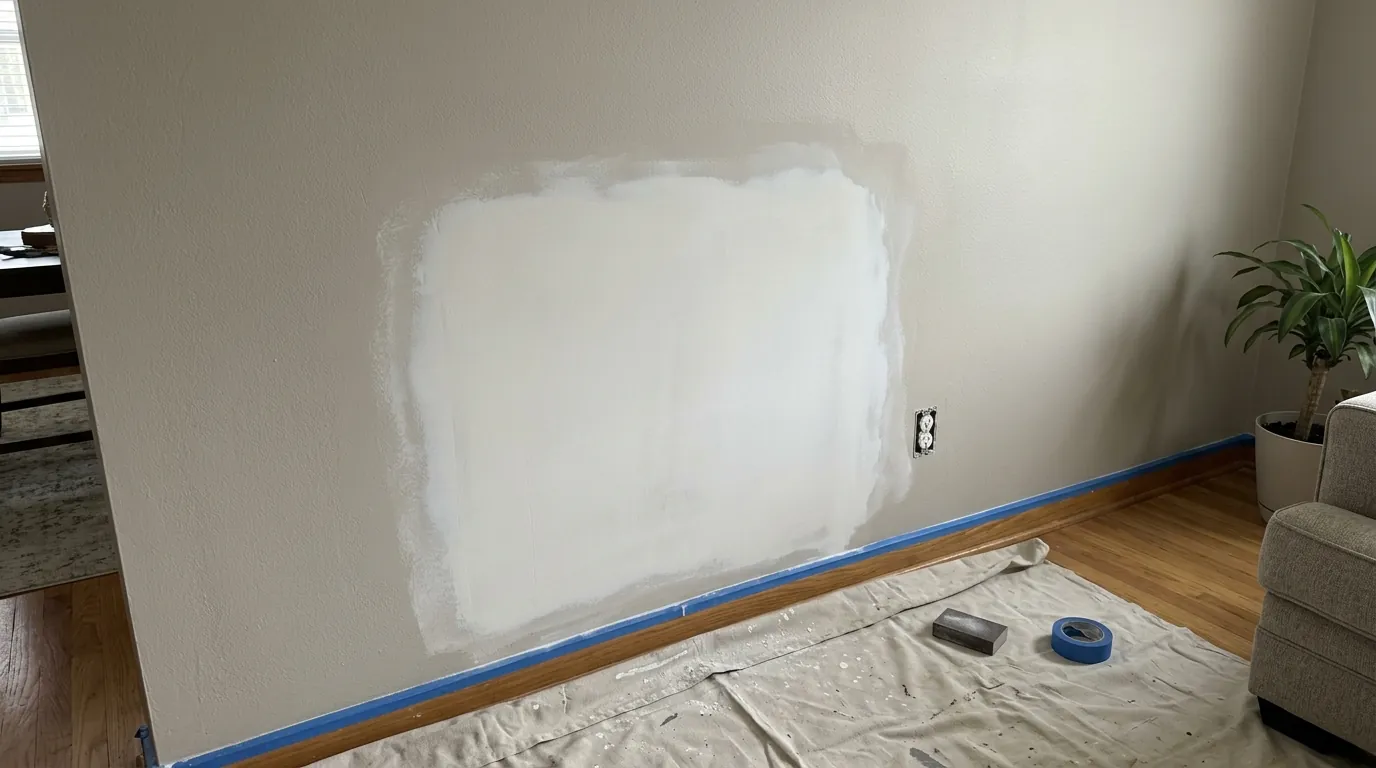
Drywall repair means cutting out or backing damaged sections, setting new drywall or mesh, taping and feathering joint compound in several thin coats, matching the surrounding texture, then priming and painting. In Sarasota homes it often follows a roof, window or air conditioning leak, so we check for moisture before patching.
Drywall is easy to damage and surprisingly hard to repair invisibly. A hole is simple to fill. Making that patch disappear under paint is the skill. It takes the right backing, several thin coats of compound feathered wide past the damage, sanding that leaves no ridge, texture that matches what surrounds it and primer that keeps the patch from flashing through the paint. Skip any of those and the repair shows as a bump, a halo or a smooth square on a textured wall every time light hits it.
We handle drywall repair as part of painting, which is why it matters to us. Patches done by someone else often get handed to us to paint over, and many of them need redoing first. When our crew does the repair, we control every layer from the backing to the finish coat. That covers small jobs like a few anchor holes, mid-size fixes like a doorknob through the wall, and larger sections where a leak softened the board and it has to be cut out and replaced.
Small anchor and nail holes are filled and sanded. Doorknob-size holes get a backed patch, and larger openings are cut square and fitted with new drywall screwed to blocking or framing.
Cracks along tape joints, above doors and at inside corners are opened, retaped with paper or mesh and feathered out, so movement does not reopen the same line again.
Fasteners that have backed out are reset or replaced with a screw nearby, then the spot is filled and sanded. Re-filling over a popped nail without resetting it never lasts.
Board softened or stained by a leak is cut out to sound material, the cavity is checked and dried, and new drywall is installed, taped and finished to match the wall.
Patched areas get the same knockdown, orange peel or smooth finish as the surrounding wall so the repair blends in, rather than sitting as a flat square in a textured field.
Fresh compound is primed so it does not absorb paint differently, then painted. Often we repaint the full wall corner to corner so color and sheen match exactly.
Water is behind a large share of the drywall repairs we see. Summer storms drive rain sideways into window frames and slider tracks, air conditioning condensate lines clog and overflow, and ducts sweating in hot attics drip onto ceilings below. The visible stain is usually only part of the damage, since wet drywall loses strength and can grow mold behind the paper. We check repair areas with a moisture meter, cut back to dry board and make sure the source has been fixed before closing anything up.
Construction style matters too. In block-and-stucco homes, interior drywall is often attached to furring strips on the masonry walls, so outside wall repairs behave differently from patches on wood-framed interior partitions. Newer homes built during busy periods sometimes show widespread nail pops and seam cracks as framing dries and settles. After hurricane season, many homes also need patching where shutters, anchors or storm panels were mounted inside. We match repair methods and materials to the wall you actually have in each room.
We look at the extent of each repair, check for moisture, find studs or furring and decide whether a fill, a backed patch or full replacement of a section is the right fix.
Damaged board is cut to clean straight edges, wood backing is added where needed, and a new piece of drywall is fitted and screwed tight, flush with the surrounding wall.
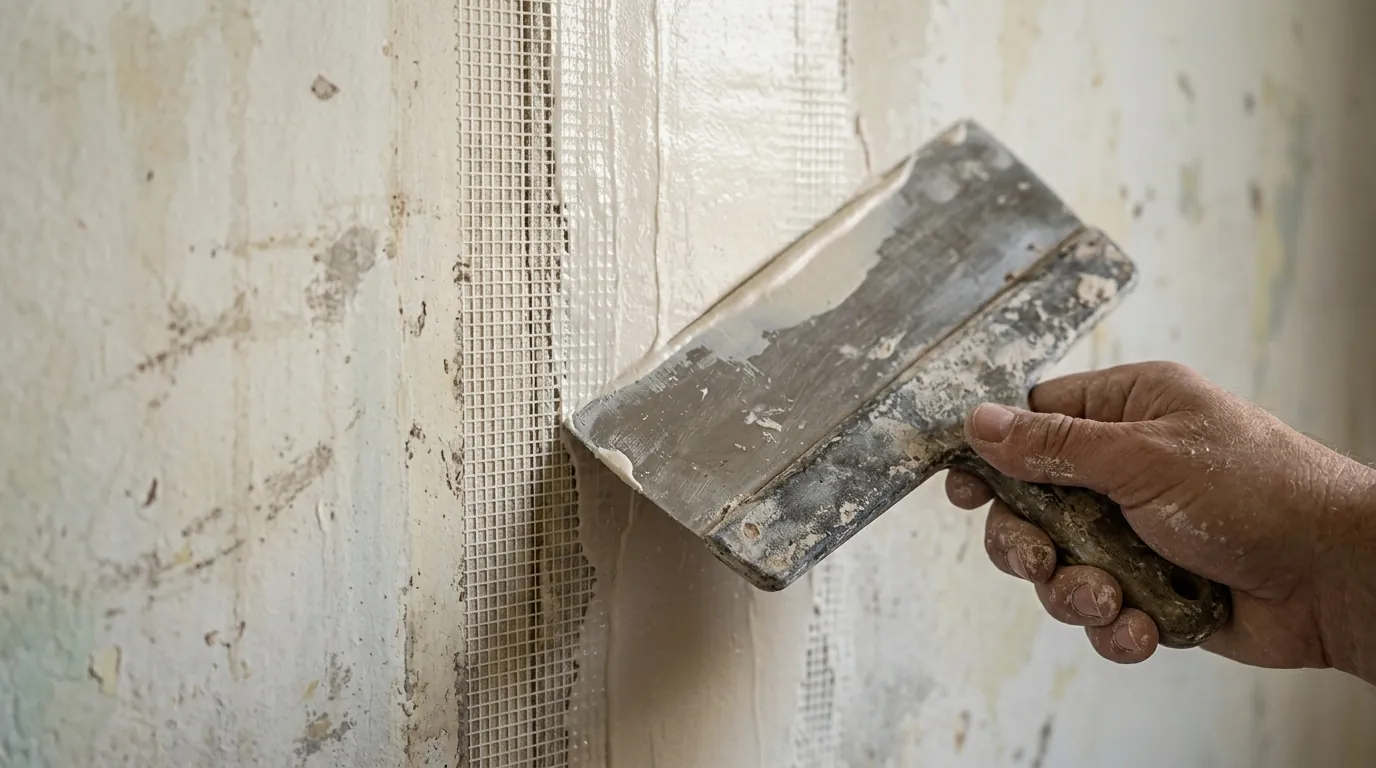
Joints are taped and covered with thin coats of compound, each one wider than the last, so the patch tapers smoothly into the wall instead of leaving a visible ridge.
Once dry, the patch is sanded flat and checked with a light. Then texture is sprayed or hand applied to match what surrounds it, and allowed to set fully.
Repairs get drywall primer so they do not flash, then finish paint. We usually paint the whole wall or ceiling plane so the repair blends in under any light.
We price drywall repair after seeing the job, and the written quote lists every item below that applies.
Call the office any hour and we will set a walk-through time.
In most cases, yes. Knockdown and orange peel are the most common textures in Sarasota homes, and we match them with spray equipment or hand tools, testing on scrap board first. Older hand-troweled or swirl finishes take more work, but they can usually be blended so the patch is hard to spot.
Corners above doors and windows move a little as the house heats, cools and settles. If a crack is just filled with compound, that movement splits it open again. A lasting fix means opening the crack, taping it with paper or mesh, feathering compound wide, then priming and painting the area.
Yes. Patching wet drywall traps moisture and invites mold. We need the source repaired first, whether it is a roof, a window seal or an air conditioning line. Then we confirm the area is dry, cut out any soft board and install new drywall before finishing and painting.
It is one of the most cost-effective steps you can take between tenants. Fixing holes, dents and loose corner bead before painting makes a unit show much better, and a properly repaired wall does not crack open again during the next lease the way quick spackle fills often do.
Knockdown, orange peel, skip trowel and smooth wall finishes recreated over patches and remodel areas so new work blends into the rest of the house.
Read moreWalls, ceilings and trim repainted with proper patching, primer where it matters and two even finish coats, one room or the whole house.
Read moreFlat, vaulted, tray and textured ceilings painted with stain blocking, full room protection and a uniform flat finish that hides small imperfections.
Read moreDrywall Repair is available across our whole service area, including: