Probe survey
We check fascia ends, door jamb bottoms, sills, corner boards and post bases with an awl, because rot starts inside and the paint film often looks intact over badly softened wood.
Soft, crumbling wood at the bottom of a door jamb or along the fascia lets water and insects into the house, and fresh paint over it fails within a season.
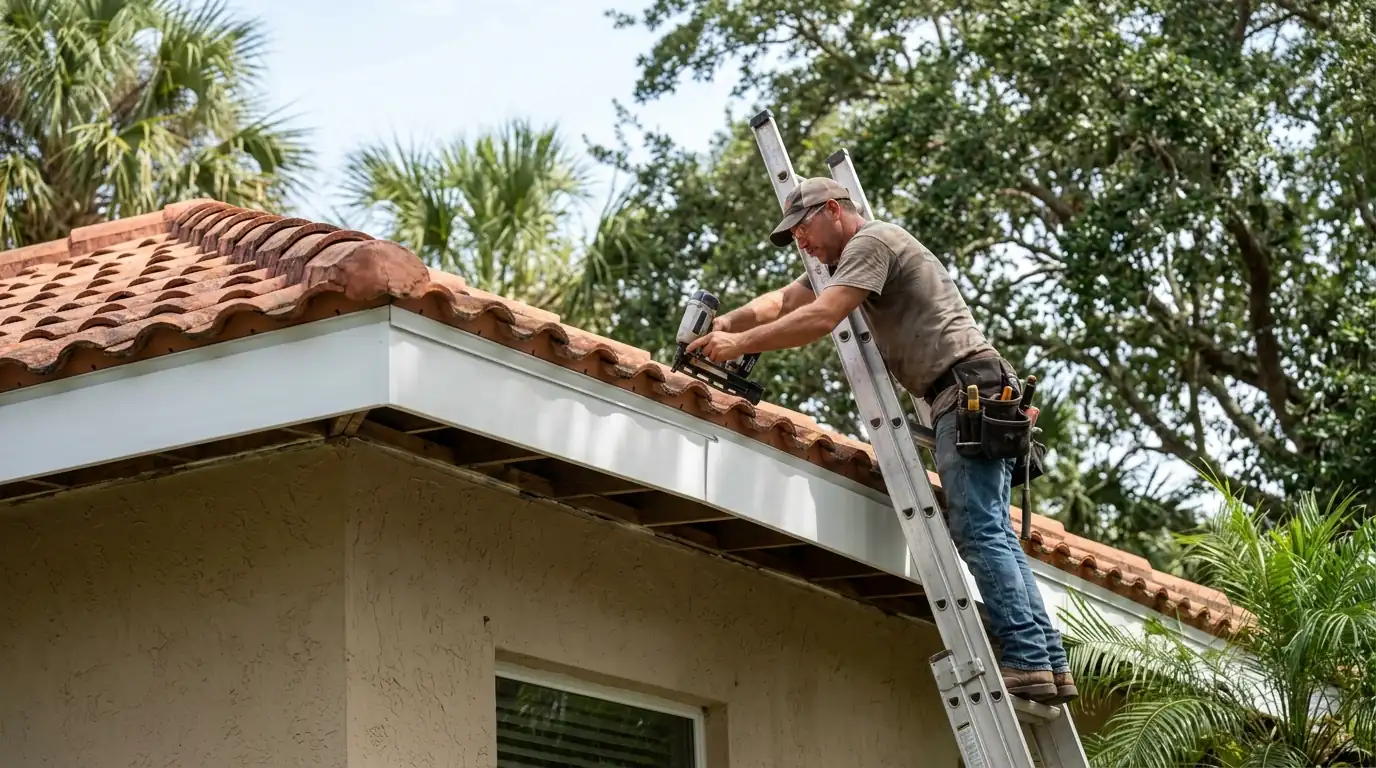
Wood rot repair means finding every soft section, cutting it back to sound wood, and either rebuilding small areas with epoxy or replacing longer runs with new material. On Sarasota homes we then seal the cut ends, caulk, prime and paint so the repaired trim matches the house and sheds rain properly.
Block-and-stucco houses still carry plenty of wood. Fascia boards, rake trim, exterior door jambs, garage door frames, window sills on older homes and lanai posts are commonly wood, and all of them sit where rain lands or splashes. Once paint fails at a joint, water soaks into the end grain, the wood stays damp in Sarasota's humidity, and decay fungi do the rest. By the time you can push a screwdriver in, the damage usually runs farther than it looks from the outside.
Painting over rot is the most common shortcut we get called to undo. It looks fine for a few months, then the paint blisters and the board softens underneath. Our approach is to probe every likely spot during the walk-through, mark what is soft, and give you a clear repair list before painting starts. Small pockets get an epoxy consolidant and filler. Longer runs get replaced, often with cellular PVC or treated lumber, which handles Gulf Coast moisture far better than the original pine did.
We check fascia ends, door jamb bottoms, sills, corner boards and post bases with an awl, because rot starts inside and the paint film often looks intact over badly softened wood.
For limited decay in shaped trim or historic profiles, we harden the remaining fibers with liquid epoxy, fill with a sandable epoxy putty and shape it so the original piece stays in place.
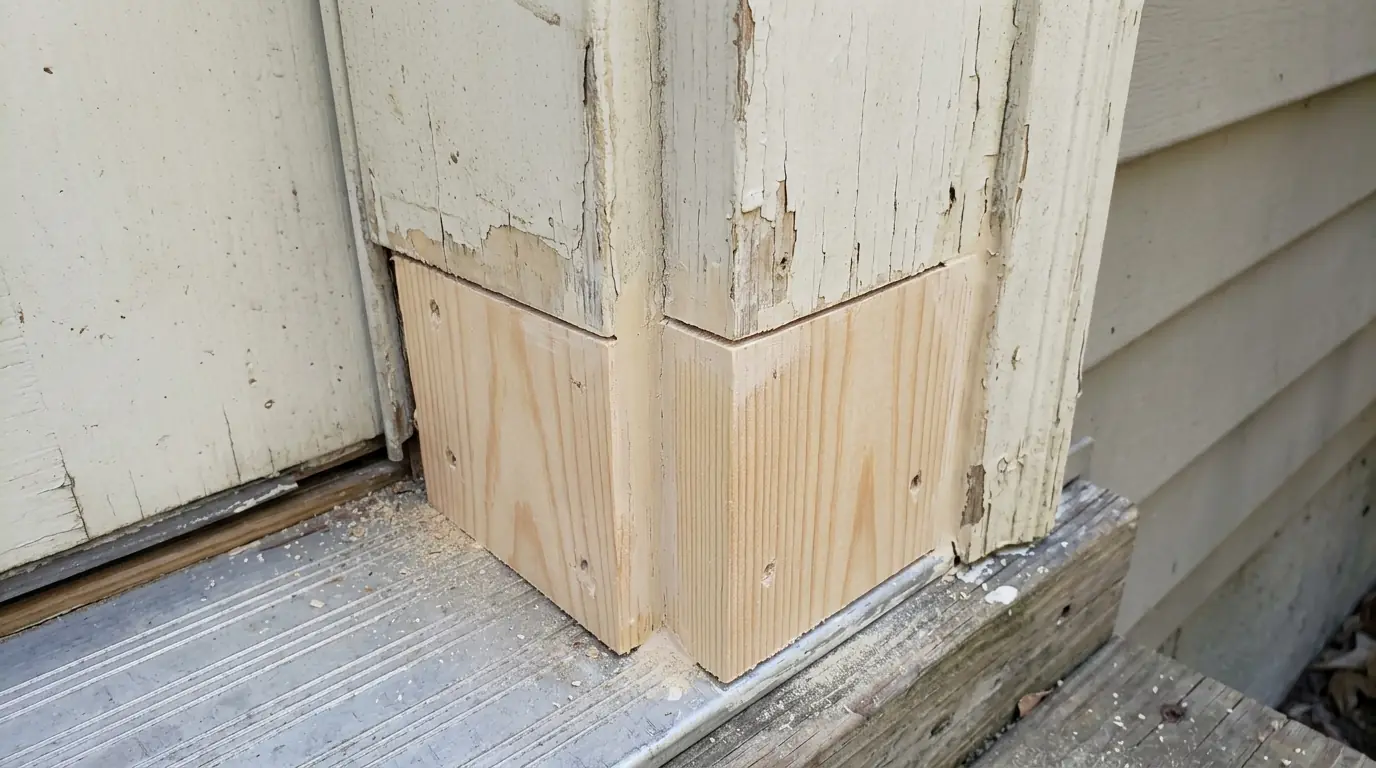
Where rot runs through a board, we cut back to solid wood and splice in a new section with angled joints that shed water, glued and fastened with corrosion-resistant hardware.
Replacement stock is typically cellular PVC for trim and fascia, or treated lumber where something carries load. Both hold paint well and resist the moisture that caused the original failure.
Every cut end is primed before installation, and joints are sealed with a paintable, flexible sealant so water cannot wick back into the new wood or the freshly repaired seams.
Repairs get an exterior primer and two finish coats in your existing color so repaired boards blend in, or we fold the work into a full exterior repaint if one is due anyway.
Wood rot needs moisture, warmth and time, and Sarasota supplies all three for most of the year. Relative humidity stays high through summer, nights cool enough for heavy dew soak horizontal surfaces, and daily storms keep fascia and door bottoms wet. Untreated pine trim, still common on homes built before builders switched to PVC, absorbs that water through any crack in the paint film and rarely dries out completely before the next rain. Shaded north sides and trim tucked behind dense landscaping are usually the worst spots on any house.
A few problem areas show up on house after house. Door jambs rot from the bottom where water runs off the threshold. Fascia rots behind gutters that overflow or at corners where roof runoff concentrates. Lanai and entry posts decay where they meet the slab and sit in splash water. On homes near the bays and barrier islands, wind-driven rain during hurricane season pushes water into joints that would stay dry farther inland. We point out the water source along with the rot itself, so the repair actually lasts.
We test every suspect area and mark the limits of soft wood with tape. You get a repair list showing where we plan to restore with epoxy and where boards need replacing.
Rotted wood is cut or chiseled back to solid material. On door frames, we often replace only the lower jamb section, keeping the sound upper frame and the door's alignment intact.
Small voids are consolidated and filled with epoxy, then shaped. Larger sections get new PVC or treated lumber cut to the original profile and fastened with stainless or coated screws.
We back-prime replacement pieces, seal end grain and caulk joints with a flexible paintable sealant, leaving drainage paths open where water needs to escape rather than trapping it inside.
Repairs are primed and given two finish coats. If the surrounding paint is old, we recommend painting the whole board or elevation so color and sheen match without visible patches.
We price wood rot repair after seeing the job, and the written quote lists every item below that applies.
Call the office any hour and we will set a walk-through time.
Often, yes. Rot in a door jamb usually starts at the bottom where water collects at the threshold. We cut out the decayed lower section, splice in a rot-resistant piece and seal the joint, leaving the upper frame and hinges untouched. If the rot has climbed high or reached the framing behind the jamb, a full frame replacement may make more sense.
For long, straight fascia boards, replacement with PVC or treated lumber is usually faster and more durable. Epoxy shines on shaped pieces, decorative brackets, historic trim on Mediterranean Revival homes and short pockets of rot where removing the board would disturb roofing or gutters. On many houses we end up using both methods in different spots.
Paint protects sound wood, but it cannot stop rot that has already started inside a board. Fungal decay keeps spreading as long as moisture is present, and sealing a soft board under fresh paint traps that moisture and usually speeds the damage. The rotted section has to be removed or consolidated first, then primed and painted.
Sometimes we uncover tunnels or droppings while removing decayed trim. We are painters, not pest technicians, so when we see signs of termites we stop work on that section, show you what we found and suggest having a pest control company inspect it before we close the area back up and paint.
Roof-edge fascia and eave soffits cleaned of mildew, repaired where soft, and repainted with a mildew-resistant finish that keeps attic vents breathing freely.
Read moreFull exterior repaints with pressure washing, crack and wood repair, primers matched to each surface and two coats of acrylic made for sun and salt air.
Read moreEntry doors of steel, fiberglass or wood sanded, primed and finished in a hard exterior enamel, with hardware protected and colors chosen to handle Florida sun.
Read moreWood Rot Repair is available across our whole service area, including: