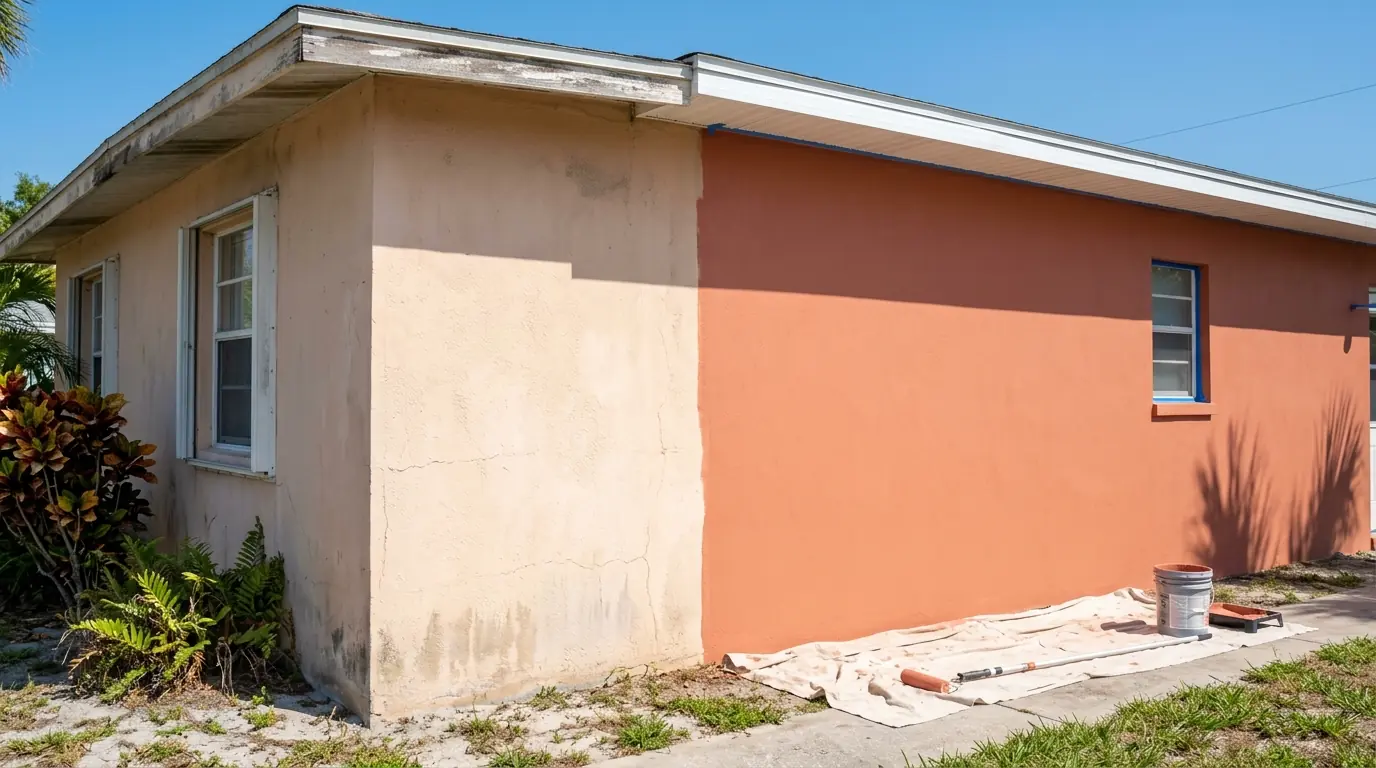
Most Sarasota exteriors need repainting somewhere in the five to ten year range, and that range is wide because exposure varies so much. South and west walls, waterfront homes and poorly prepped jobs land at the short end. Interiors usually last longer, often until wear, scuffs or a color change make the decision for you.
Why there is no single number
Homeowners ask us for one figure, and we understand why. A neat interval would make budgeting easy. The trouble is that two houses on the same Sarasota street can age at very different speeds. One sits under oaks with a deep roof overhang. The other faces west across an open lot and takes the full afternoon sun from March to November. Same paint, same year, same builder, and the second house can look tired years before the first. Exposure is the biggest variable, and it changes wall by wall, not just house by house.
The second variable is what happened before the last coat went on. A wall that was washed, dried, repaired and primed where needed will hold paint far longer than one that got a quick rinse and a single coat over chalk. When we look at a house, we are partly reading its history. Uniform fading usually points to plain age. Peeling in patches, bubbling near the ground or flaking around windows tells us something went wrong underneath, and repainting without fixing that will only reset the same problem on a shorter timer.
What shortens paint life on the Gulf Coast
Ultraviolet light does most of the damage. It breaks down the binder that holds pigment to the wall, and once that binder goes, color fades and the surface turns powdery. Our sun is strong year round, so there is no winter break for the paint film. Heat adds stress as stucco and wood expand and contract through the day. Then the afternoon storms arrive and soak everything, and the cycle repeats. A coating that would coast for a decade further north can be working much harder here.
Location matters within the county too. Homes on the barrier islands and along the bay deal with salt carried on the breeze, which settles on walls and pulls moisture into the film. Irrigation is another quiet culprit. A sprinkler head that hits the same patch of stucco every morning will wear that area out long before the rest of the wall. It is one of the easiest problems to fix once someone finally notices it.
- Full sun on south and west elevations
- Salt air on waterfront and island homes
- Sprinkler overspray hitting the same wall daily
- Roof runoff where there are no gutters
Signs the exterior is due
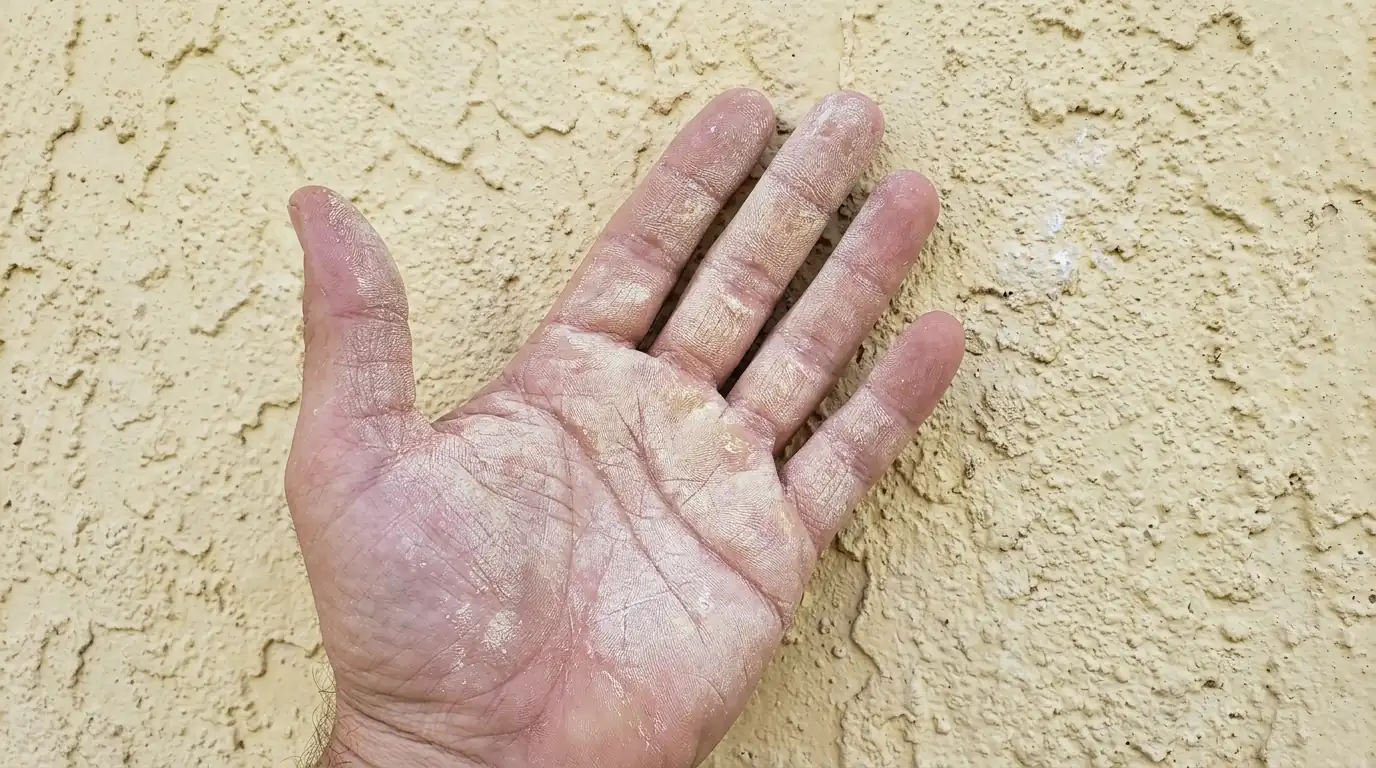
Run your palm across a sunny wall. If it comes away with a film of color, the paint is chalking, which means the binder has broken down. Light chalking is normal with age. Heavy chalking means the coating is near the end of its useful life and needs proper cleaning and a bonding primer before anything new goes on. Fading is the other obvious signal, and it is easiest to judge by comparing a wall that gets full sun with one tucked under the lanai roof.
Cracks deserve a closer look than color does. Hairline cracks in stucco are common and often cosmetic, but they let water reach the block behind. Wider cracks, or cracks that run in a stair pattern, should be looked at before painting. On trim and fascia, watch for paint lifting at joints and the bottom edges of boards, where water sits longest. If you push on soft wood with a screwdriver and it gives, the repair has to come before the brush.
- Chalky residue on your hand after touching the wall
- Noticeable fading between sunny and shaded sides
- Hairline cracks spreading across stucco
- Peeling at window sills, fascia joints and door bottoms
Interior rooms run on a different clock
Inside the house, sunlight is not the main enemy. Wear is. Hallways, kitchens, kids' rooms and the wall beside the garage door take bumps and fingerprints every day, and those spaces tend to need fresh paint well before a formal dining room or a guest suite that sits empty half the year. Ceilings can go a very long time unless there is a leak, cooking residue or smoke. Bathrooms are a special case because steam and poor ventilation can lead to peeling or mildew spots.
A good test for interiors is whether the wall still cleans. Quality paint in an eggshell or satin finish should handle a gentle wipe with a damp cloth. When cleaning starts to leave shiny patches, or marks simply will not come off, the finish has worn through and touch-ups will show. Color changes drive plenty of interior work too: many Sarasota home buyers like to repaint right after closing, and sellers often refresh tired rooms before listing the house.
Trim, doors and metal need attention sooner
The body of a stucco house is forgiving. Wood trim, front doors, shutters and metal railings are not. They are thinner, they move more with heat and moisture, and they often face direct weather with no overhang. A front door that faces west can look worn in a few years even when the walls around it still look fine. Garage doors take a beating from sun and from cars brushing past. These smaller items are worth checking every year, not just when the whole house is due.
Painting trim and doors between full repaints is a sensible way to keep a house looking cared for without repainting everything. The trick is matching the existing color and sheen, so we always ask whether leftover paint from the last job is still around and labeled. Metal is the other early warning area. Rust bleeding from railings, light fixtures or fasteners spreads quickly in salt air, and catching it while it is still surface rust keeps the repair small and keeps stains off the stucco below.
- Front and side doors facing south or west
- Fascia boards and the soffit edge under the gutters
- Garage doors and their trim
- Metal railings, gates and exposed fasteners
How to stretch the time between repaints
A gentle wash every year or two does more for paint life than most people expect. Dirt, salt and mildew spores hold moisture against the film. Low pressure with the right cleaning solution removes them without driving water into stucco cracks or stripping soft paint. High pressure aimed carelessly can do real harm, so be cautious with rented machines. While the house is clean, it is easy to spot the small things: a failed caulk joint at a window, a crack near a hose bib, rust starting at a railing.
Fix those small items promptly and the big job can wait longer. Re-aim sprinkler heads away from walls. Trim shrubs so they do not rub against paint or trap damp air. Keep gutters clear so water does not sheet over fascia. None of this is complicated, and it costs very little next to a full repaint. When the time does come, give us a call and we will walk the house with you, show you what we see on each side, and quote the work after that visit.