Crack assessment
We map every crack on the house, note width, direction and whether it looks active, and separate cosmetic shrinkage from anything showing structural movement that needs a professional opinion before we patch.
A crack in your stucco is more than a cosmetic line. It is an open channel for summer rain to reach the block, rust metal lath and push stains through interior walls.
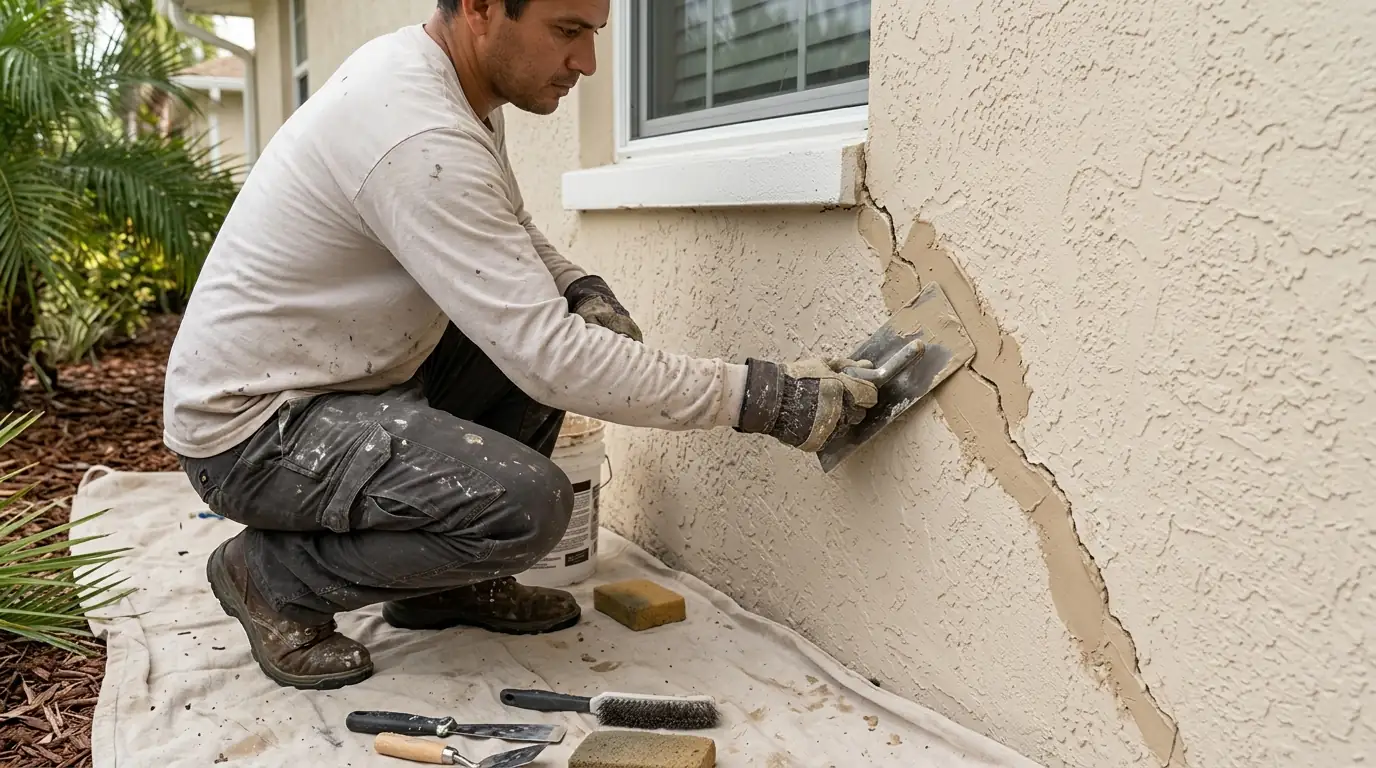
Stucco crack repair means opening each crack enough to accept patching material, filling it with a flexible compound or stucco mix, then rebuilding the surface texture so it blends with the wall. On Sarasota homes we finish by priming every patch so the new paint dries evenly and the repair stays invisible.
Not every crack means the same thing. A spiderweb of hairlines across a wall is usually surface shrinkage in the stucco itself. A diagonal crack running from the corner of a window is stress concentrating at an opening. A straight vertical or horizontal line often follows a block joint or the seam where an addition meets the original house. Each gets a slightly different repair, and reading the pattern correctly is most of the job.
What goes wrong with quick fixes is easy to spot on any street. A bead of caulk smeared over a crack leaves a shiny worm line that shows through paint forever. Patch compound troweled flat on a sand-finish wall looks like a bandage. Our painters fill each crack with a material suited to its movement, then rebuild the texture with sponge, brush or trowel until the repair reads as part of the wall. If a crack suggests the structure itself is moving, we stop and recommend an engineer look first.
We map every crack on the house, note width, direction and whether it looks active, and separate cosmetic shrinkage from anything showing structural movement that needs a professional opinion before we patch.
Narrow cracks are lightly routed into a shallow V so the filler can key into sound stucco. Without this step, patch sits on the surface and pops loose after the first few heat cycles.
Moving cracks get an elastomeric patching compound that stretches with the wall. Static, wider gaps may be filled with a cement-based stucco patch built up in layers so it cures without shrinking.
We recreate the existing finish, whether sand float, knockdown, lace or smooth, so the patch does not show as a flat stripe once the wall is painted and the low afternoon sun rakes across it.
Stucco that sounds hollow when tapped or has pieces breaking away gets cut back to sound material, edges are treated, and the area is rebuilt properly rather than skimmed over.
Every patch gets a masonry primer before finish paint. Fresh cement patch is alkaline and porous, and skipping primer leaves dull, blotchy squares visible through the topcoat for years.
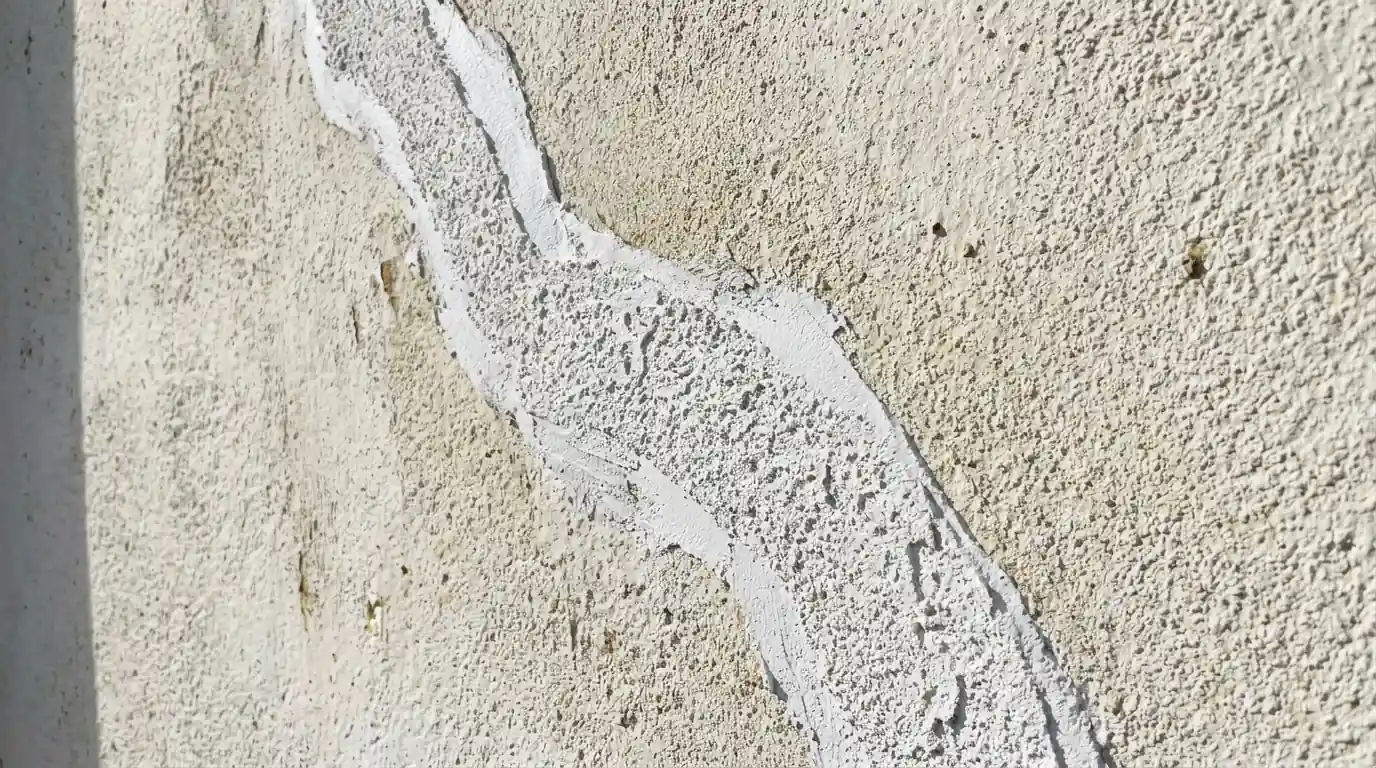
Sarasota's sandy soils, long dry winters and soaking wet summers make houses move a little every year. Slabs settle, block walls flex with heat, and stucco, which is hard and brittle once cured, reacts by cracking at its weakest points: window and door corners, control joints that were never cut, and the line where a garage or lanai was added. Many homes from the region's big building decades show the same window-corner diagonals on almost every elevation, a pattern we see so often we look for it first.
Weather then turns small cracks into bigger problems. Afternoon storms from June to September drive water into every opening, and on barrier island and bayfront homes that water carries salt. Where stucco was applied over metal lath on frame sections, such as some gable ends and second-floor additions, moisture can rust the lath and make the stucco bulge or delaminate. We check those areas closely, because patching over rusted lath only hides the problem until the next hurricane season pushes rain back in.
Cracks hide under mildew and dirt. A gentle wash reveals every line, removes growth from inside the crack and gives patching materials a clean, sound surface to bond to.
We walk each elevation, flag cracks with tape and sort them into hairline, moving and structural concern. You see the map before repairs begin, so nothing on the bill comes as a surprise.
Cracks are opened, dust is brushed out and filler is pressed in firmly. Wider repairs are built up in layers, letting each one cure in the humidity before the next layer goes on.
Once the fill has set, we match the texture with the same tools the original plasterer likely used, then let the patch cure fully, which can take a few days for cement-based material.
Patches are primed, then the wall is painted or coated. For houses with ongoing movement, we often suggest an elastomeric topcoat so new hairlines stay sealed between paint cycles.
We price stucco crack repair after seeing the job, and the written quote lists every item below that applies.
Call the office any hour and we will set a walk-through time.
Cracks wider than a coin's edge, cracks that keep widening month to month, stair-step patterns through block, or cracks paired with sticking doors and sloping floors can point to foundation movement. We do not diagnose structure. When we see those signs, we pause the stucco crack repair and suggest an engineer evaluate the house before anything is patched or painted.
Yes, but expect the patch to show unless it is primed and the wall is painted at least corner to corner. Even an exact color match looks different over fresh patch because texture and sheen change. Many owners repair now and repaint the affected elevation, then handle the rest of the house on their normal repaint cycle.
Caulk alone sits on the surface while the crack keeps moving, so the bead either tears or pulls loose from dusty edges. Proper stucco crack repair opens the crack so filler keys into solid stucco, uses a patch that suits the movement, and adds primer and a flexible topcoat. That combination is what keeps a line from reappearing next summer.
Patching itself is often done in a day or two, but cement-based fills need several days to cure before primer, and humid weather slows that further. For a full house with repairs and repainting, we plan the schedule so patches cure while the crew handles washing, masking and trim work on the other sides.
Stucco walls washed, cracks repaired, patches primed and coated in breathable acrylic or crack-bridging elastomeric suited to Sarasota sun and rain.
Read moreThick, flexible wall coating that bridges hairline stucco cracks and keeps Gulf Coast storm rain out of block walls, applied over properly prepped and primed surfaces.
Read moreFull exterior repaints with pressure washing, crack and wood repair, primers matched to each surface and two coats of acrylic made for sun and salt air.
Read moreStucco Crack Repair is available across our whole service area, including: