Baseboards and shoe molding
Baseboards are cleaned, sanded, filled and caulked at the top edge. Floors get tape and paper protection so the enamel can be cut cleanly along tile, wood or vinyl.
Baseboards scuffed by vacuums and shoes, casings with gaps at the corners and yellowed white trim make freshly painted walls look unfinished.
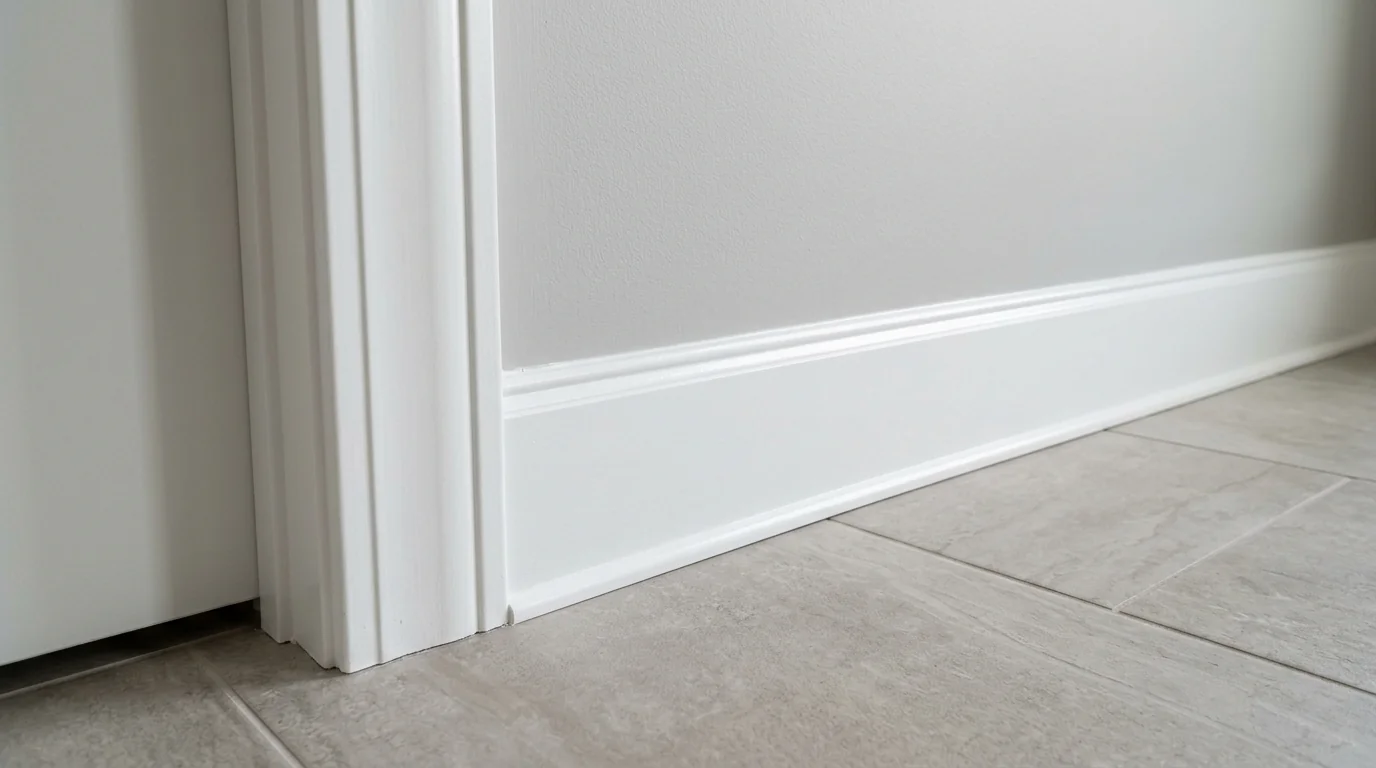
Trim and baseboard painting means cleaning and scuff sanding the woodwork, filling nail holes and dents, recaulking gaps where trim meets walls and floors, priming bare spots, then brushing two coats of durable enamel. In Sarasota we choose waterborne enamels that resist yellowing and stand up to humidity and daily cleaning.
Trim takes more abuse than any other painted surface inside a house. Vacuum heads hit baseboards daily, kids and pets scuff them, and door casings collect fingerprints at hand height. Older oil-based white trim also yellows with age, especially in rooms with less sunlight, so the trim starts looking cream next to fresh white ceilings. Repainting woodwork is slow, detailed brush work, and it is the part of a paint job that most clearly separates careful painters from fast ones.
We approach trim as a finishing trade. Gaps between baseboard and wall are caulked so the line looks solid, nail holes are filled and sanded flush, and dents in the edge of the wood are filled rather than painted over. Old oil-based trim gets a bonding primer, since latex enamel will peel off a glossy alkyd surface. The finish coats are brushed with quality brushes so the enamel lays out smooth and level, and floors are protected with tape and paper so the bottom edge stays clean.
Baseboards are cleaned, sanded, filled and caulked at the top edge. Floors get tape and paper protection so the enamel can be cut cleanly along tile, wood or vinyl.
Casings are degreased at hand height, open miter joints are filled, and gaps against the wall are caulked so each opening reads as one clean frame.
Crown is painted from ladders or planks with careful cut lines at the ceiling and wall, and separated joints and nail holes are filled before the first coat goes on.
Sills catch condensation and sun, so they are sanded, spot primed and finished in a hard enamel. Any soft or swollen spots are pointed out for repair first.
We test existing trim to see whether it is oil or latex. Oil-based trim is scuffed and primed with a bonding primer so the new waterborne enamel stays put.
A satin or semi-gloss waterborne enamel goes on in two brushed coats. It levels well, resists yellowing, and stands up to scrubbing far better than wall paint.
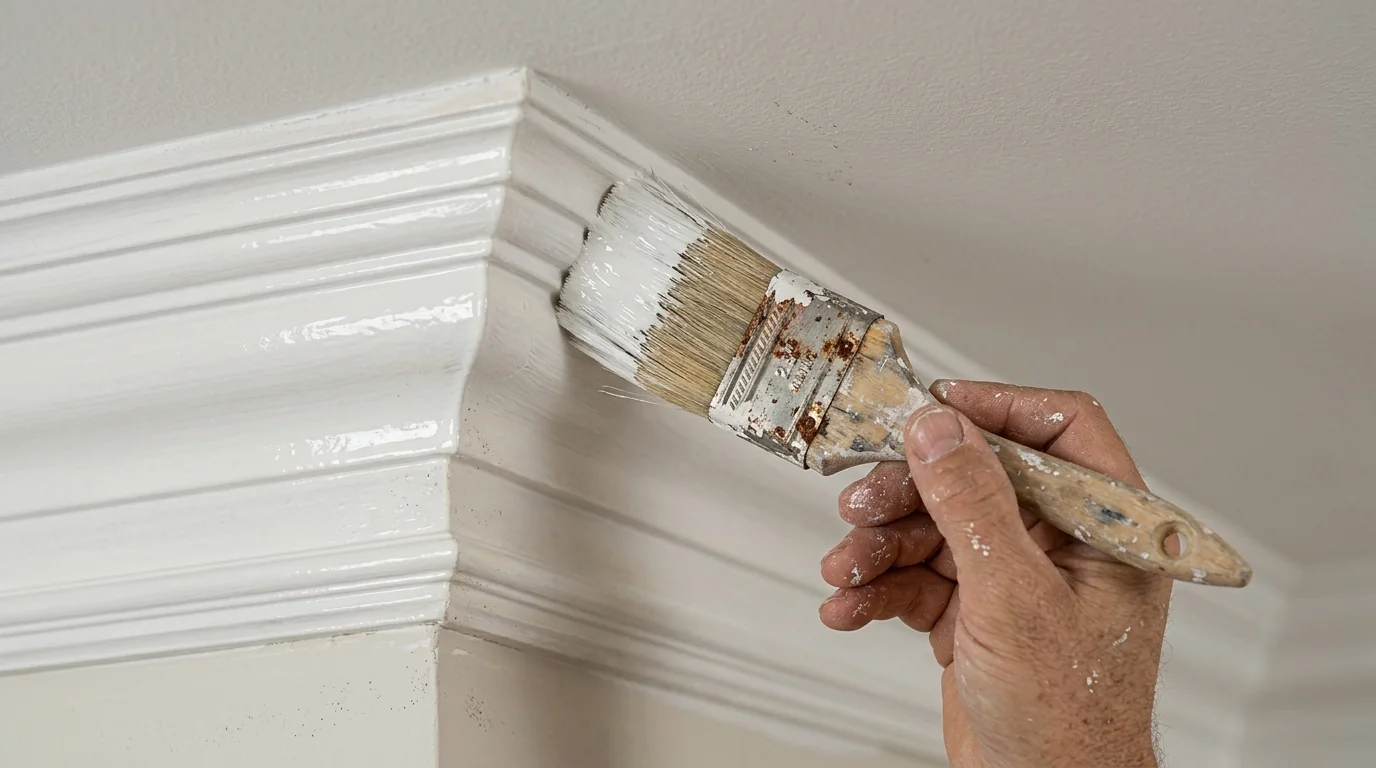
Florida homes put trim through a lot of moisture. Window sills and the bottom of door casings near sliders pick up condensation when cool indoor air meets humid outside air, and baseboards along tile floors get wet every time the floor is mopped. Over the years, joints open and paint lifts at the bottom edge. We check the lower edges of casings and baseboards for swelling or soft wood, especially near exterior doors and in bathrooms, and handle repairs before painting.
Yellowing is the other big issue here. Many Sarasota homes built through the 1990s have oil-based trim that has slowly turned amber, especially in shaded rooms and behind furniture. Painting right over it with latex leads to peeling, so we test, scuff and prime first. In mid-century and Mediterranean Revival houses, the original wood trim may have detailed profiles that deserve careful brushing instead of heavy coats that fill the detail. On those homes we also ask whether you want any stained woodwork left as is.
We test whether the existing trim is oil or latex, then wash the woodwork to remove dust, grease and cleaning residue that would stop new enamel from bonding.
Woodwork is scuff sanded, nail holes and dings are filled, and gaps along the wall and floor are caulked with a paintable caulk so every line looks tight.
Bare wood, filled spots and old oil-based enamel get the right primer. Bonding primer goes over glossy oil paint so the new topcoat does not peel off.
Enamel is brushed in long smooth strokes along the grain, with floors taped and covered, and cut lines kept sharp along walls, ceilings and flooring.
After drying and a light sanding, the second coat goes on. We then inspect the trim with a light, touch up any misses and remove tape before the enamel fully hardens.
We price trim & baseboard painting after seeing the job, and the written quote lists every item below that applies.
Call the office any hour and we will set a walk-through time.
Trim is all edges and detail. Every board needs cleaning, sanding, filling, caulking and two brushed coats, with careful lines against walls and floors. A roller covers a wall in minutes, but a room of baseboards and casings is slow handwork. That care is what makes trim look crisp instead of drippy.
Not directly. Latex over glossy oil paint tends to peel, sometimes in long strips. We test the trim first. If it is oil-based, we degrease, scuff sand and apply a bonding primer, then finish with a waterborne enamel that stays white and does not yellow the way old oil paint does.
Semi-gloss is the classic choice because it is tough and easy to wipe, and it gives a crisp contrast against matte or eggshell walls. Satin is softer and hides small imperfections in older wood. Either way, we use an enamel designed for trim rather than ordinary wall paint.
Yes, many Sarasota homeowners do just the trim when walls are still in good shape. We cut in carefully along the wall, and if a little wall paint is disturbed while caulking, we touch it up with your existing color if you have leftover paint or we can match it.
Panel, flat and louvered interior doors cleaned, sanded, primed and finished in a smooth hard enamel, with hardware removed and edges sealed.
Read moreWalls, ceilings and trim repainted with proper patching, primer where it matters and two even finish coats, one room or the whole house.
Read moreHandrails, balusters, newel posts, risers and stringers sanded, primed and finished in hard enamel, with the stairs kept usable during the job.
Read moreTrim & Baseboard Painting is available across our whole service area, including: