Cleaning and brightening
Wood is washed with a cleaner that removes mildew and graying. A brightener can restore the wood's color before staining. Metal fences are washed to remove chalk and salt.
A gray, mildewed or peeling fence makes a well-kept yard look neglected, and unsealed wood fences crack, warp and rot quickly in Sarasota's wet summers.
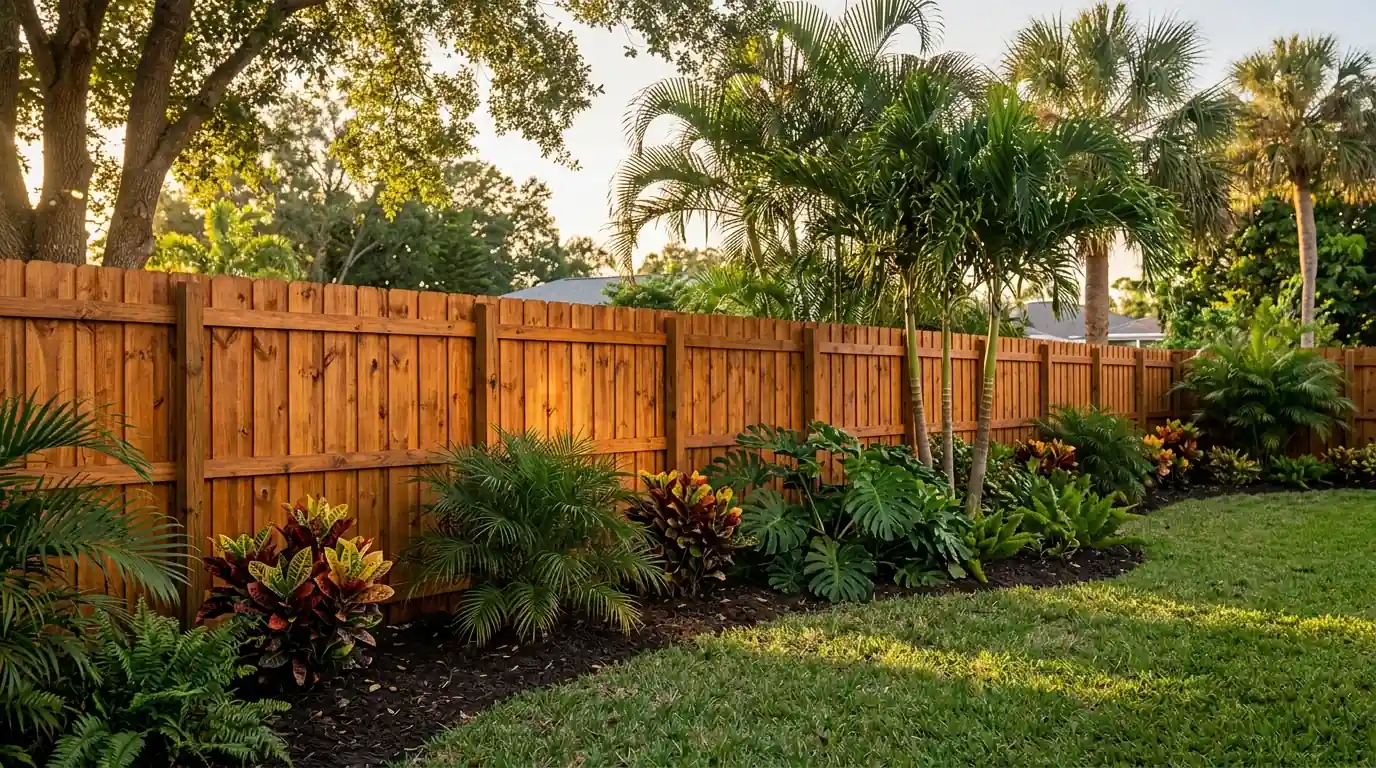
Fence painting and staining means cleaning off mildew and graying, making minor repairs, then applying a penetrating stain or exterior paint to every board. On Sarasota fences we choose products suited to the wood or metal and pay close attention to post bases and bottom rails where moisture collects.
Fences take more weather than most surfaces on a property. They stand in full sun, get hit by sprinklers twice a day, sit in splash water from summer storms and back onto shaded side yards where mildew grows fast. Untreated pine and cedar turn gray within a season or two, then start to check, cup and split. Painted fences peel at the bottom first, where the boards stay damp. Aluminum fencing near the coast chalks and pits at the welds.
The first decision is paint or stain. Stain soaks into wood and wears away gradually, so recoating is simple and there is little peeling. Paint gives a solid, uniform color and covers mismatched boards, but it needs more careful prep each time. We look at the wood, the condition of the old finish and the look you want, then recommend one approach. Aluminum and other metal fences get a cleaning, light sanding and a coating made for metal.
Wood is washed with a cleaner that removes mildew and graying. A brightener can restore the wood's color before staining. Metal fences are washed to remove chalk and salt.
Loose boards are refastened with exterior screws, popped nails are reset and small broken pickets can be replaced. Larger structural repairs like leaning posts are flagged separately.
Shrubs, flower beds and lawn edges are protected with drop cloths and plastic. We also cover nearby walls, cars and the neighbor's side of the fence when needed.
Semi-transparent stain shows the wood grain, solid stain gives an opaque color and paint gives the most uniform look. We help you choose based on condition and maintenance.
We coat both faces when access allows, plus tops of boards, rails and post caps. End grain at the bottom of pickets gets extra attention since it absorbs the most water.
Aluminum and iron fences are sanded at rust or chalky spots, primed with a metal primer where bare, and finished with a coating built for exterior metal.
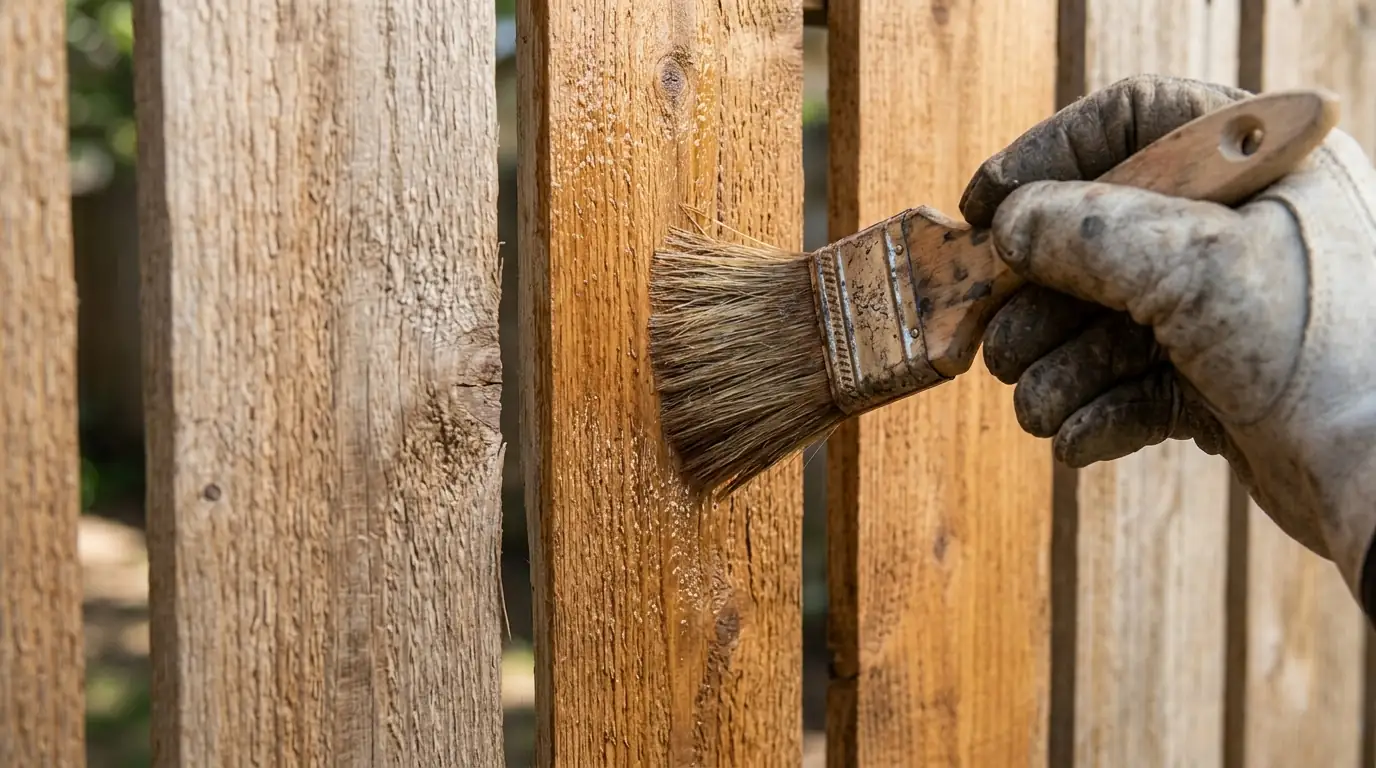
Wood fences here face a punishing cycle. Intense UV breaks down the surface fibers, which is what turns new pine gray, while summer afternoon storms and daily sprinkler cycles keep the bottom of each picket wet. Many fences sit next to irrigated lawns, and sprinkler water with iron content can leave orange stains on the lower boards. Without a protective coat, boards check and warp, and the bottom ends rot where they meet the soil or mulch. Shaded side-yard runs also grow mildew that dulls any finish within a season.
Coastal properties add salt air, which speeds corrosion of fasteners in wood fences and attacks aluminum fencing at welds and joints. Pool fences, required around many backyard pools, take chlorine splash too. Many neighborhoods in Sarasota also have HOA guidelines for fence colors and stain types, so we check whether your community has an approved list. When a neighbor shares the fence, we talk through access to the other side before scheduling. Rust from old nails and sprinkler water is treated before coating so it does not bleed through.
We check the material, old finish, damaged boards and access to both sides. You choose paint or stain and a color, and we note any posts that need structural work.
The fence is cleaned with a wood or metal cleaner, rinsed gently and left to dry. Wood needs to be dry enough to absorb stain, which can take a day or two.
Boards are refastened, nails reset and loose paint scraped. Metal fences get rust spots sanded and primed. Plants, pavers and nearby walls are covered before coating.
Stain is brushed or sprayed and back-brushed into the wood. Paint is rolled and brushed. We work from the top down, one section at a time, so drips are caught and blended before they dry.
We walk the fence line checking coverage, especially at rails, post bases and picket ends, touch up any thin spots and remove all protection from plants and walls.
We price fence painting & staining after seeing the job, and the written quote lists every item below that applies.
Call the office any hour and we will set a walk-through time.
Stain usually lasts better on wood fences here because it soaks in and wears gradually rather than peeling. It also makes recoating simpler. Paint gives a uniform color and hides mismatched boards, but it needs more prep each time it is redone. We look at your fence's wood and condition before recommending one.
New pressure-treated lumber is often too wet to accept stain right away. In Sarasota's humidity, it may need several weeks to dry out enough. We can test the wood's moisture and absorption. Cedar and some kiln-dried woods may be ready sooner. Staining too early leads to poor absorption and blotchy color.
Yes. Aluminum pool fences chalk, fade and sometimes corrode near welds, especially close to the coast. We clean off chalk and salt, sand any corroded spots, prime bare metal and apply a coating made for exterior metal. Gates are checked afterward to make sure self-closing hinges and latches still work properly.
We do need access to the neighbor's yard to coat their side. It is a good idea to talk with them first. Some neighbors are happy to have their side refreshed too. If access isn't possible, we coat your side and the top edge, and we keep overspray and drips off their property.
Wood docks, decks and boardwalks cleaned, brightened and sealed with penetrating stain that resists UV, salt spray and the daily soak of summer rain.
Read moreSoft washing for stucco, tile roofs and lanai screens plus rotary surface cleaning for pavers and pool decks, for upkeep or as prep before painting.
Read moreRust removal, metal-specific primers and hard enamel finishes for steel, wrought iron and aluminum railings on balconies, stairs, porches and pool areas.
Read moreFence Painting & Staining is available across our whole service area, including: