
A good painting quote names every surface included and excluded, writes out the prep and repairs, lists the products, sheens and number of coats, explains how floors, plants and the pool will be protected, covers daily cleanup, and gives a realistic schedule. If those details are missing, you cannot compare one quote to another.
Scope: every surface named
The first job of a quote is to say exactly what is being painted. For an interior, that means room by room, with walls, ceilings, baseboards, door casings, window trim and doors each listed or clearly excluded. For an exterior, it means stucco walls, fascia, soffits, the front door, the garage door, shutters, railings and any lanai or pool cage surfaces. Vague wording like paint exterior of house leaves room for very different ideas of what that includes.
Exclusions matter just as much. A quote that leaves out the lanai ceiling, the inside of the garage door or the closets is not wrong, but you should see that in writing before work starts. Comparing two quotes only works when they cover the same surfaces. If one painter includes trim and doors and another does not, the gap between the two numbers may come down to scope rather than quality or value. Anything missing can be added or struck out in writing before you sign.
- Each room or elevation listed by name
- Walls, ceilings, trim and doors called out separately
- Exterior extras such as soffits, shutters and railings
- A clear list of what is not included
Prep written out, not implied
Prep is where good paint jobs and short-lived ones part ways, and it is also the easiest place for a quote to cut corners without you noticing. On a Sarasota exterior, look for pressure washing, mildew treatment, scraping loose paint, sealing hairline stucco cracks, caulking gaps around windows and doors, and spot priming bare or repaired areas. Inside, look for patching nail holes and dents, sanding glossy surfaces, caulking trim joints and priming stains or new drywall.
If a quote simply says includes prep, ask what that means. A painter who intends to wash and paint without sealing cracks or priming bare stucco may come in lower, but the paint will not last as long. You do not need to become an expert. Ask each painter to describe their prep steps for your walls, and compare the answers side by side. The level of detail you get back tells you a lot.
- Washing and mildew treatment
- Scraping and sanding loose or glossy paint
- Crack sealing, caulking and patching
- Spot priming bare, repaired or stained areas
Repairs and how surprises are handled
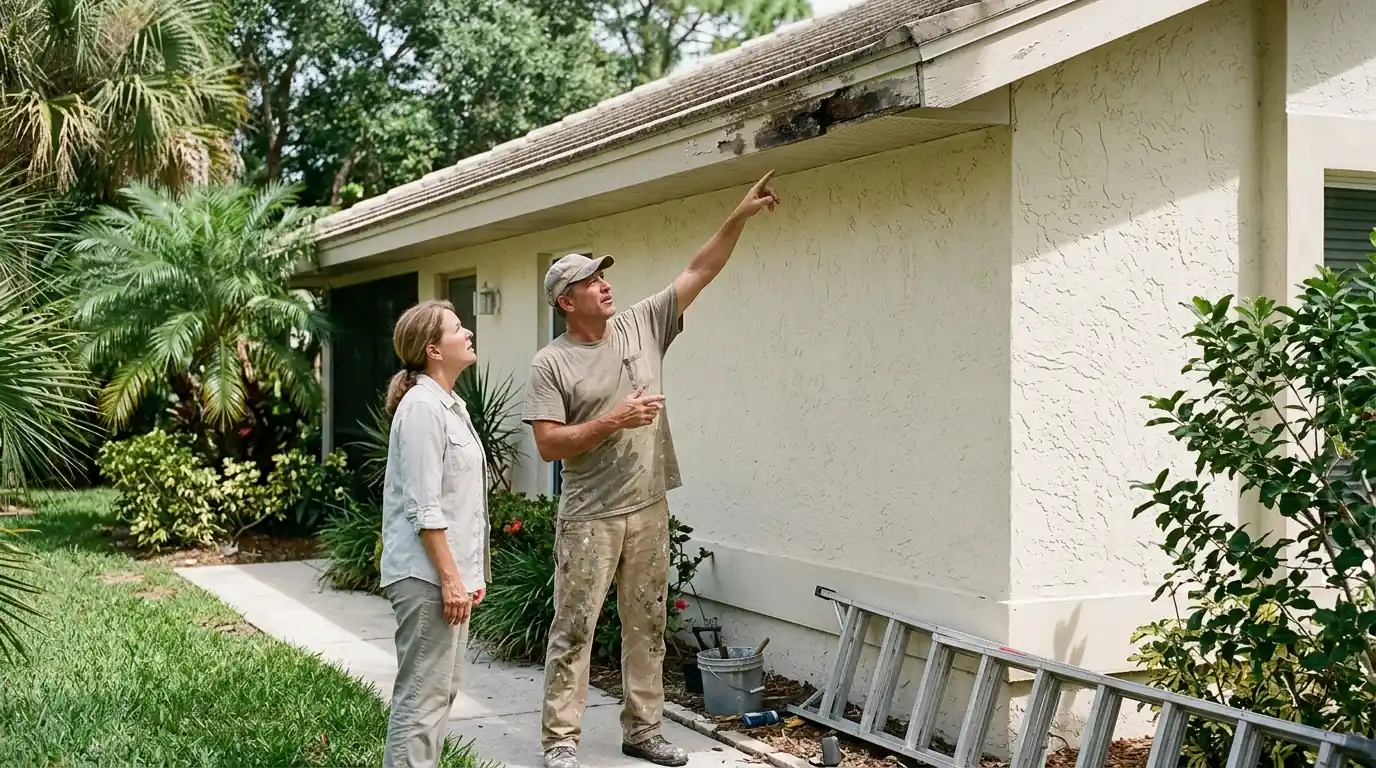
Some repairs are visible during the walk-through, such as cracked drywall, a soft fascia board or a dented garage door panel. Those should be listed with a description of the fix. Others only appear once work begins, especially rotted wood hidden behind old paint and caulk. A good quote explains what happens when that comes up: the crew stops, shows you the problem, explains the repair, and gets your approval before going ahead. Each listed repair should say whether it means a patch, a partial replacement or a whole new board.
Watch for quotes that say nothing about hidden damage at all. It is not a sign of honesty that a painter promises no surprises on a thirty year old house, and it can lead to tension mid-job. A clear process, written into the quote, protects both sides. You stay in control of extra work, and the painter is not left guessing whether to patch around a problem or fix it properly. It also helps to know in advance how added work will be priced.
Products, colors and coats
A quote should name the product line for each surface, not just say premium paint. It should also list the sheen for walls, ceilings and trim, and the primer to be used where needed. Different product lines from the same maker can vary widely in durability, mildew resistance and coverage, so two quotes that both say exterior acrylic may not describe the same coating at all. Asking for the specific product lets you compare like with like.
The number of coats deserves its own line. Two finish coats are common on most surfaces, and a dramatic color change or a bare stucco patch may need more. If a quote says one coat or does not say at all, ask. Colors should be confirmed in writing too, along with who chooses them and whether sample patches are included. That small step heads off the most common disagreement on painting jobs. Check, too, whether trim and doors get the same number of coats as the walls.
Protection, cleanup and the site
Paint gets everywhere if nobody plans for it. A thorough quote explains how floors, furniture, countertops and fixtures will be covered indoors, and how windows, roofs, plants, pavers, pools and cars will be protected outside. On a Sarasota property with a pool cage or lanai, that includes screen panels and pool water. You should also see whether the crew moves furniture, and whether anything needs to be moved by you before they arrive. Ladder placement against cage frames and gutters is worth a sentence as well.
Cleanup should be written in, both daily and at the end. Daily cleanup keeps the house livable while the work goes on. Final cleanup covers removing masking, hauling away debris and empty containers, and leaving leftover paint labeled for future touch-ups. A final walk-through with you, to point out any misses before the crew leaves, is a sign of a painter who expects to stand behind the work. The quote can also say where brushes and rollers get rinsed, since that water should never run into a storm drain or garden bed.
- Floor, furniture and fixture covering indoors
- Plants, pools, screens and vehicles protected outside
- Daily cleanup and final debris removal
- Leftover paint labeled and a final walk-through
Schedule, terms and comparing quotes
A quote should give a realistic start window and an estimated length, along with working hours and how weather delays are handled. In Sarasota summers, afternoon storms often cut exterior days short, so a schedule that ignores rain is a warning sign. Payment terms should be clear and tied to progress, with the final payment due after the walk-through. For homes built before 1978, ask how the crew will handle possible lead paint using lead-safe work practices.
When you lay quotes side by side, read the scope, prep and products before you look at the bottom line. The lowest number often reflects fewer coats, lighter prep or a missing surface. If a detail is unclear, ask the painter to add it in writing. We are happy to walk through our own quote line by line, so give us a call if you would like to compare. Painters who welcome those questions are usually the ones who planned the job properly.