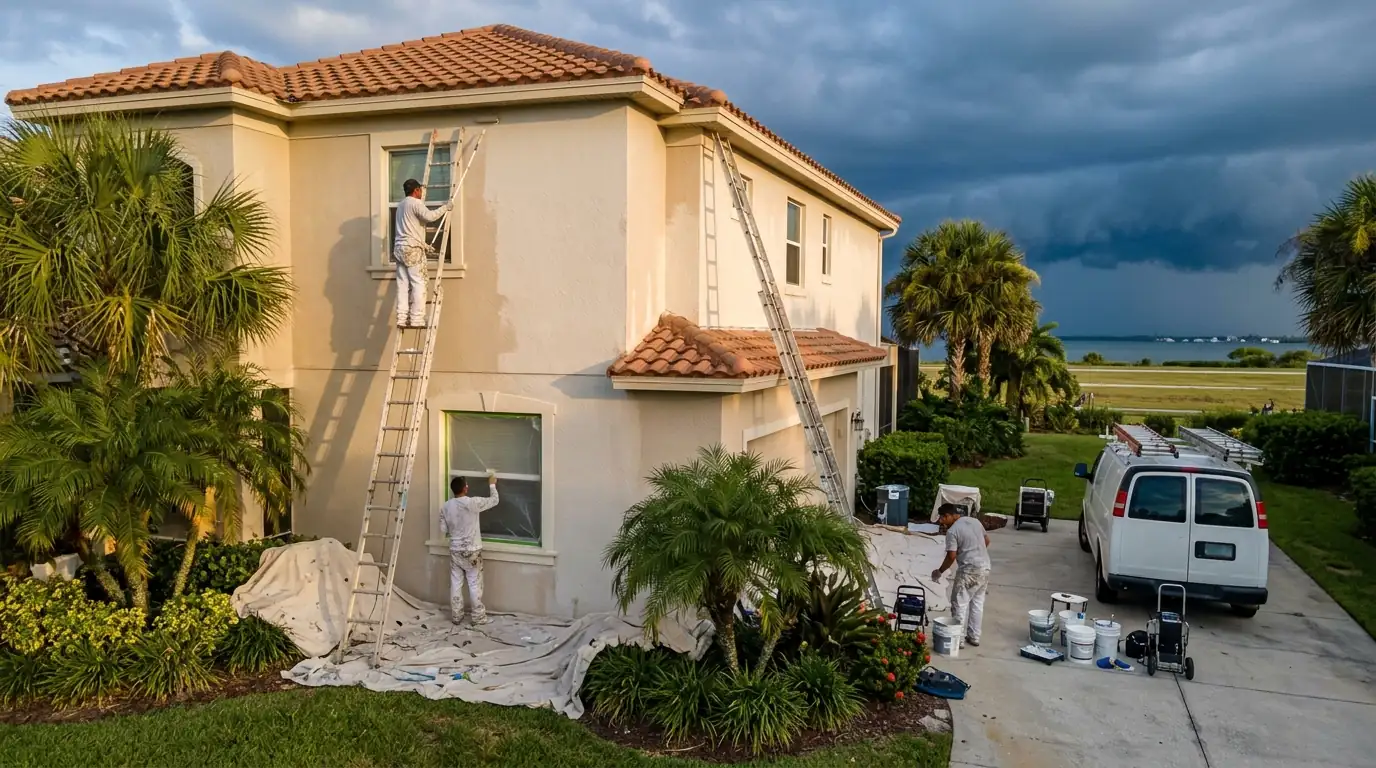
The drier months, roughly late fall through spring, are the easiest time to paint exteriors in Sarasota, though schedules fill quickly then. Summer painting is still very doable with early starts, smaller daily sections and close attention to afternoon storms. Fresh paint needs a few dry hours before rain, so planning around the day matters most.
What the rainy season means for paint
From about June through September, the Gulf Coast settles into a familiar rhythm: hot, humid mornings, clouds building by early afternoon, and a storm that can drop heavy rain in a short burst before the sun comes back. That pattern is predictable enough to plan around, which surprises people who assume nothing gets painted in summer. The challenge is less the rain itself and more the humidity and timing that surround it, because fresh paint needs a window of dry air to set properly.
Humidity slows drying. Water-based exterior paints release their moisture into the air as they cure, and when the air is already heavy, that takes longer. Walls also stay damp longer after a storm, especially on shaded sides and at the base where soil and plants hold water. Painting over a surface that looks dry but still holds moisture underneath is one of the quiet causes of blistering and poor adhesion months later. A summer schedule has to respect all of that, not just dodge the storm itself.
The drier months and their trade-off
Late October through May is generally the most comfortable stretch for exterior work. Rain is less frequent, humidity eases, and days are mild enough that paint dries at a steady pace. Nights can bring heavy dew in some weeks, so crews often start a bit later in the morning and stop applying paint early enough for it to set before evening moisture settles. Overall, though, this is the window when an exterior job runs most smoothly from start to finish.
The trade-off is demand. Seasonal residents return in the cooler months, and many want work done while they are in town. Builders and HOA communities schedule large repaints for the same window. Calendars fill, and the dates you want may already be taken if you call late. Planning a winter or spring exterior job in the late summer or early fall gives you the best shot at a time that suits you, and leaves room for color decisions and any HOA approval to happen first.
Painting through a Florida summer
Plenty of Sarasota houses get painted in July and August, and the results can be just as good as a winter job when the crew plans the day carefully. Work starts early, often as soon as surfaces are dry from overnight dew. The house is divided into sections, and each day's wet work is planned to wrap up well before the usual storm build-up. Prep tasks like washing, caulking and crack repair can fill afternoons, since those steps are less sensitive to a passing shower.
Crews also follow the sun around the house. Painting a wall in direct midday sun makes paint dry too fast on the surface, which can cause lap marks and weaker adhesion. Working the shaded sides during peak heat and the sunny sides in the morning keeps conditions closer to what the product expects. When radar shows a storm forming early, a good foreman stops applying paint and protects what is fresh rather than pushing to finish a wall.
- Early starts once morning dew has burned off
- Smaller daily sections that can finish before storms
- Prep work scheduled for the stormy part of the day
- Shaded walls during peak heat, sunny walls in the morning
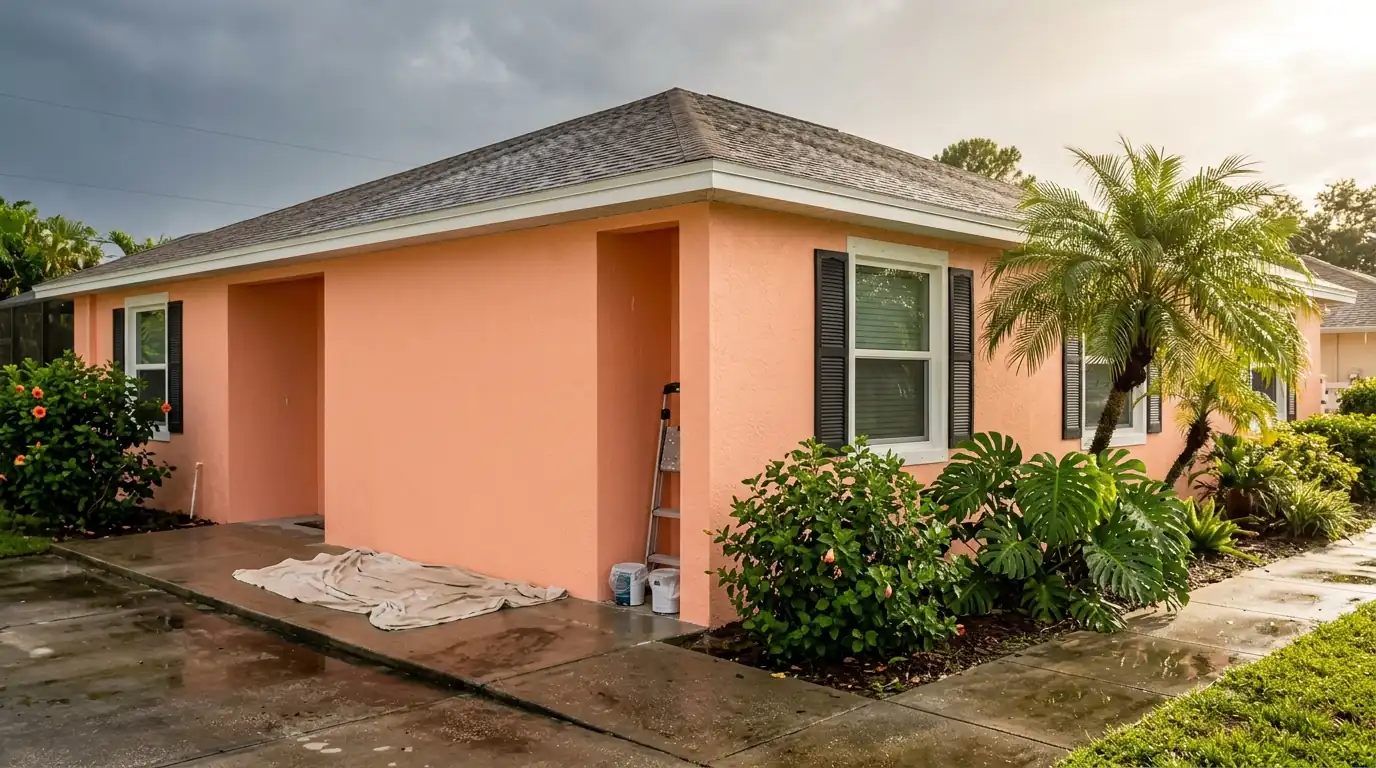
What rain does to fresh paint
Rain on paint that has not yet set can cause several problems. The mildest is surfactant leaching, where water-soluble ingredients rise to the surface and leave sticky, tan or glossy streaks. These often rinse away with gentle washing or the next few rains and do not usually affect long-term performance. Heavier rain on very fresh paint can wash pigment down the wall, leave spots, or thin the film. In those cases, the affected area has to be touched up or recoated once it dries.
Each product lists a minimum dry time before rain and a minimum surface and air temperature. Those numbers are not suggestions. Dew point matters too: if the wall surface temperature is near the dew point, moisture can condense on it as paint is applied. Crews keep an eye on these conditions through the day. If a wall gets caught by an early storm, the right response is to let it dry fully, inspect it, and fix what needs fixing rather than pretending nothing happened.
- Follow the product's minimum dry time before rain
- Keep surface temperature safely above the dew point
- Avoid painting walls still damp from the last storm
- Inspect and repair any rain-marked areas once dry
Working around hurricane season
Hurricane season runs from June through November, and most years it does not interrupt a paint job at all. When a storm does threaten the area, the priorities shift quickly. Crews stop applying paint, collect ladders, drop cloths and materials, and secure anything that could blow around. Homeowners have their own preparation to handle, and painting is the last thing anyone should be thinking about with a storm on the way. The job simply resumes once the weather clears and the walls dry out.
After a storm, it is worth walking the house before painting continues. Wind-driven rain can find weak spots in caulk, windows and stucco that were not obvious before. Debris can scratch fresh paint. Sometimes a storm reveals a leak or a soft section of fascia that should be repaired before more paint goes on. Building those checks into the plan protects the finished job and keeps you from sealing new paint over damage that only showed up a few days earlier.
Planning your window
The best way to get the timing you want is to start the conversation early. Colors take time to settle, especially if you are testing large samples on the house. HOA approval can take weeks depending on how often the committee meets. Repairs like wood rot or stucco cracks may need to happen first. Shrubs and trees against the walls should be trimmed back. All of that runs more smoothly when it is not compressed into the week before the crew shows up.
If summer is the only time that works, that is fine. Many homeowners prefer it because the house is quieter and seasonal neighbors are away. Just expect a few days where weather pauses the work. Whichever season suits you, give us a call and we will walk the house with you, talk through timing and weather honestly, and quote the job after that visit so you know what to expect before a single wall is washed.
- Call several weeks ahead of the window you prefer
- Settle colors and HOA approval before scheduling
- Book repairs ahead of the paint dates
- Trim landscaping back from all walls