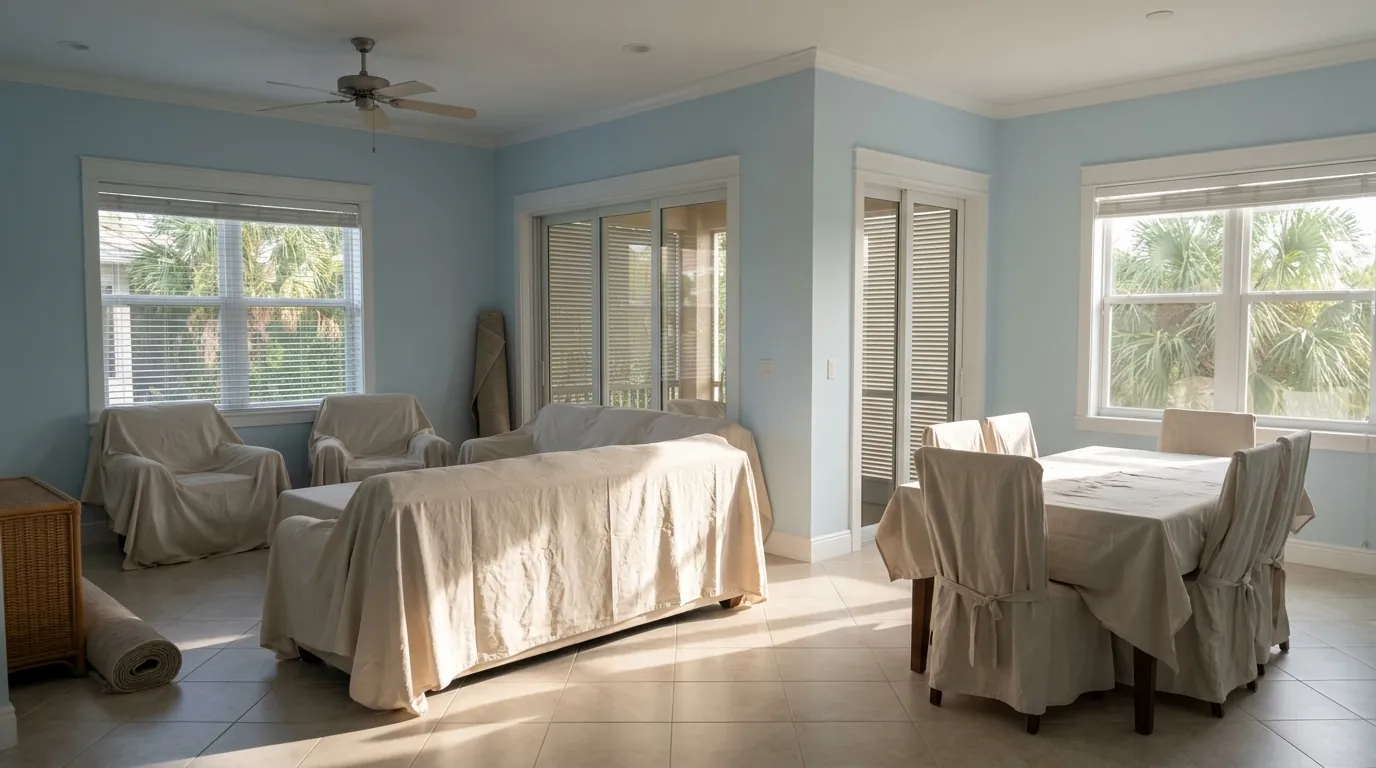
Settle colors, scope and any HOA approval before you leave. Arrange secure access and a local contact, agree on how often you will get photo updates, and decide how changes will be handled. Ask for a full set of photos at the end, and walk the house on your return to note any touch-ups.
Why the off-season can work well
A large share of Sarasota homes are second homes, and their owners often head north for the summer. That empty stretch can be a good time to repaint. Interior work happens without anyone needing to live around drop cloths and ladders. Furniture can be grouped and covered for longer without disrupting daily life. Exterior work avoids the inconvenience of crews outside the windows. Painting schedules are often more flexible in summer, too, since winter is the busiest time for many contractors.
Summer weather does need planning, as afternoon storms and humidity slow exterior work and drying. Interior work is far less affected, provided the air conditioning runs during the job. Many owners choose to do interiors over the summer and exteriors in late fall or spring when they are back in town. Others do both while away. There is no single right answer, but deciding which parts suit your absence is the first step in planning.
Decisions to finalize before you leave
The most important thing is to make every decision that requires you before you go. That means choosing colors for each room or surface, confirming sheens, and deciding the full scope, including closets, ceilings, trim and doors. Test samples on the walls while you are still there so you can see them in your own light. If you are changing exterior colors in a community with an HOA, get written approval in hand first. Changing colors from a distance by photo is possible, but it is much harder.
Write the plan down. A simple sheet listing each room, the wall color, the trim color, the ceiling color and any special notes avoids confusion later. Note anything that should not be touched, such as a mural, a built-in you want left natural, or a room with fragile collectibles. Share this with the crew foreman and keep a copy for yourself. That written list is what everyone checks against during the job and at the final inspection.
- Colors and sheens for every room and surface
- Full scope including closets, ceilings and doors
- HOA approval for any exterior color change
- Items or areas that must not be touched
- A written room-by-room plan shared with the foreman
Access, security and the house itself
Decide how the crew will get in. Common approaches include a lockbox, a door code set just for the job, or a key left with a trusted neighbor or property manager. Make sure the alarm company knows the crew will be entering, or set up a temporary code. If you are in a gated community or condo building, register the contractor with the gate or front desk so they are not turned away. Agree on which door will be used and where materials can be stored overnight.
Seasonal homes are often set up for absence: water shut off, air conditioning set higher and some rooms closed. Painting needs a few adjustments. Paint dries and cures best with steady temperature and humidity, so the air conditioning should run at a normal setting while the work is underway. Crews need water for cleanup, so that may need to be on. Once the job is done, the house can be returned to its away settings. Let us know how you normally leave the house so we can plan around it.
Staying in the loop from a distance
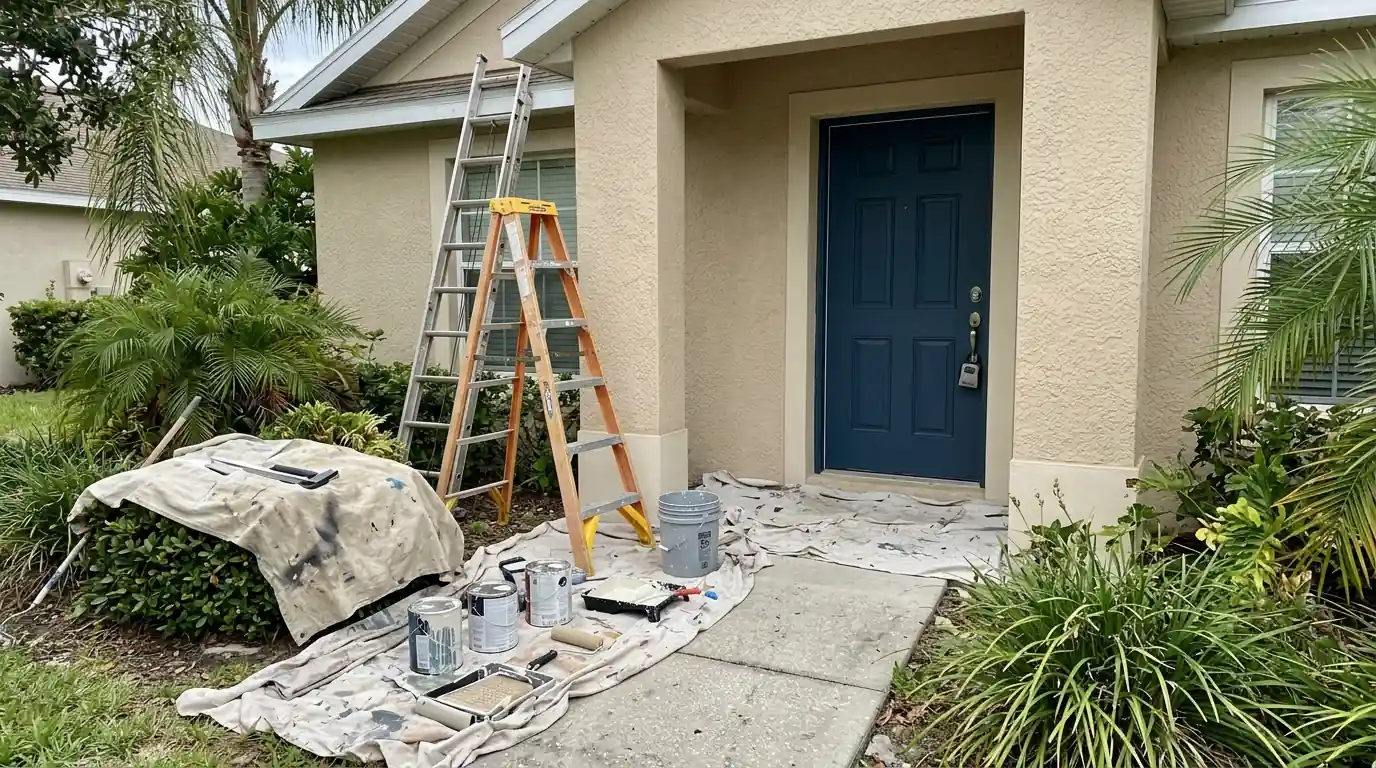
Agree up front how you will hear about progress. Some owners like a short message with a few photos at the end of each day. Others are happy with updates at the start, middle and end of the job. Either works, as long as everyone knows what to expect. Photos are especially useful for things like color in daylight, a repaired section of drywall before it is painted, or the condition of a wall once old paint is scraped away.
It also helps to have a local contact who can stop by if needed. A neighbor, friend or property manager can check that the crew is on site, look at a color in person, or let someone in if a code fails. Decide in advance who can approve small changes on your behalf. If something unexpected comes up, such as hidden water damage behind a wall, you want to be able to make a quick decision rather than leaving the job paused for days.
- Agree how often you want photo updates
- Name a local contact who can visit the house
- Decide who can approve small changes
- Ask for photos of any hidden damage before repairs
When surprises come up
Older homes and homes that sit closed for part of the year sometimes reveal problems once painting starts. Scraping may expose soft wood at a window sill. Moving furniture may uncover a water stain behind a dresser. Removing wallpaper may show damaged drywall. None of this is unusual, and a good crew will pause, take photos and explain what they found and what fixing it would involve before going further. The work then continues once you have given the go-ahead.
Clear communication is what keeps these moments small. Know in advance how you prefer to be reached and how quickly you can respond. If the surprise is minor, many owners are comfortable letting the foreman handle it within an agreed limit. If it is larger, you may want your local contact or a separate trade to take a look. Either way, you should never come home to find extra work done that nobody discussed with you.
Coming home to the finished job
When the work is done, ask for a full set of final photos of each room or elevation. Your local contact can do a walk-through if you would like eyes on it before you return. Furniture should be back in place, switch plates reinstalled and the house cleaned of drop cloths and debris. Leftover paint should be labeled by room and color and stored indoors, away from the heat of the garage, so touch-ups are easy later.
When you are back, walk each room in daylight and evening light, and note anything you would like touched up. Fresh paint will have cured fully by then, so it is a good time to judge the finish. Let us know about anything you spot. If you are planning to be away this season and would like to repaint while the house sits empty, give us a call and we will set up a walk-through before you go.
- Final photos of every room or elevation
- Furniture, switch plates and fixtures back in place
- Leftover paint labeled and stored indoors
- A daylight walk-through when you return