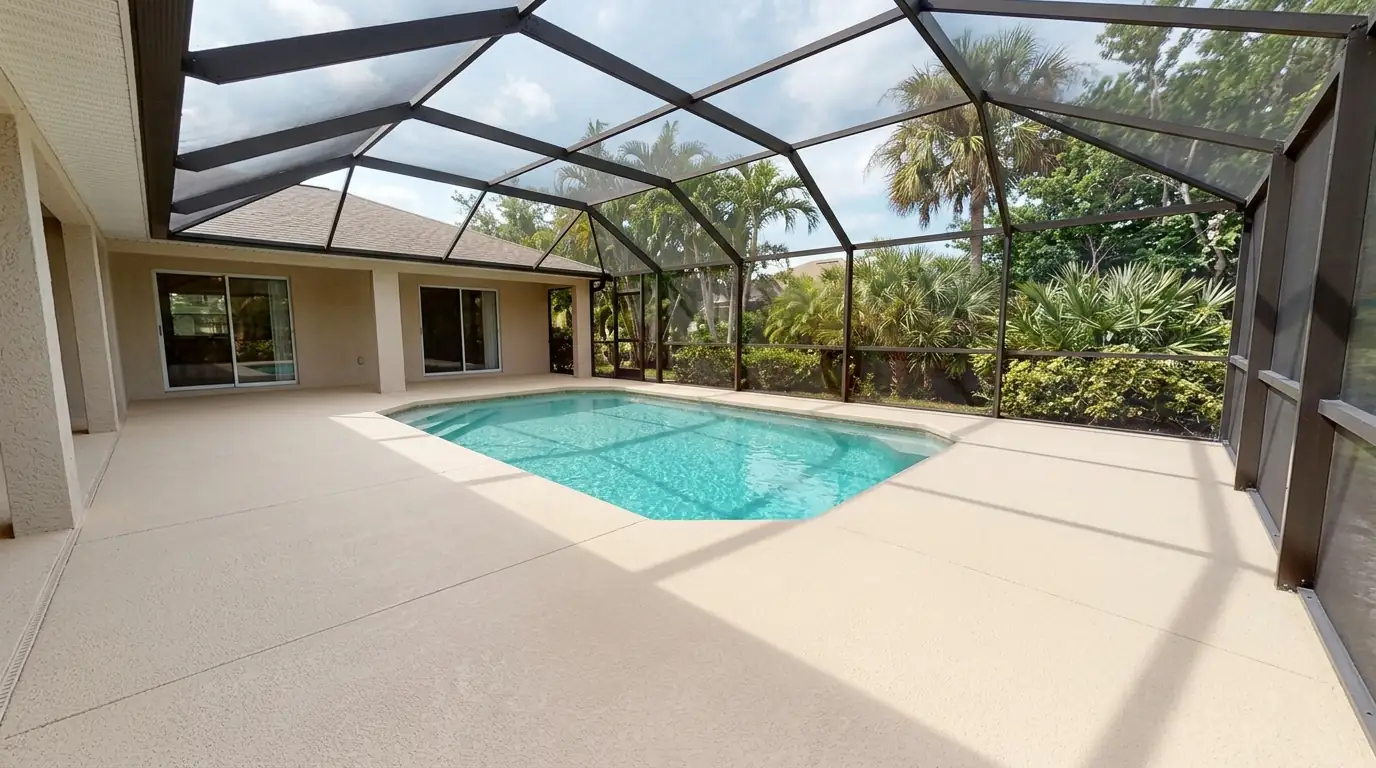
Most Sarasota pool decks are concrete, often with a textured spray finish. Options run from acrylic deck coatings that refresh color and add grip, to resurfacing that rebuilds texture over a worn surface. The right choice depends on the deck's condition, cracking and existing coating. Prep and slip resistance matter more than color.
What is usually on a Sarasota pool deck
Pool decks across Sarasota County are most often poured concrete, frequently finished with a textured spray coat that leaves a knockdown or splatter pattern. The texture keeps feet cooler and adds grip. Over time, sun, pool chemicals, foot traffic and rain wear down that top layer. Color fades, the texture smooths in high-traffic areas, mildew collects in shaded corners, and hairline cracks appear. Some decks have pavers instead, which call for cleaning and sealing rather than coating. This article focuses on concrete.
Many decks have been coated before, sometimes several times. Knowing what is already on the surface matters, because new coatings need to be compatible with old ones. A deck that was painted with an ordinary exterior paint, rather than a product designed for horizontal concrete, may peel and need more removal. A deck with a sound acrylic coating is usually easier to refresh. The first step in any project is identifying the existing surface and checking how firmly it is attached.
Coating options from light to heavy
At the lighter end, an acrylic deck coating refreshes color and adds a thin layer of protection. It works well when the existing texture is in decent condition and the deck mainly looks faded or stained. It is the quickest option and the easiest to recoat in a few years. Many products include or can take a slip-resistant additive. This is the most common route for decks that are sound but tired, and it keeps the original texture visible.
At the heavier end, resurfacing applies a new cement-based layer that is troweled, sprayed or textured to rebuild the surface. It can hide minor imperfections, restore a worn texture and give the deck a fresh look in a different pattern. It takes longer, costs more and needs suitable conditions to cure. Between the two, some decks benefit from repairing cracks and patching worn spots, then applying a coating. The right choice depends on what the deck needs, not on a single preferred product.
- Acrylic deck coating: refreshes color, keeps existing texture
- Coating with slip-resistant additive: adds grip on smooth areas
- Patching plus coating: repairs worn spots before refreshing
- Resurfacing: rebuilds texture over a worn or damaged deck
Slip resistance and heat
Around a pool, grip comes first. Wet concrete with a smooth coating can be slippery, especially for children and older family members. A good deck coating should leave enough texture underfoot to feel secure when wet. Slip-resistant additives, mixed in or broadcast over the surface, help in areas where the texture has worn smooth. Steps, the pool edge and walkways to the lanai door deserve particular attention, since that is where people move quickly with wet feet.
Heat is the other big factor in Florida. Concrete in full summer sun gets hot, and color affects how hot. Lighter colors reflect more sunlight and stay noticeably cooler than dark ones, which is why many decks in this area are finished in sand, light tan, soft gray or off-white tones. Dark coatings can look striking but may be uncomfortable barefoot in July. If the pool is under a screened cage, heat is somewhat moderated, but sunny sections can still get very warm.
- Keep enough texture to feel secure when wet
- Pay extra attention to steps and the pool edge
- Choose lighter colors for a cooler surface
- Test a small section barefoot on a sunny day if possible
Prep that decides how long it lasts
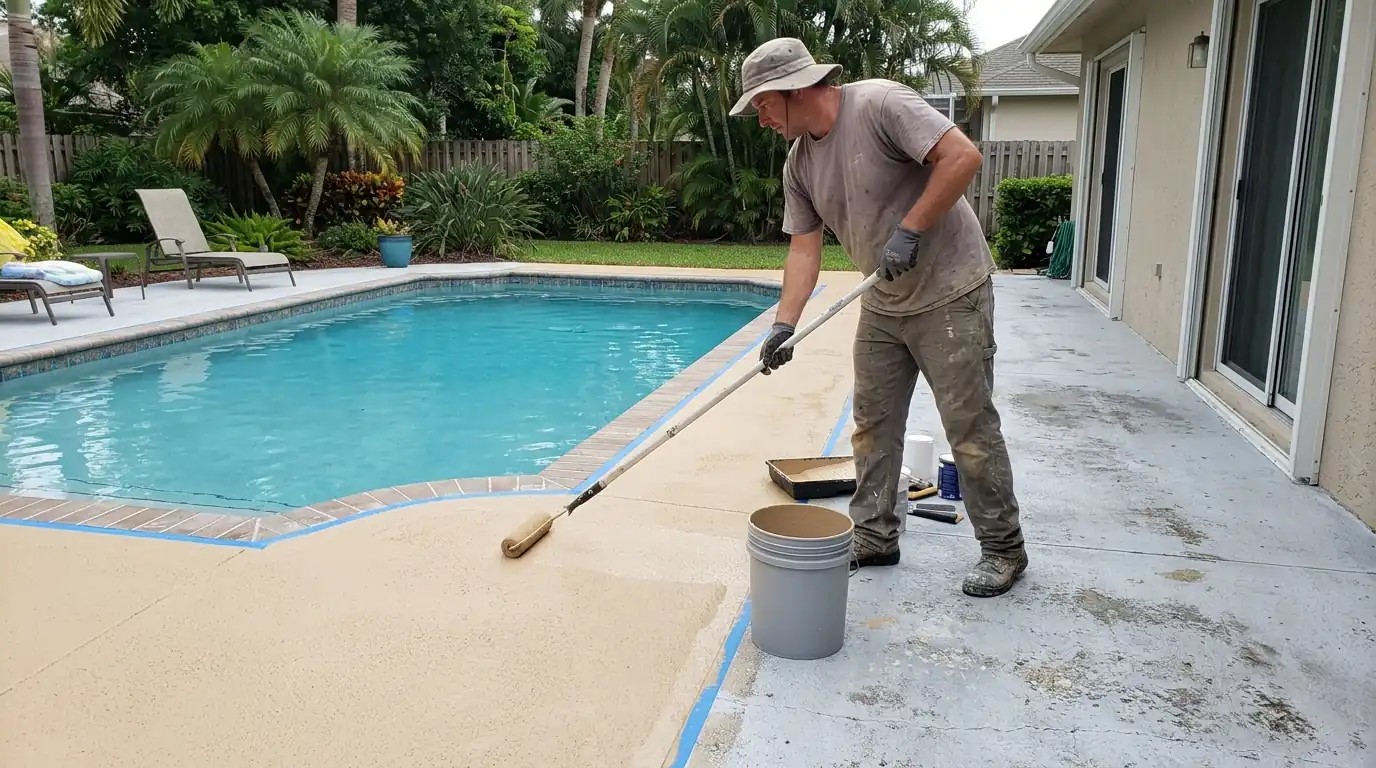
Most deck coating failures come back to preparation. The surface has to be cleaned thoroughly to remove dirt, sunscreen residue, algae and mildew. Loose or peeling coating must be removed. Cracks need attention, since a coating will not hold a moving crack together and will simply crack along with it. Cracks can be routed and filled with a flexible product, and stable control joints are usually left open or sealed with caulk rather than coated over.
The deck must then dry, which can take time in humid weather or after storms. Coating damp concrete invites peeling and blistering. Weather planning matters too: the product needs a dry window to cure, and a sudden afternoon shower can mark a fresh coat. Expect the area to be off limits for a period after coating. Furniture, grills and planters need to be moved and kept off the deck until the coating has cured enough to handle them.
Pool chemicals, water and the coping
Pool water splashes onto the deck constantly, carrying chlorine or salt depending on the system. Over time, that chemistry affects the coating, particularly near the edge. Good deck products are made to tolerate this, but the strip right around the pool will still wear faster than the rest. Rinsing the deck occasionally with fresh water, especially after heavy pool use or chemical treatments, helps slow that wear. So does keeping water levels and chemistry in balance.
Coping, the cap along the pool edge, is often stone, brick or precast material. Whether it gets coated depends on the material, since many should be cleaned and sealed instead. The joint between coping and deck is a common source of trouble and should be sealed with a flexible caulk rather than coated over solidly. Draining the pool is not usually required for deck work, but crews will protect the water from dust and debris. Let us know if you have a pool service visit scheduled during the job.
Keeping the new surface looking good
Once the coating has cured, care is fairly simple. Sweep or blow off leaves and debris regularly, since wet organic matter stains and holds moisture. Rinse the deck now and then, and clean mildew from shaded areas before it builds up. Avoid dragging heavy furniture across the surface, and use pads under feet where possible. If a grill sits on the deck, a mat underneath protects the coating from grease and heat. Small repairs done early keep the whole surface looking even.
Expect to refresh an acrylic coating periodically, since sun and foot traffic do their work. Resurfaced decks usually go longer before needing attention, though the top coat may still benefit from refreshing. Watch the pool edge and the busiest walkways, because those spots show wear first and tell you when the time is coming. If you are not sure what your pool deck needs, give us a call. We will set up a visit, look at the surface, the cracks and the existing coating, and explain your options before quoting the work.
- Sweep leaves and debris off regularly
- Rinse pool water and chemicals from the edge
- Use pads under furniture and a mat under the grill
- Clean mildew from shaded corners early