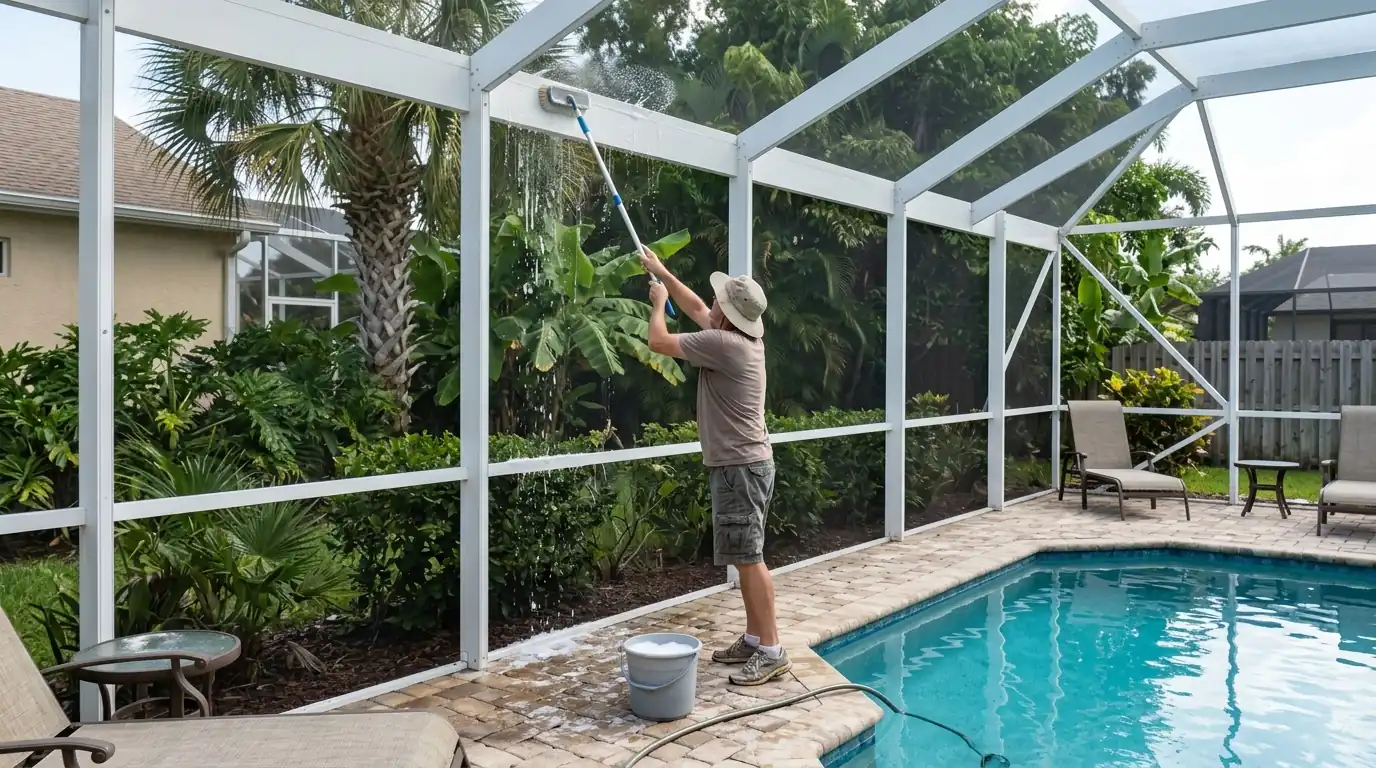
Wash the cage frame gently a couple of times a year, keep a close eye on screws and gusset plates, wipe mildew off the lanai ceiling before it sets in, and protect the floor from rust rings and grease. Most of this takes an afternoon, and it can push the next repaint further out.
A simple yearly rhythm
Screened enclosures take a beating in Sarasota, but most of the wear is slow and visible long before it becomes expensive. The homeowners whose cages still look sharp years after painting are rarely doing anything complicated. They wash the frame on a schedule, they look at the hardware when they do, and they fix small things while they are small. That routine fits neatly around the seasons, with one visit before the summer storms arrive and another after the worst of hurricane season has passed.
The lanai itself deserves the same attention as the cage around it. The ceiling collects mildew, the floor collects stains, and the wall where the cage meets the house takes splashes from the pool and blown rain. A walk-through twice a year with a notepad catches most problems early. If you keep the leftover paint from your last job, labeled with the room and color, small touch-ups become a five minute task instead of a guessing game at the paint counter.
- Late spring: wash the frame and check hardware before storm season
- Late fall: rinse off summer grime and look for storm damage
- Monthly: sweep the lanai floor and wipe the ceiling corners
- Keep labeled leftover paint for quick touch-ups
Washing the frame without damaging the finish
The urge to grab a pressure washer is strong, and it does more harm than good on a painted enclosure. High pressure can lift paint at its weakest spots, drive water into fastener holes, and tear or stretch screen panels that were perfectly fine. A long-handled soft brush, a bucket of mild soapy water and a garden hose do the job better. Start at the top beams, work down, and rinse each section before the soap dries in the sun.
Skip strong household cleaners and anything with ammonia or harsh alkaline content, since they can dull the coating and spot bare aluminum. Bleach solutions can also damage nearby plants and throw off the pool water if runoff reaches it. If the frame has a light film of chalk that comes back on your hand right after washing, the finish is aging, and gentle cleaning will only slow it down. That is useful information, because it tells you a repaint is approaching.
Fasteners, gussets and small repairs
Corrosion on a screen enclosure almost always starts at the hardware. Plain steel screws rust, and the rust runs down the frame as orange streaks. On aluminum gusset plates and joints, a white crusty bloom is a sign the metal is reacting with moisture and salt. While you are washing the frame, look closely at every joint you can see from the ground. Swapping a rusting screw for a stainless one is a quick fix, and it stops a stain from spreading onto fresh paint.
Chips and scrapes from pool nets, ladders and patio chairs are the other common issue. A small dab of matching exterior paint on clean, dry metal keeps moisture off the exposed spot. Larger areas of bare aluminum need a proper metal primer before any color goes on, or the touch-up will peel away. Loose spline, sagging screens and wobbly door hinges are not paint problems, but they let rain and debris in, and they are worth fixing before storm season starts.
- Replace rusting steel screws with stainless ones
- Clean white blooms on gussets and keep them dry
- Dab matching paint on small chips in clean metal
- Use a metal primer before touching up bare spots
Keeping the lanai ceiling clean
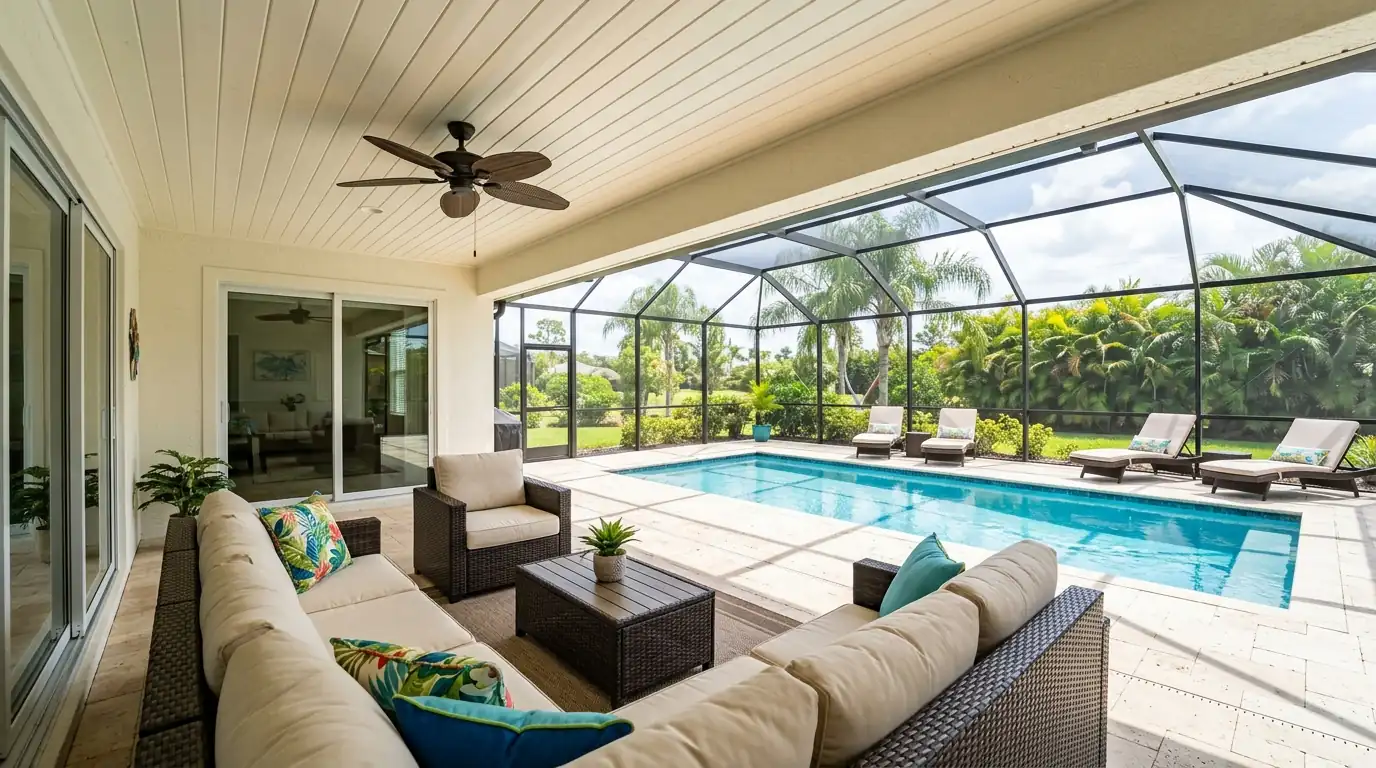
Lanai ceilings stay in shade most of the day, catch blown rain at the outer edge, and sit above a pool that adds moisture to the air. That makes them a favorite place for mildew. The first sign is usually a scattering of dark specks near the corners or above the ceiling fan. Wipe them away early with a mild cleaner on a sponge mop, rinse with clean water, and let the surface dry fully. Spots left for months tend to stain the paint permanently.
Water stains are a different story. A brown ring or a sagging patch usually points to a leak at the roof edge, a clogged gutter on the cage, or failing flashing where the enclosure ties into the house. Cleaning will not solve that, and painting over it before the leak is fixed only buys a few weeks. Keep the ceiling fan running on humid days, clear leaves out of the cage gutter, and have any recurring stain traced to its source.
Protecting the lanai floor
Coated floors, pavers and painted concrete inside a lanai mostly fail from what sits on them rather than from foot traffic. Metal chair legs and planter stands leave rust rings that soak into the surface after a few wet weeks. Grills drip grease. Pool chemicals spilled while topping off the water can bleach or etch a coating. Putting felt or rubber pads under furniture, using saucers under every plant, and keeping chemicals in a tray instead of on the floor will save a lot of scrubbing later.
Sweep often, since grit acts like sandpaper under shoes and furniture. A gentle rinse with a hose and a soft deck brush handles most dirt, and a mild cleaner takes care of footprints and sunscreen marks. Avoid dragging heavy furniture across the floor, and lift it instead. If a rust ring has already set, deal with it while it is fresh, because older stains bond deeper into the surface and are much harder to lift.
- Pads under metal chair and table legs
- Saucers under every potted plant
- A tray or bin for pool chemicals and cleaners
- A mat under the grill to catch drips
- Lift furniture rather than dragging it
Before and after storm season
Before June arrives, walk the enclosure with storm prep in mind. Tighten loose screws, secure the screen door latch, and store anything on the lanai that could be thrown into the frame by wind. Take a few photos of the cage and lanai from every side, so you have a clear record of their condition if a storm causes damage. Those pictures also help when you later compare how the paint has held up over time.
After a storm passes, rinse the frame and the lanai with fresh water to remove salt, sand and leaf litter. Look for bent members, torn panels and fresh scrapes on the paint where debris struck. Touch up small scrapes once the metal is clean and dry. Bigger damage, or a frame that is chalking heavily again soon after a wash, is a sign that maintenance has done its part and it is time to plan a proper repaint.