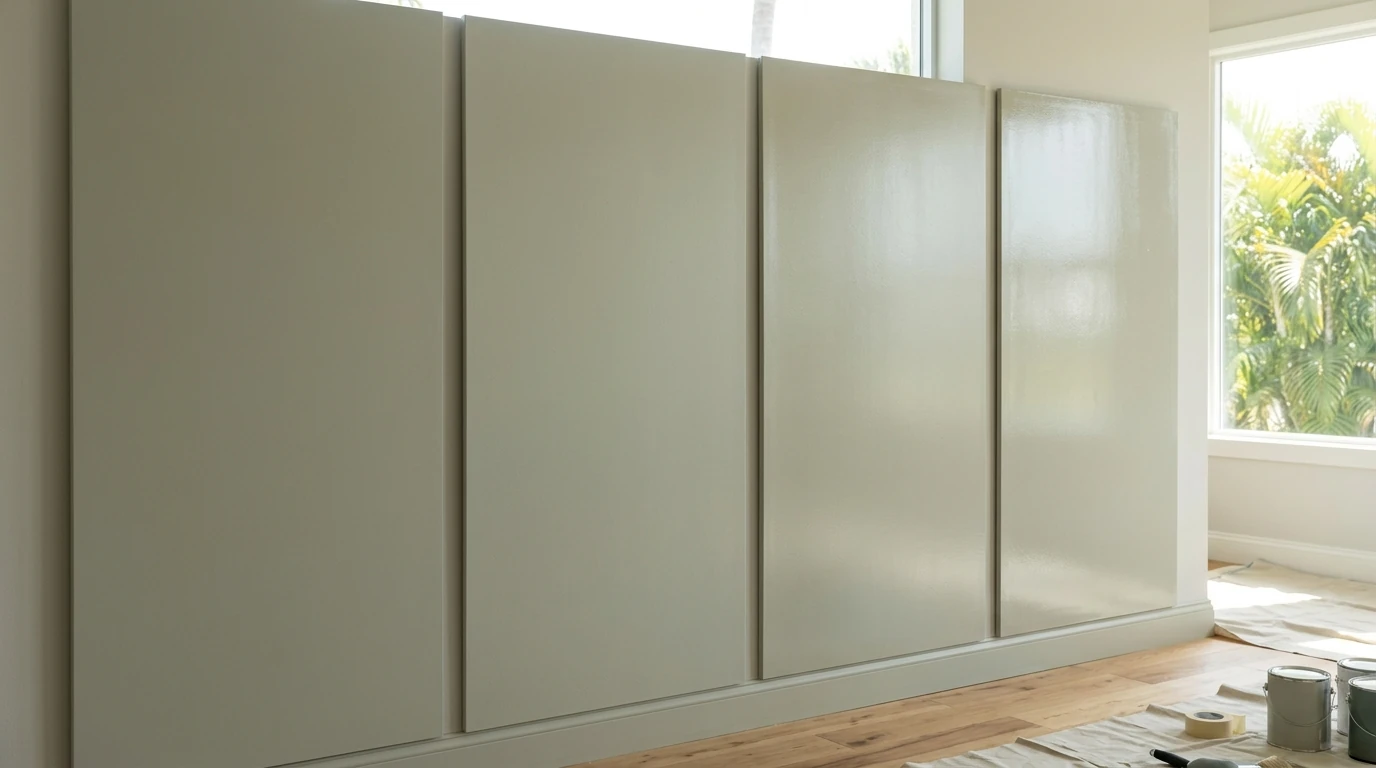
Use flat or matte on most ceilings and low-traffic walls, eggshell or satin in living spaces and hallways, satin or semi-gloss in bathrooms and laundry rooms, and semi-gloss on trim and doors. In humid Florida homes, pair the right sheen with good airflow and mildew-resistant paint, especially in rooms closed up for the season.
What sheen actually changes
Sheen describes how much light a dried paint film reflects, from the soft, chalk-like look of flat to the glassy shine of high gloss. It is not only about looks. As sheen goes up, the film usually becomes tighter and harder, which makes it easier to wipe clean and slower to absorb moisture. As sheen goes down, the paint hides wall flaws better but marks and stains more easily. Every choice is a trade between hiding imperfections and standing up to wear.
In a humid climate, that trade tilts a little. Damp air gives mildew more chances to settle on walls, and a slicker film gives it less to hold onto. A smoother surface also lets you wipe away early spots before they stain. That does not mean every room should be shiny, because gloss on a large wall shows every roller mark, patch and wave in the drywall. The right answer depends on the room, its light and how much moisture it sees.
Flat and matte for ceilings and quiet walls
Ceilings are the classic place for flat paint. Most Sarasota homes have textured or long open ceilings lit by big windows and sliders, and any shine on that surface catches light at an angle and shows every joint and patch. Flat paint hides those flaws and gives an even, calm look. The exception is a bathroom or laundry ceiling that sees steam, where a ceiling paint with mildew resistance or a low-luster finish holds up better.
Matte works well on walls in formal living rooms, dining rooms and guest bedrooms that see little contact. Newer washable mattes are far tougher than the flat wall paints of years past, so light fingerprints and scuffs can often be wiped without leaving a shiny spot. For a house with uneven walls or lots of patched areas, matte is the kindest finish, because it lets the color carry the room instead of the texture. It also suits the soft, calm look many coastal homes aim for.
- Flat on most ceilings to hide joints and texture
- Washable matte on low-traffic walls
- Mildew-resistant ceiling paint in steamy rooms
- Matte for walls with patches or uneven drywall
Eggshell and satin for everyday living spaces
Family rooms, kitchens, hallways and kids' rooms take daily contact, and that is where eggshell and satin earn their keep. Eggshell has a gentle glow and cleans reasonably well while still hiding minor flaws. Satin is a step shinier and tougher, and it shrugs off repeated wiping in kitchens and entries. In humid Florida houses, both give mildew a harder surface to cling to than flat paint does, which helps in rooms near sliders that open often to the lanai.
The catch is light. Large windows and glass doors throw strong raking light across walls in the afternoon, and satin shows roller texture, patches and touch-ups more than eggshell does. Good prep matters more as sheen rises: sanded patches, primed repairs and steady rolling technique all show in the finish. For most open living spaces we lean toward eggshell, and save satin for the walls that really take abuse. Kitchens with a backsplash wall near the stove are a good example of where satin is worth it.
- Eggshell for open living rooms and bedrooms
- Satin in kitchens, entries and mudrooms
- Satin near sliders that open to the lanai
- Careful patching and priming before higher sheens
Bathrooms, laundry rooms and steam
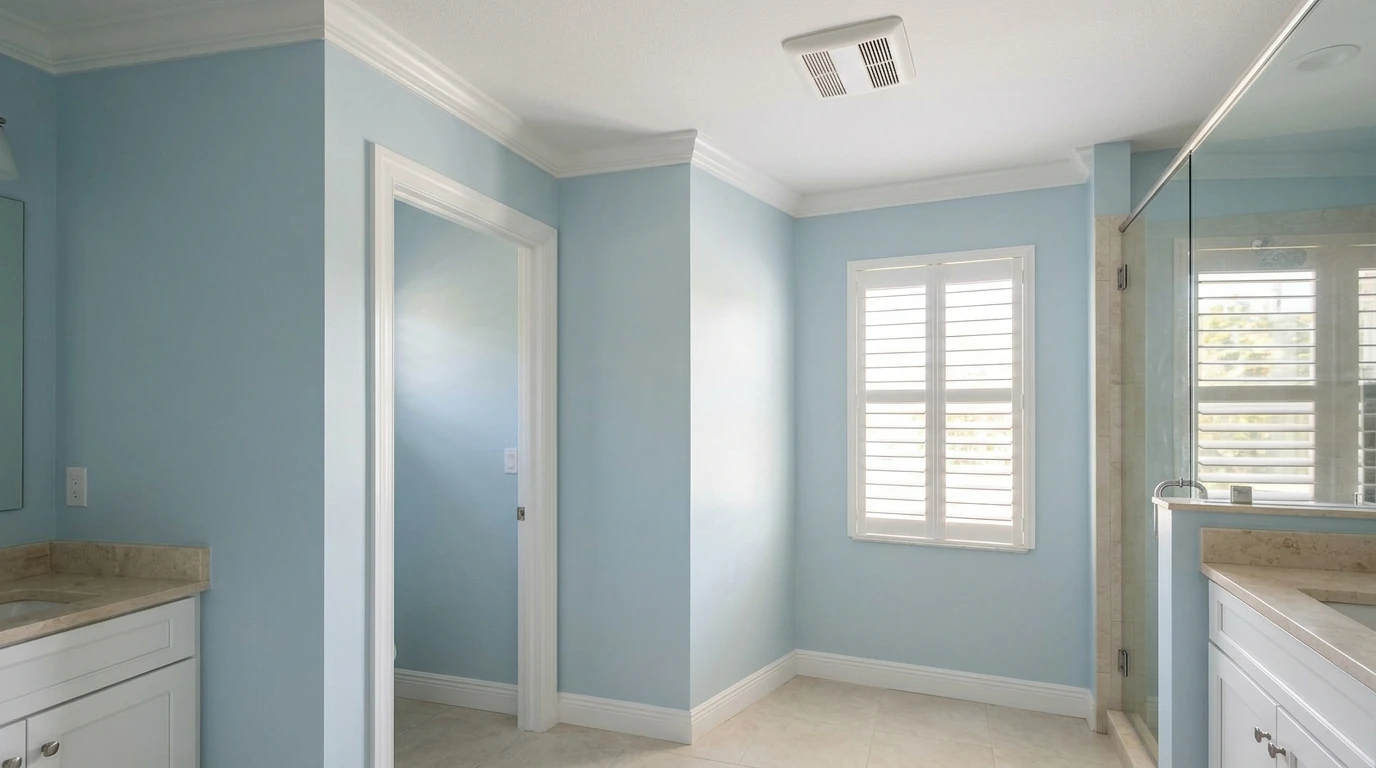
Bathrooms are where sheen and moisture meet head on. Steam settles on walls and ceilings after every shower, and if the room does not dry out, mildew follows. Satin or semi-gloss sheds water and wipes clean far better than flat. Many homeowners also choose paint labeled for bathrooms, which carries extra mildew resistance in the film. Before any of it goes on, existing mildew has to be cleaned off and killed, because fresh paint over live growth will spot again quickly.
Ventilation does as much as paint. An exhaust fan that runs during the shower and for a while after keeps moisture from soaking into walls. Laundry rooms with a dryer and no window face similar conditions. After painting, give the new finish time to cure before long hot showers, since a film that is still soft can streak or develop surfactant drips. Our painters will tell you how long to wait for each room. Fans that vent into the attic rather than outside only move the problem, so it is worth checking where yours goes.
- Clean and kill existing mildew before painting
- Satin or semi-gloss on bathroom walls
- Paint labeled for bathrooms in steamy spaces
- Run the exhaust fan during and after showers
Closed-up seasonal homes and condos
A Sarasota home or condo shut up for the summer faces a different kind of moisture. With nobody opening doors or running the shower, the air goes still, and if the air conditioning is set too high or turned off, humidity climbs. Mildew often shows up first in closets, behind furniture against exterior walls, and in bathrooms with no airflow. Flat paint in those spots tends to hold the spots and stain, while eggshell or satin wipes clean more easily when owners return.
Sheen alone will not save a closed-up house, though. Keep the air conditioning running at a sensible setting, or use a humidity control setting if your system has one, and leave interior doors and closet doors open to let air move. Avoid pushing furniture tight against exterior walls. When we repaint seasonal homes, we often suggest a slightly higher sheen and a mildew-resistant product in closets and baths, where stale air lingers longest. A dehumidifier left running in a closed bathroom can also help on long absences.
Trim, doors and the touch-up question
Baseboards, door casings, window trim and interior doors take kicks, vacuum bumps and constant hand contact, so semi-gloss is the usual choice. It cleans easily, resists moisture from mopping and humid air, and gives a crisp line against eggshell or matte walls. On stair railings and heavily used doors, some homeowners go to a harder enamel for even better wear. A contrast in sheen between wall and trim also makes rooms look sharper and more finished.
Higher sheens have one downside: touch-ups are harder to hide. A small patch of semi-gloss can flash, meaning it shows as a different shine from the paint around it, especially in side light. Flat and matte touch up almost invisibly. Keep labeled leftover paint for every sheen used, and when a touch-up on trim or satin walls does not blend, repaint the whole section from edge to edge rather than dabbing the spot. Flat ceilings are the easiest of all to patch later.