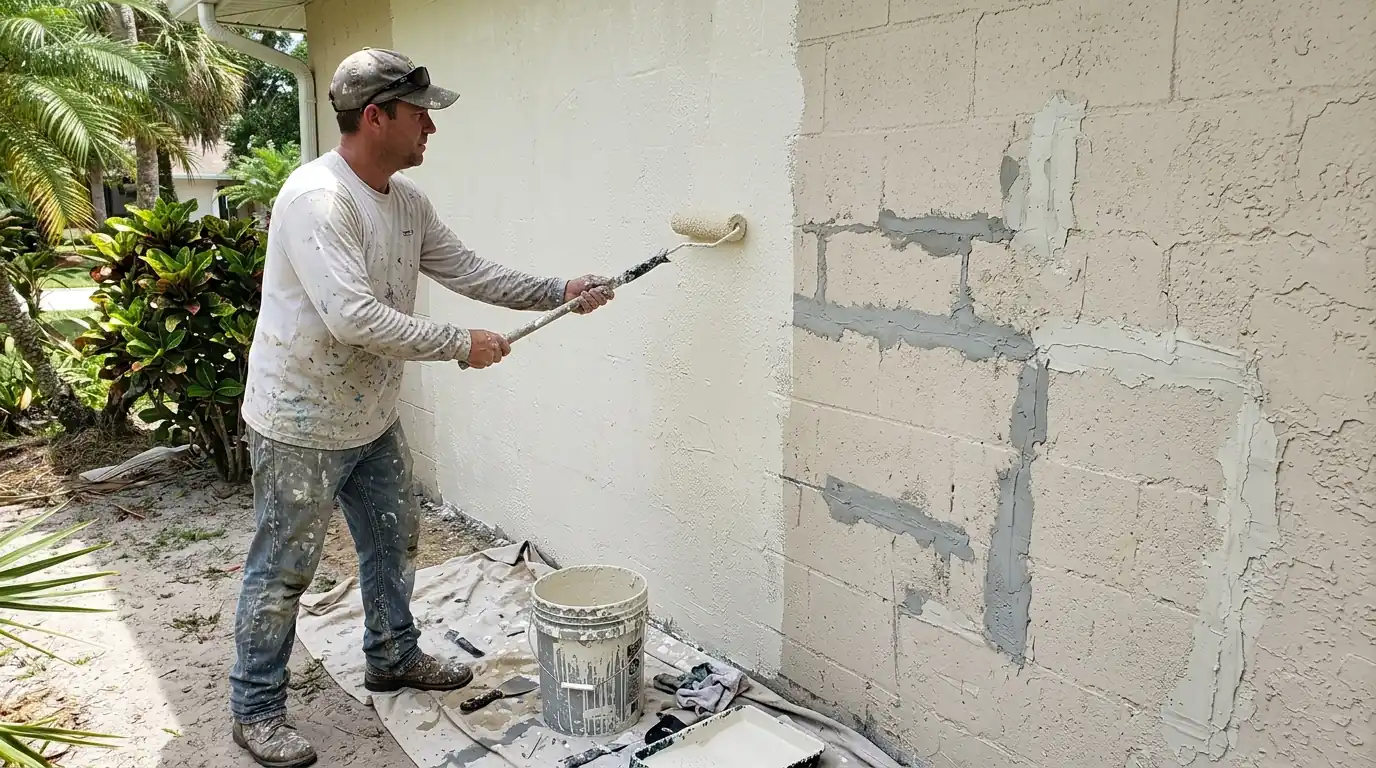
Elastomeric coating suits stucco with lots of hairline cracking or walls that take heavy wind-driven rain, because it goes on thick and stretches. A quality acrylic exterior paint suits sound stucco, breathes more freely and is easier to touch up and recoat. The condition of your walls, not a general rule, should decide.
What each coating actually is
Both coatings are water-based, and both are built on acrylic resin, which is where some confusion starts. The difference is in how they are formulated and applied. A standard exterior acrylic paint goes on in fairly thin coats and dries to a film that is tough but only modestly flexible. An elastomeric coating is made to stay stretchy. It is applied much thicker, often several times the film build of ordinary paint, and once cured it behaves more like a rubbery membrane than a layer of paint.
That thickness is the whole point. A heavy, flexible film can span hairline cracks and move with the wall as stucco expands in heat and shrinks after a storm cools it down. Ordinary paint simply cracks along with the stucco. The trade-off is that elastomeric material is heavier to apply, slower to work with, and less forgiving when conditions or prep are wrong. It is a specialized product, not an automatic upgrade, and treating it as one causes many of the failures we are called to fix.
Where elastomeric earns its place
Block-and-stucco construction is everywhere in Sarasota County, and older stucco often develops a web of fine cracks over time. Each one is a small path for water to reach the block. On those walls, elastomeric can make a real difference. It bridges the hairlines, sheds rain, and keeps water from wicking in during summer storms that drive rain sideways against the house. Homes in open, exposed spots, near the water or on corner lots with nothing to break the wind, are good candidates.
It also helps on walls that have been patched repeatedly and look uneven. The thicker film evens out the appearance of minor repairs a little better than thin paint. Still, it is not a crack filler. Anything wider than a hairline needs to be opened up and repaired with a proper patching material first, then textured to match. Elastomeric over a wide, moving crack will just stretch until it splits, and then water gets in behind a coating that is good at keeping it trapped.
- Stucco with widespread hairline cracking
- Walls exposed to wind-driven rain
- Waterfront and corner-lot homes with little shelter
- Masonry where a thicker, water-shedding film is the goal
Where elastomeric causes trouble
The same quality that keeps rain out can keep moisture in. Elastomeric coatings breathe less than standard acrylics. If water is already inside the wall from a roof leak, a window that weeps, or ground moisture rising through the base, that moisture looks for a way out and can push the coating off in blisters. We see this most often on lower walls and around windows. Applying elastomeric over stucco that has not fully dried after washing produces the same result, just faster.
Heat and timing are another concern. Thick coatings applied in direct afternoon sun can skin over on top while staying soft beneath. Rain that arrives before a heavy film has cured can leave streaks or wash material down the wall. Elastomeric also tends to hold onto dirt more than harder paints, and touching it up later can be tricky because the patch may show. None of this rules it out, but it should be a deliberate choice made after looking at the wall, not a default line on every estimate.
The case for a quality acrylic
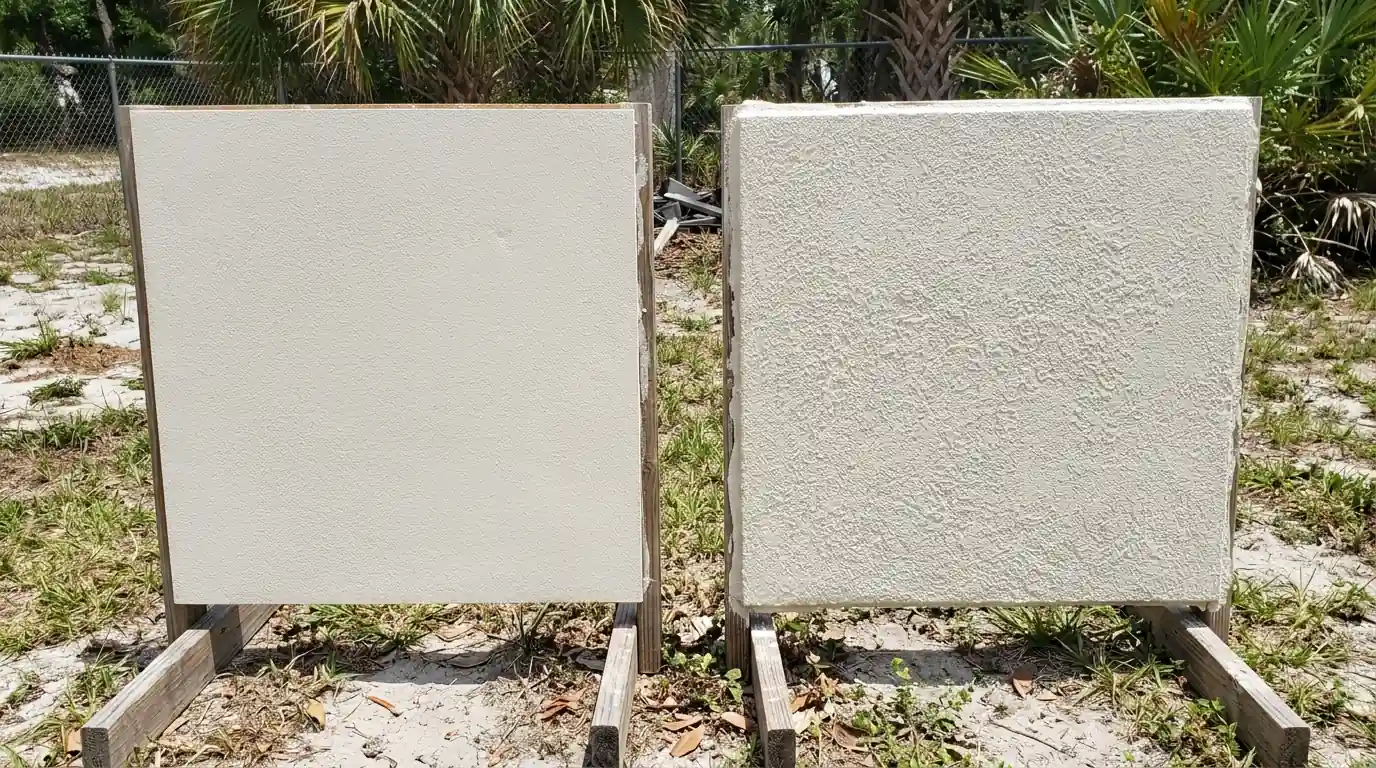
For stucco that is in decent shape, with only a few small cracks that can be patched, a top-quality exterior acrylic is often the better fit. It lets the wall breathe more freely, which matters in a humid climate where some moisture always moves through masonry. It goes on faster, which can mean less labor. It comes in a wider range of sheens and holds color well. Later repaints are straightforward, because new acrylic bonds readily to old acrylic once the surface is clean and sound.
Acrylic is also easier to live with between repaints. Touch-ups blend better, and the finish resists dirt pickup a bit better than many elastomeric products. On a house with good stucco, sensible overhangs and no history of water problems, there is little reason to pay for a heavy coating whose main strength is bridging cracks that are not there. Two full coats of a good acrylic over properly prepared stucco is a solid, honest system for a large share of homes we paint.
Prep matters more than product
A great coating over a poorly prepared wall will fail, and it will not matter which type it was. Prep starts with cleaning: removing dirt, salt, chalk and mildew so the new film bonds to sound material. Cracks are opened and filled, and patches are textured to match. Chalky or porous surfaces get a masonry primer or conditioner that locks down the surface. Then the wall must be properly dry. In the rainy months that can mean waiting longer than anyone would like after a wash.
With elastomeric, film thickness has to be right as well. Applied too thin, it loses the flexibility you paid for. Applied too heavy in one pass, it can sag or cure poorly. Crews check coverage rates as they go rather than guessing. Acrylic is more forgiving here, but two full coats still beat one heavy one. If an estimate does not mention washing, crack repair, priming and number of coats, ask about each, because those steps decide how long the job lasts.
- Low-pressure wash with mildew treatment
- Crack repair and texture matching before coating
- Masonry primer on chalky or patched areas
- Moisture check before any coating goes on
- Correct film thickness for the product chosen
How we decide for a specific house
When we walk a stucco house, we look at crack patterns, the base of each wall, the condition of the existing paint and the exposure of each side. We ask about past leaks, recent roof work and whether any rooms have smelled damp. If the old coating is elastomeric, we note it, because that affects what can go on next. Sometimes the answer is different for different walls, with elastomeric on the weather side and acrylic elsewhere, though most homeowners prefer one system for a uniform look.
We will tell you plainly if a wall has a moisture problem that needs to be solved before any coating goes on. That conversation can be frustrating in the moment, but it is cheaper than repainting peeling stucco a few years later. If you are weighing the two options, give us a call and we will set up a visit, look at the actual walls, and explain which coating we would recommend and why before quoting the job.
- How many cracks, how wide and where
- Any signs of moisture at the base or around windows
- What coating is already on the wall
- How exposed each side is to sun and rain