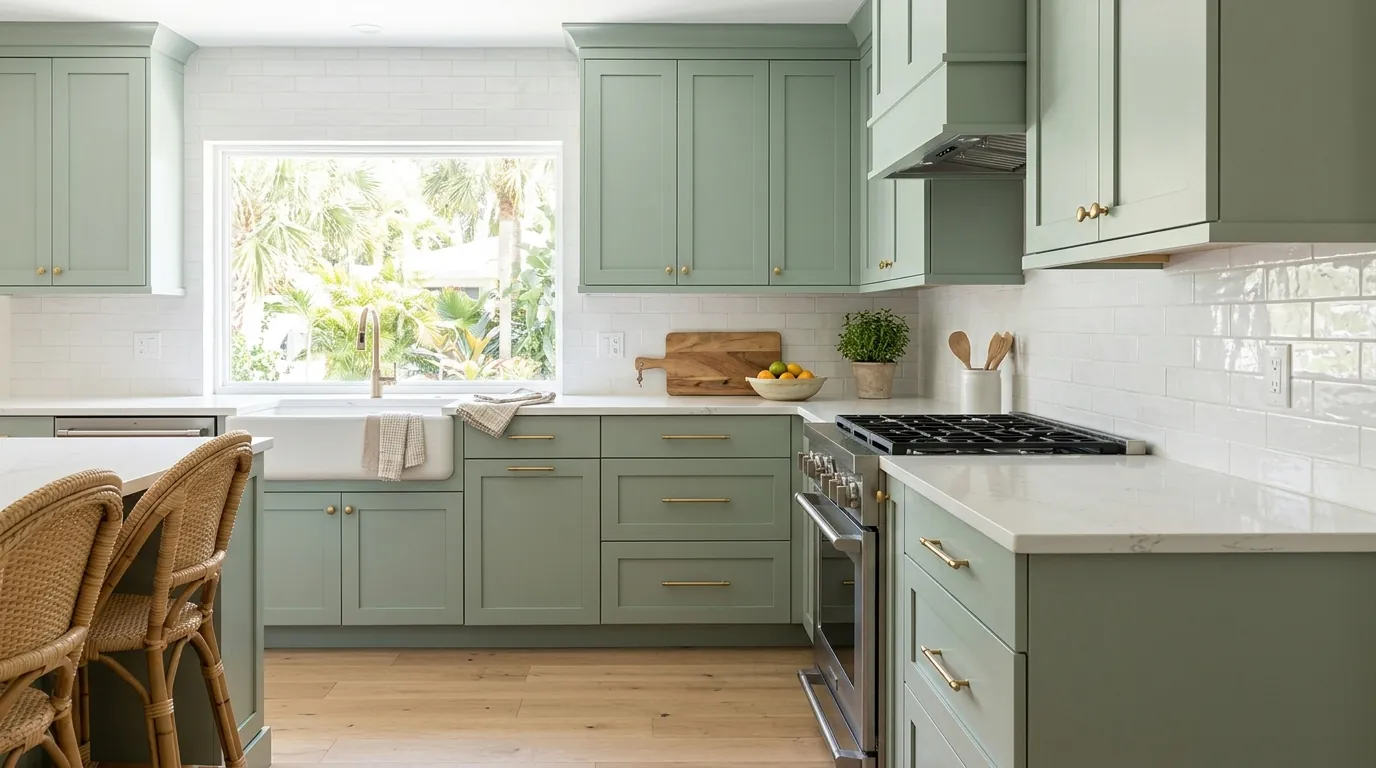
Painting suits cabinets with solid boxes and door styles you still like; it changes color, not shape. Refacing replaces the doors and drawer fronts and covers the boxes with new veneer, so it can change style as well. If the boxes are damaged or the layout does not work, neither fully solves it.
What each option involves
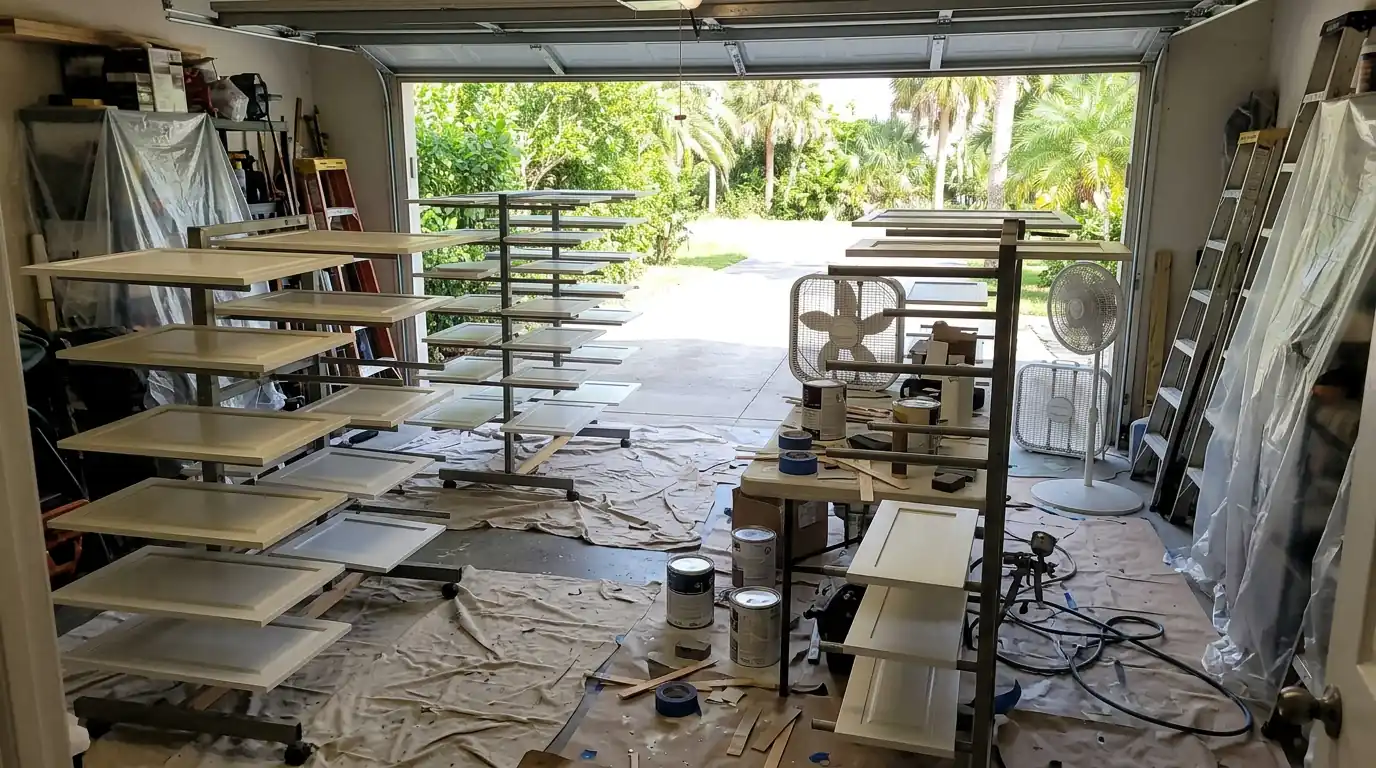
Cabinet painting keeps everything you have and changes its finish. Doors and drawer fronts are removed, labeled and taken to a work area. Every surface is cleaned to remove kitchen grease, sanded, primed with a bonding primer and coated with a hard enamel. The face frames and visible box sides are prepped and finished in place. Hardware is cleaned and reinstalled, or new pulls and hinges can go on at the same time. The cabinets look new, but the door style and layout stay the same.
Refacing goes further. The old doors and drawer fronts are replaced entirely with new ones, often in a different style. The exposed parts of the cabinet boxes, the face frames and end panels, are covered with a new veneer or laminate to match. Hinges and drawer hardware are usually replaced. The boxes and layout stay, but everything you see from the room is new. Because new parts must be ordered and fitted, refacing often involves more lead time and a different kind of trade.
When painting is the better fit
Painting makes the most sense when the doors are solid and you like their shape. Shaker doors, simple raised panels and flat slab doors in real wood or good-quality wood products all paint well. Many Sarasota kitchens from the 1990s and 2000s have sturdy oak or maple cabinets in an orange-toned finish that simply looks dated. A new color, often white, soft gray, a muted green or a deep navy on an island, can make that kitchen feel current without throwing away perfectly good cabinetry.
Painting is also less disruptive in some ways. There is no ordering period for new doors, and the work happens mostly on site. Kitchens can stay partly usable while doors are being finished, depending on how the work is staged. One honest limit: paint will not hide heavy oak grain completely unless a grain filler is used, and it will not change a door style you dislike. If the main problem with your kitchen is color, painting is usually the most direct route.
- Solid wood or quality wood-product doors
- Door style you still like
- A dated stain color is the main complaint
- Boxes and drawers in good working order
When refacing makes more sense
Refacing earns its keep when the doors themselves are the problem. Thin, peeling thermofoil doors, damaged or warped doors, and dated styles with heavy arches or ornate details are hard to fix with paint. Thermofoil in particular is a poor candidate for painting once its plastic skin starts lifting, since the coating will not hold to a failing surface. If you want a fundamentally different look, such as switching from a raised panel to a modern slab, new doors are the only real way to get there.
Refacing still keeps the cabinet boxes, so they must be in sound condition. If there is water damage under the sink, sagging shelves or boxes that are coming apart, covering them with new veneer only hides the issue. In that case, the honest conversation is about replacing those cabinets, or the kitchen. Refacing is a separate trade from painting, and we will tell you plainly if we think your kitchen needs new doors rather than paint.
- Peeling or lifting thermofoil doors
- Warped, cracked or damaged doors
- A door style you want to change completely
- Boxes still solid and layout still useful
Humidity and Gulf Coast kitchens
Coastal humidity affects both options. Painted cabinets need a finish that can handle moisture from cooking, dishwashers and the occasional splash, which is why proper cabinet enamels are used rather than ordinary wall paint. Those enamels cure harder over time, but they need good drying conditions during the job. In summer, that means running the air conditioning steadily and allowing extra time between coats. Rushing coats in humid air is one of the main causes of soft, easily marked finishes.
Seasonal homes raise a related point. A kitchen that sits closed up with the air conditioning set high, or humidity uncontrolled, can see swelling around sink bases and lifting veneer near the dishwasher. If you split the year between Sarasota and somewhere else, check those areas carefully before deciding. Moisture damage needs to be dealt with first, whichever way you go. Keeping humidity steady while you are away also helps any finish, painted or refaced, last longer.
How long each takes and what to expect
Painting usually runs over several days to a couple of weeks depending on the size of the kitchen, the number of doors and how many coats the chosen color needs. Prep is the bulk of the time: degreasing, sanding, filling and priming. Doors are finished in stages so each coat dries properly. During that period, your kitchen will have empty cabinet openings and protective covering, but the sink and appliances usually stay usable, which matters for families cooking at home.
Refacing timelines depend largely on how long new doors and fronts take to arrive. Once they are on site, installation itself can move fairly quickly. Ask any refacing company about lead times before you commit. For painting, ask us about the finish we plan to use, how doors will be handled and how long to be gentle with the new surfaces. Fresh enamel needs time to harden fully, so avoid scrubbing or slamming doors for the first few weeks.
- Expect empty openings while doors are off
- Sink and appliances usually stay in use
- Be gentle with new enamel for the first few weeks
- Ask about door lead times if refacing
Questions to settle before you decide
Start with the boxes. Open every cabinet and look at the shelves, the sink base and the drawer boxes. If they are solid, both options are on the table. Then look at the doors. Do you like their shape? Are they solid wood or a product that will take paint? Are they flat and true, or warped? Finally, think about the overall plan for the house. If you might remodel the kitchen fully in a few years, painting may be the sensible bridge.
Budget matters, but so does how long you plan to stay. Neither option fixes a layout that does not work for you. If the kitchen functions well and you only dislike how it looks, painting or refacing will feel like a real upgrade. If you would like an honest opinion on whether your cabinets are good candidates for paint, give us a call and we will set up a visit, look at the doors and boxes, and quote the work after that walk-through.